
Quince Tree Pruning and Natural Dyeing
Hello friends,
I was running out of time this winter to prune our quince tree, and the job needed to get done before spring came and the tree began bursting its buds. So one warm and dry winter afternoon hubby and I got out our ladder, and the numerous pruning tools necessary for the job, and got to work taming our unruly quince tree.
My first aim was to get the vertical branches under control. If they were allowed to grow much further, the quince fruit would be out of reach, even with a ladder. The tree was also beginning to cast shade over my dahlias every afternoon, which definitely wasn't an allowed option either. With the area set up for the pruning job, it was time to look at the 4 'D's of plant pruning, remove dead, damaged, diseased, and dying branches, along with branches that crossed over other branches.


It didn't take very long at all to prune our quince tree, and turning it into a much smaller and tighter shape. With that done it was time to clean up the pruned quince branches.

Not wanting to waste the quince branches, I chopped them into smaller pieces and set them aside for a natural dyeing experiment. Apple and pear branches are well known among natural dyers for producing pink and peach shades from their bark, so I was curious to see whether quince being in the same family, might produce similar results.

As yet, I haven't had a chance to try this natural dyeing experiment, but in the meantime the quince wood chips have dried nicely and are now stored away for later. Hopefully I'll get a chance to see what colours they produce before too long.
Have a wonderful day
Julie-Ann
If you'd like to continue the conversation, you can find me on Instagram, Mastodon, Bluesky, and Facebook.
White Daffodil Project : Planting My Collection
Hello friends,
I've become completely obsessed with white daffodils, also known as white narcissus, and it all began with a single observation.
While taking the Floret Flower Farm Workshop last summer, I came across a comment from Erin Benzakein during the daffodil section of the course. She explained that at her flower farm, traditional yellow daffodils didn't sell nearly as well as the white varieties. She suggested that white daffodils have an elegance that appeals to many people. They are also so much harder to find than the traditional yellow varieties, making them feel a little more unusual and distinctive.

The more I thought about her observations, the more I realised I agreed with her. I already had a few white daffodil varieties growing in my garden, but I'd never really paid much attention to them. Once I started researching the different varieties available in New Zealand, I discovered an incredible diversity of flower forms, colours, and fragrances. Before long, I wanted to see whether my own experience with white daffodils would support Erin's observations, and that curiosity soon grew into a project of its own.

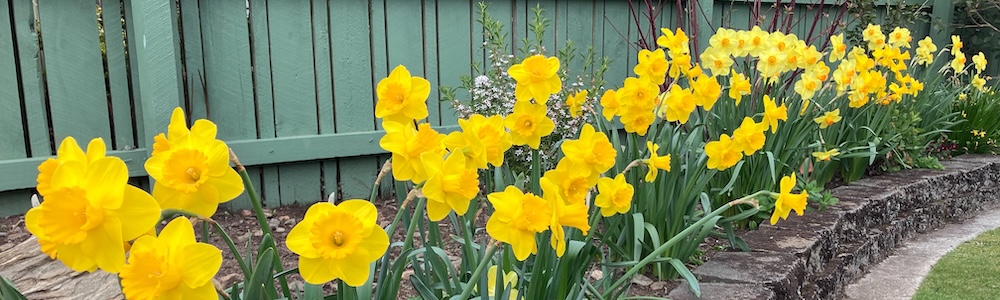
I've included some photos of white daffodils already growing in my garden. I no longer remember the names of these varieties, but they've given me a starting point for what I hope will become a much larger collection over the coming years.

When spring bulb pre-orders opened on the NZ Bulbs and Bulbs Direct websites this past summer, I bought the following white narcissus varieties for my garden:
- Annalise
- Bridal Crown
- Cheerfulness
- Earlicheer
- Ice Follies
- Mint Julep
- Pure White
- Thalia
- Watch Up
Together they represent a mix of single and double flowers, pure white and cream-toned varieties, a range of sizes, and varying flowering forms. I'm looking forward to watching them grow over the coming months, observing their characteristics, and discovering which ones become my favourites.
With the daffodils chosen and delivered to my doorstep, it was finally time to plant them. Wanting to compare the different varieties side by side as they emerged and flowered, I planted them together in one of the empty dahlia seedling beds in early winter (yes, I was a little late!).


I planted the bulbs according to their mature height, with the tallest varieties at the back of the bed and the shortest at the front. My trusty bulb planter made quick work of digging the planting holes before each bulb was safely tucked into place.


It's now been about a month since I planted the daffodil bulbs, and some of the varieties have already begun emerging through the soil. It's always exciting to see those first green shoots appear, knowing the flowers won't be too far behind.

I'm looking forward to discovering the unique character of each white daffodil variety, seeing how they perform in my garden, and finding out whether my own experience supports Erin's observations as my white daffodil project unfolds over this gardening season.
Have a wonderful day
Julie-Ann
If you'd like to continue the conversation, you can find me on Instagram, Mastodon, Bluesky, and Facebook.
I'd love to hear if you grow white daffodils, or if you have a favourite variety that I should add to my collection in the future.
The Sweet Pea Project: Sowing the Seeds for a New Gardening Year
Hello friends,
Although the garden may seem quiet in the middle of winter, now is the time when preparation for the next growing season begins. For me, July is peak sweet pea sowing season, and I always save this job for cold, rainy days when it's too wet to work outside. Sweet peas prefer germinating in cooler temperatures, so sowing them in winter gives them the best chance of producing armfuls of fragrant blooms in late spring and early summer.
Sweet peas have always been a favourite of mine ever since childhood, when my grandfather used to grow them in his back garden. Their fragrance would drift through the backyard during the warmer months, and ever since then I've dreamed of having a dedicated sweet pea patch of my very own.
Until recently though, I simply didn't have the space in my garden to do this. That changed last summer when our old lilac tree finally succumbed to the damage it suffered during last year's big spring storm. Once the tree had been removed, a section of the backyard fence opened up to full sun from early morning until late afternoon, creating the perfect place for a sweet pea patch. With the space finally available, it seems like now is the perfect time to turn a long-held dream into a reality. So let's begin, and I'll show you the little patch of garden where this year's sweet pea project will take shape.
My sweet pea patch will run along the western side of our backyard, beside the boundary fence that used to sit in permanent shade beneath the old lilac tree. This section of fence line is approximately four metres long, providing plenty of room for this new project. My plan is to install metal mesh along the fence, and let the sweet peas scramble their way upward, hopefully filling the space with flowers and fragrance throughout spring and summer.
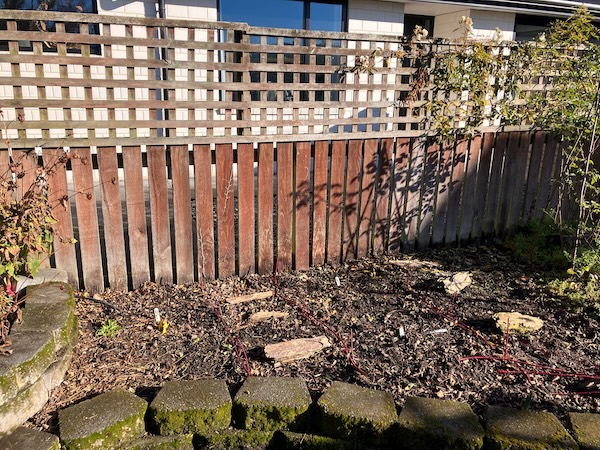
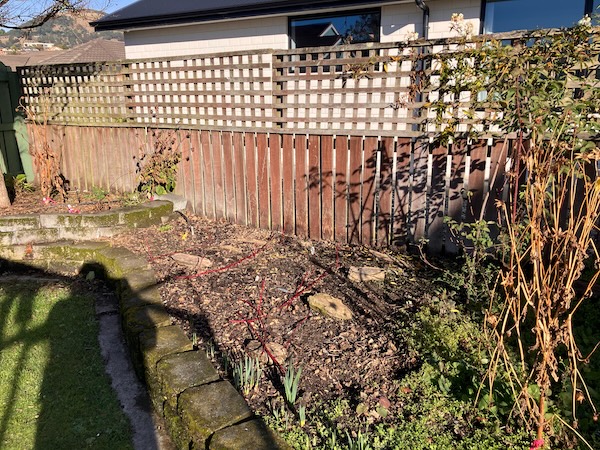
With the growing area planned, it was finally time to pull out my sweet pea seed collection, and decide which varieties to grow. Over the years I've accumulated a large collection of sweet pea seed, so narrowing down the choices was no easy task. In the end, I settled on a collection of mostly Keith Hammett varieties, along with a few other favourites, and some homegrown seed collected from my own garden, all selected for their beautiful colours and sweet fragrance.
The varieties I chose and sowed were:
- 23 × Hammett Blue Butterflies
- 15 × Hammett Blue Shift
- 10 × Hammett Blue Reflections
- 15 × Hammett Brilliant Fragrance
- 10 × Hammett Burlesque
- 15 × Hammett's Surprise
- 2 × Hammett Licorice
- 6 × Hammett NZ Gardener
- 10 × Hammett Somewhere
- 15 × Hammett Sapphire
- 9 × Hammett Triple G
- 10 × Hammett Turquoise Lagoon
- 25 × Homegrown seeds from my garden
- 10 × Nimbus
- 10 × Swan Lake
- 10 × Sweet Pea Original
In total, I sowed 195 sweet pea seeds, which should provide a beautiful mixture of blues, purples, smoky pinks, bi-colours, and wonderfully fragrant blooms over the coming spring and summer.
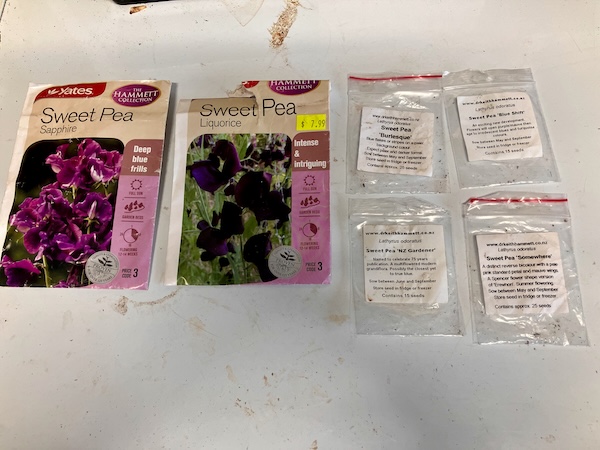
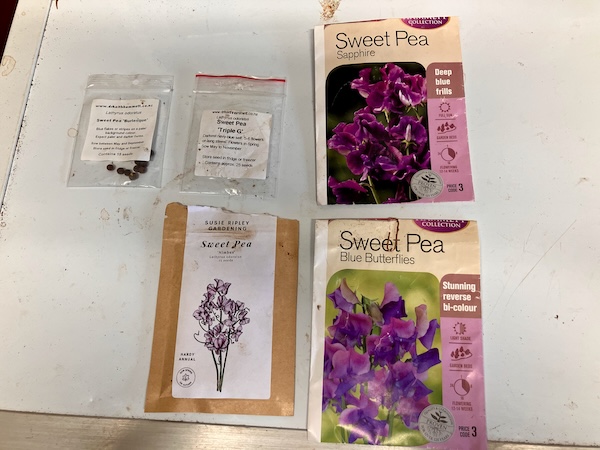
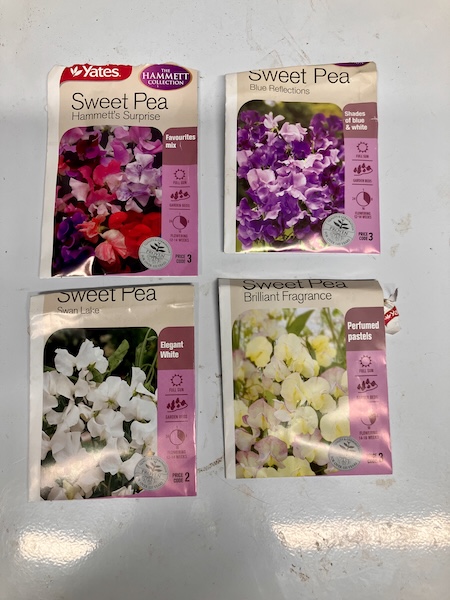
Although 195 sweet pea seeds may seem like a lot, some of the seed packets were older, and experience has taught me that not every seed will germinate. The seeds were sown into seed-raising mix that had been sieved to remove large stones and wood chips, before being placed into four 50-cell seed trays.
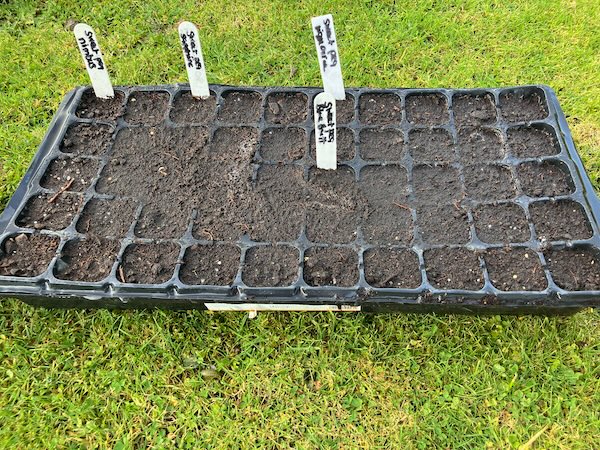
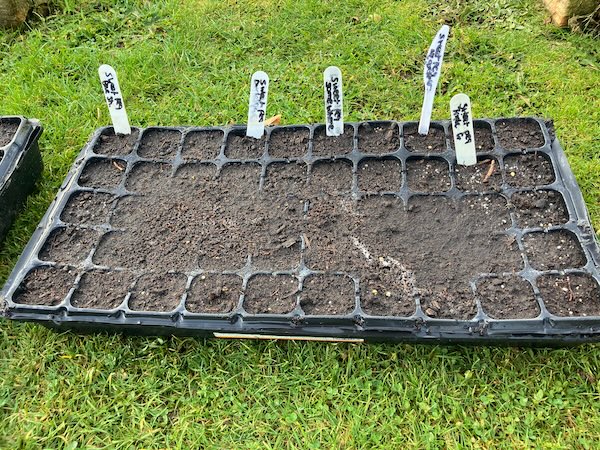
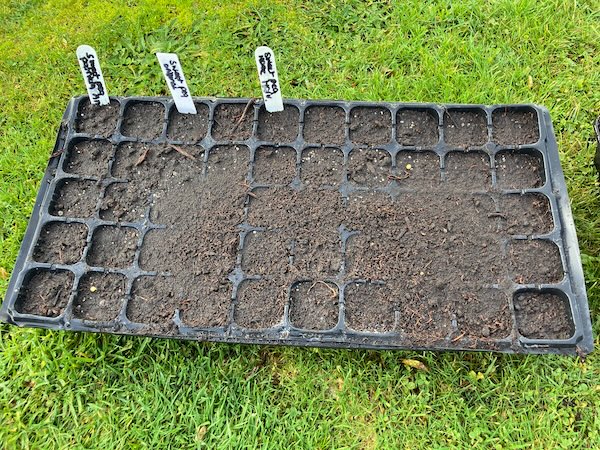
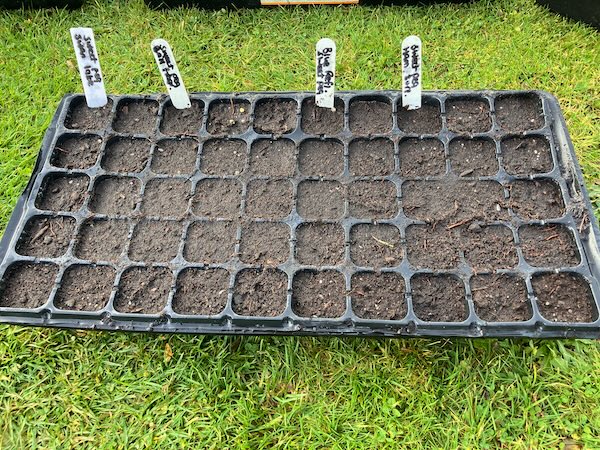
After sowing, the seed trays were watered well, and placed onto shelving in my glasshouse. The shelving is covered with some shade cloth, which helps protect the emerging seedlings from strong sunlight, and it also prevents them from drying out too quickly.
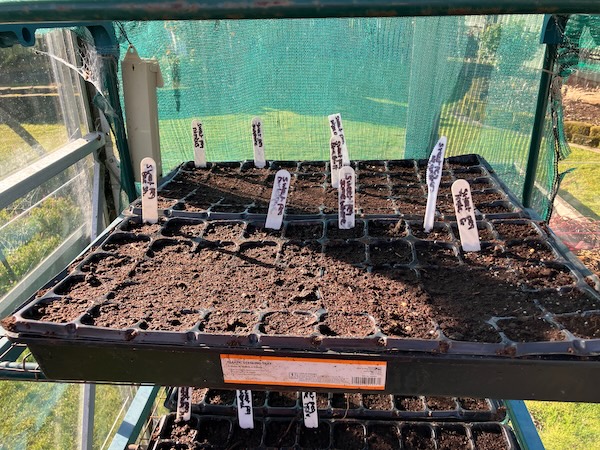
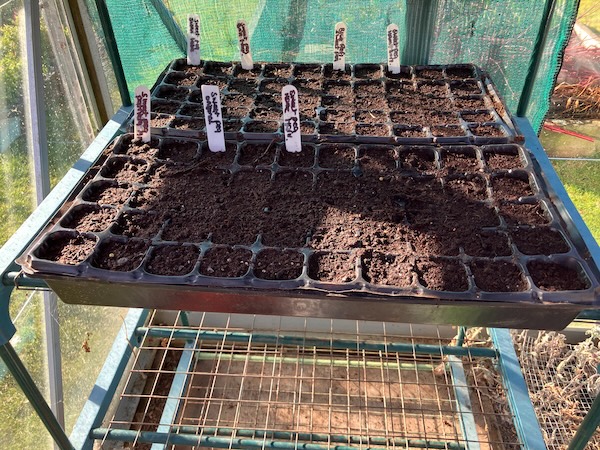
There is always something so hopeful about seed sowing. In the depths of winter, seeds are a reminder that spring is never too far away, and that every gardening year begins with the promise of new life.
For now, the sweet peas are sown, and the waiting begins...
Have a wonderful day
Julie-Ann
If you'd like to continue the conversation, you can find me on Instagram, Mastodon, Bluesky, and Facebook.
I'd love to hear what you're growing, making, or enjoying in your own garden.
Social Media



Archives