
From A Lilac Tree to More Dahlias in the Backyard
Hello friends,
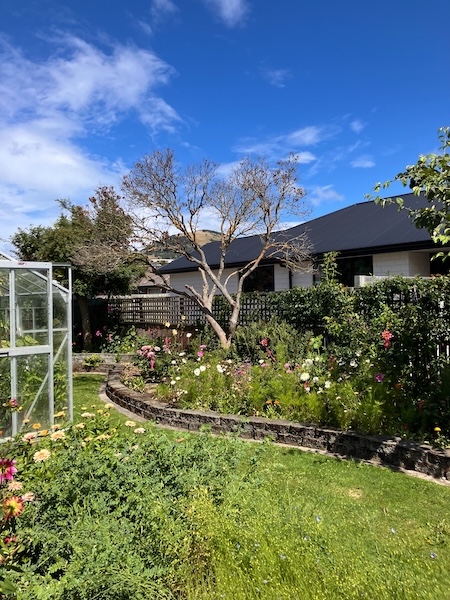
Over the winter months I've been busy in the back left-hand side of our garden, in the area where our lilac tree used to stand. After the tree died after the big spring storm last year, and once we'd taken it down, it gave me an opportunity to rethink and rearrange that side of the garden.
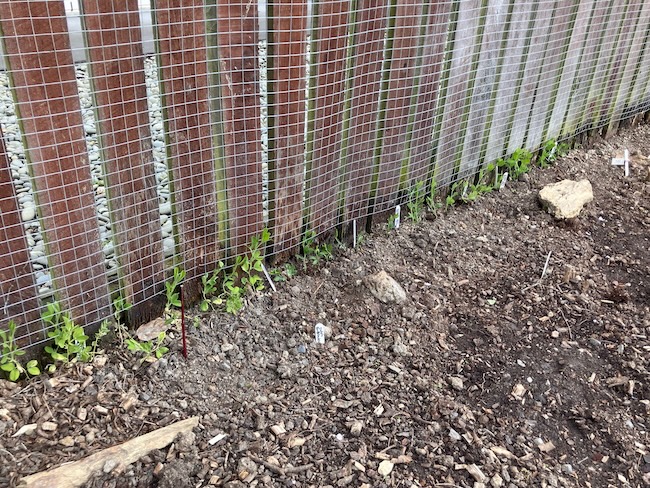
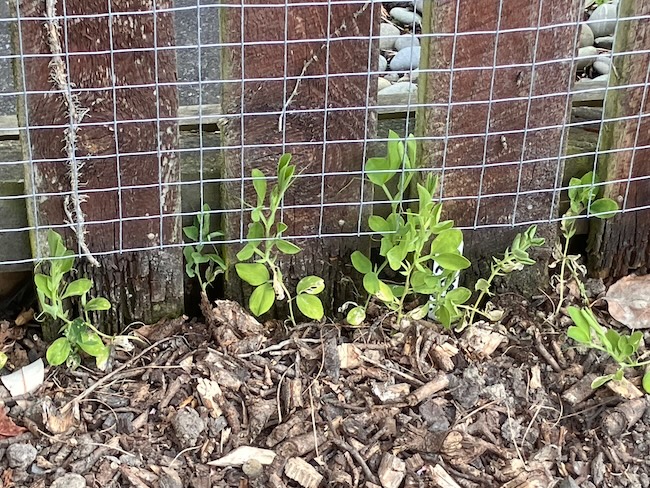
The first thing I did was set up some space along the fence line for growing sweet peas, which is already underway. The sweet peas are now growing happily up the wire netting.
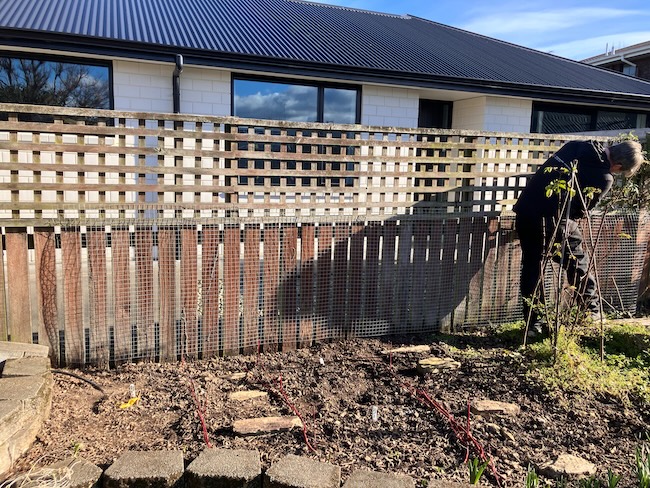
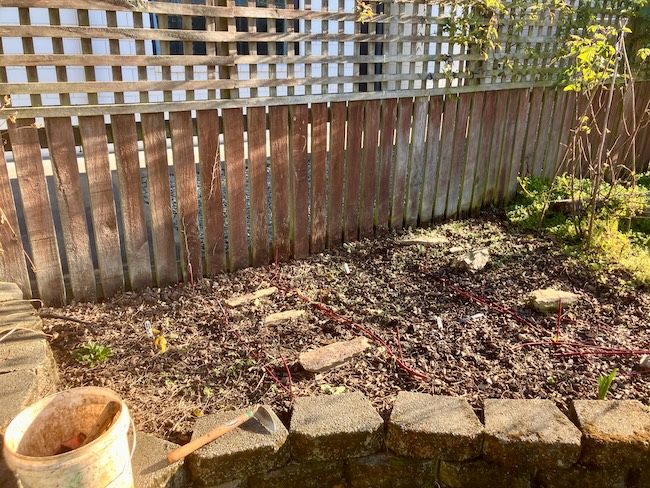
As for the rest of the space, there was now a large area that could fit many more dahlias than I currently had. I decided to lay it out in rows so I could fit in as many as possible. I've become obsessed with anemone and collarette dahlias recently, so I wanted to add more of these to my collection, and also include them in my fledgling breeding program.
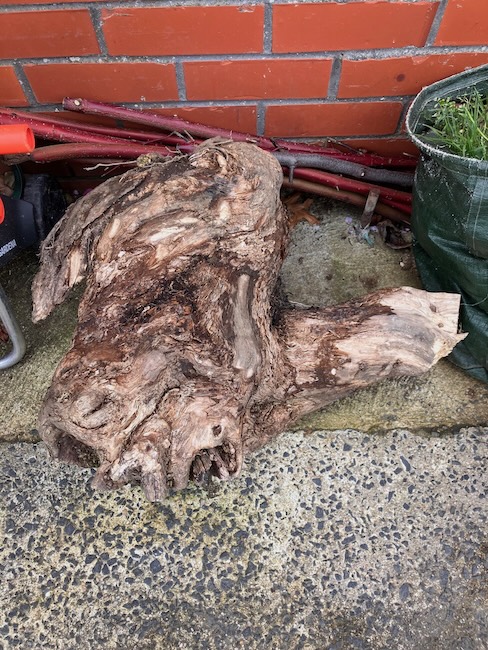
The first step was to dig out the lilac tree stump, and it turned out to be much easier than we'd expected. Hubby got the job done in less than half an hour, as the stump was completely rotten. I suspect this may have been the main reason why the lilac tree may have died in the first place...
The next step was to transplant my two damask rose bushes to the back fence line of our backyard. Last year, I had grown a dahlia between my dogwood and feijoa bushes, but it had struggled to survive in that position. Although the area gets sun for most of the day, the soil isn't in the best condition. My two damask roses (Duc De Cambridge and Isapahan), on the other hand, are very hardy, and don't mind what soil type they are in, so I thought they would be much better suited to the space, while also freeing up more room in my new dahlia area.
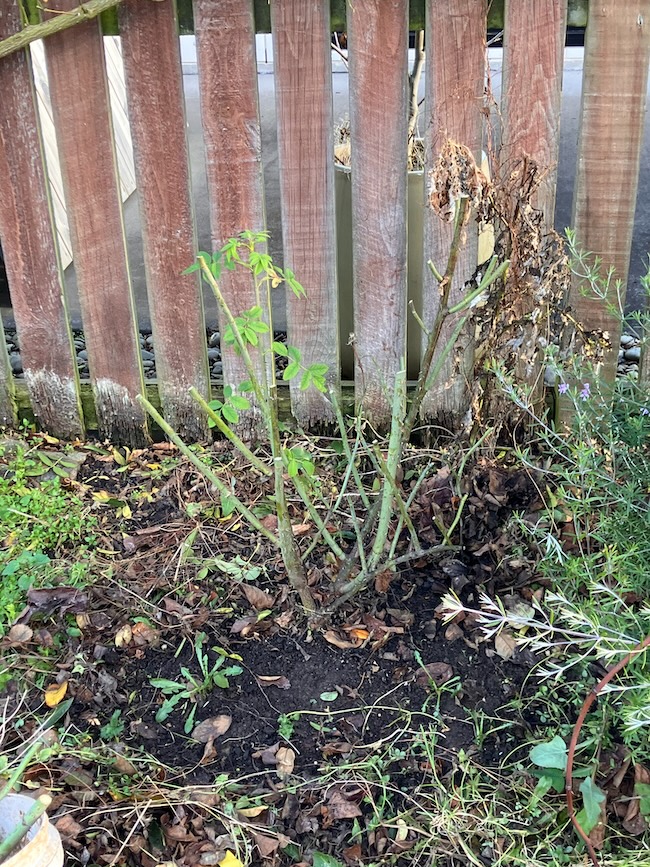
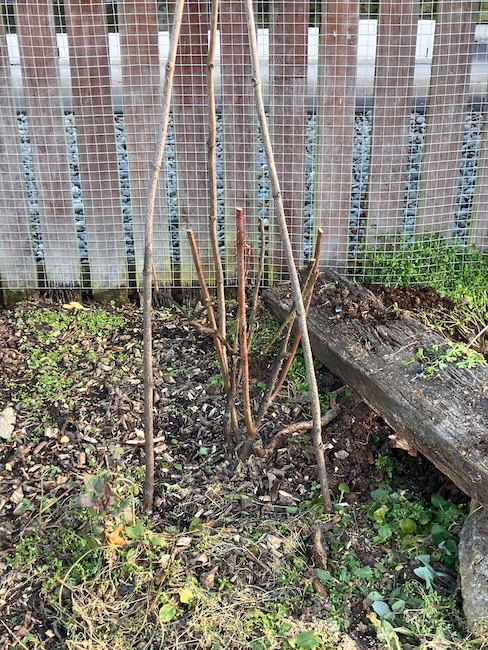
It didn't take very long to prune the damask roses back to a size more easier to transport, before carefully digging them up, while keeping as much of their root systems intact as possible. Then came the tricky part, walking them across the backyard without getting stabbed by their many sharp thorns. Once they had safely reached their new home, the roses were planted and watered in well. Now, in spring, they are very happily growing in their new position.
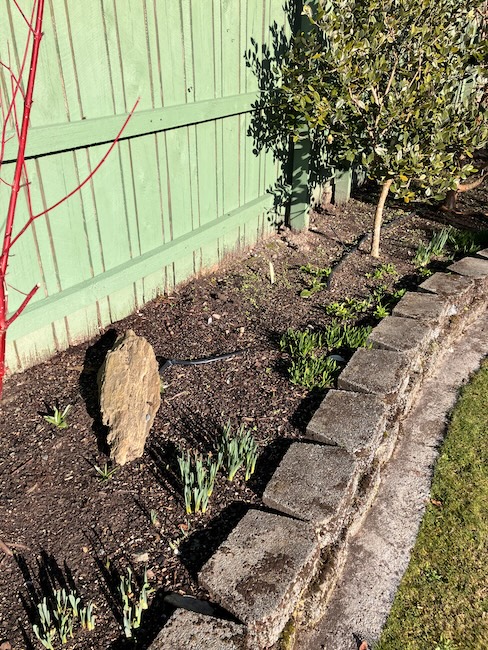
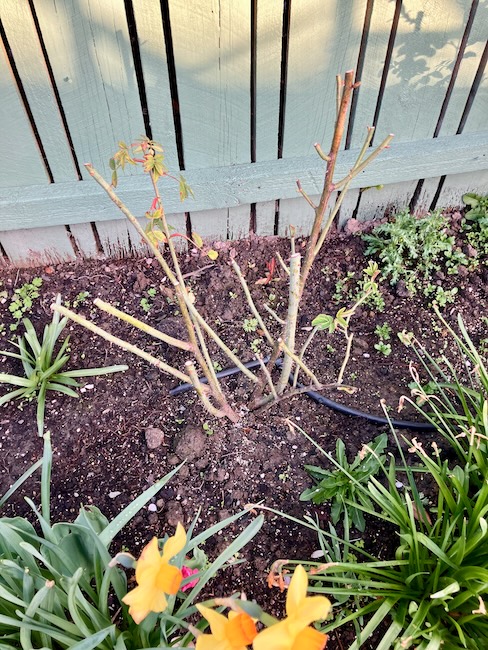
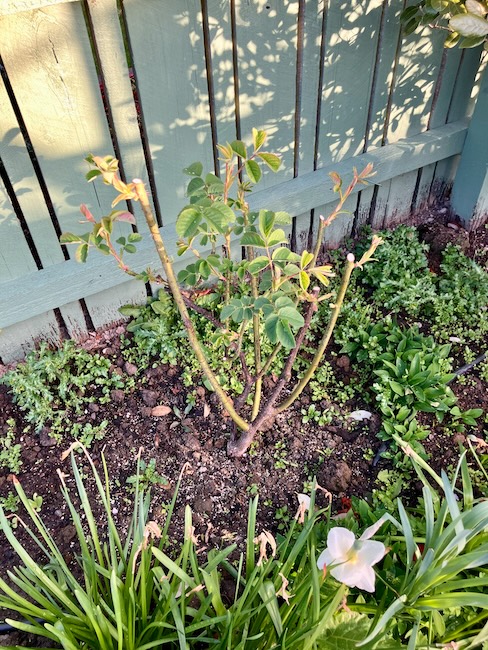
By now it was the middle of winter, and in between the frosts, rain, and a snow storm, it was time to tackle the dahlias that remained in the ground in this area. One by one, they were carefully dug up and transplanted into an empty vegetable garden bed nearby to overwinter while I prepared their new permanent home.
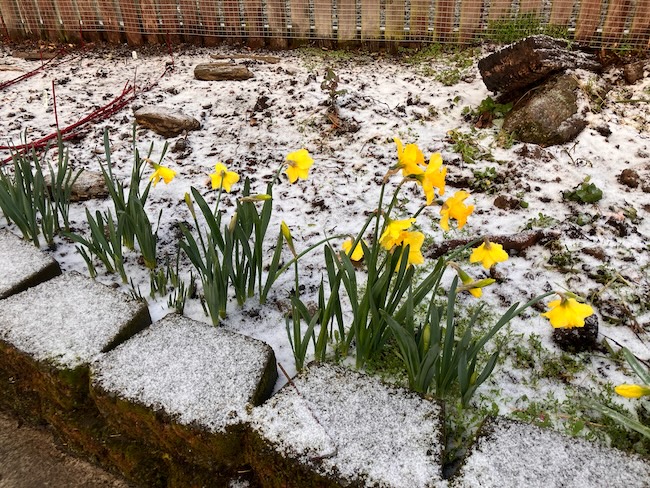
The task after this was a big one. Weeding the entire side of the garden took many weeks as I worked my way along the bed, laying out plant tags, and placing schist rocks to create paths between the rows where the dahlias would go. My plan was to plant the anemone and collarette dahlias two abreast, with the shortest varieties at the front and the tallest ones at the back.
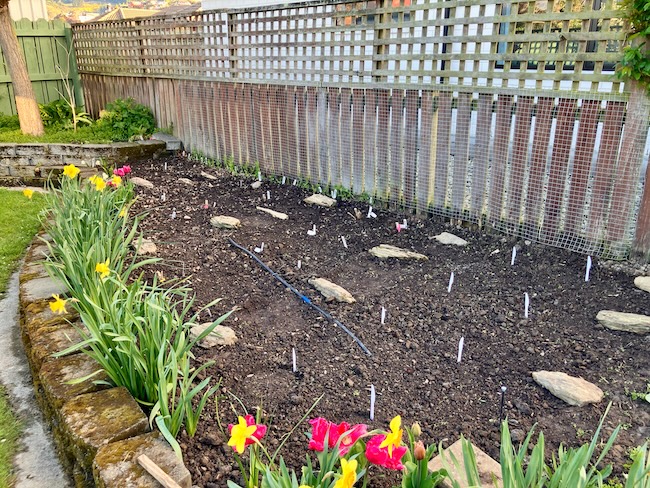
I'd really let this side of the garden go in late summer and autumn, and I was paying for it now, dealing with a large number of weeds. The weeding continued into spring, and I even had to go back over some of the areas I'd already cleared as new weeds began popping up.
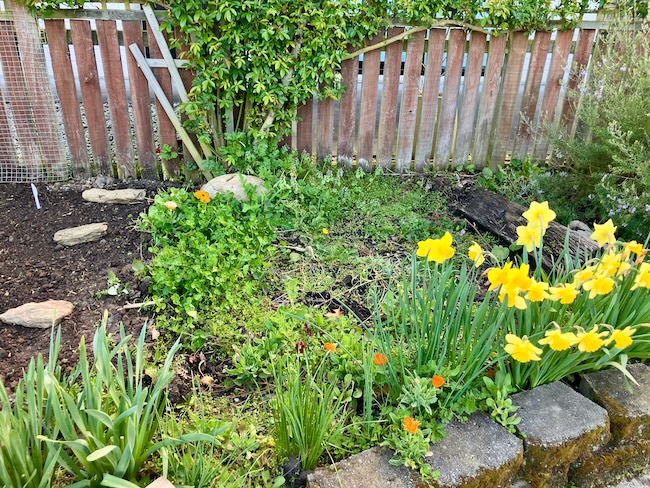
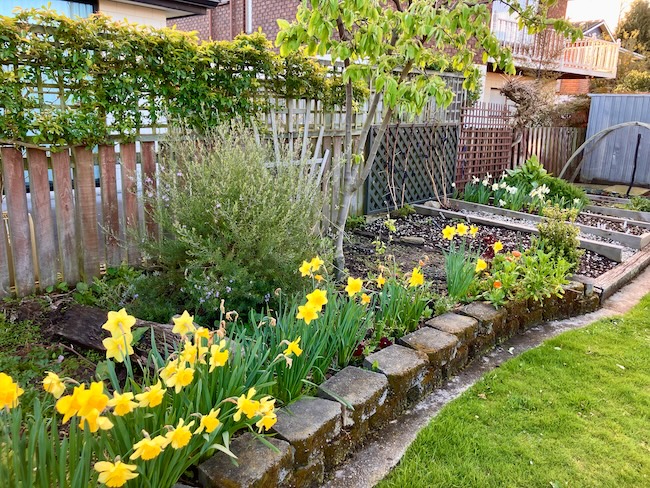
But finally, after many weeks of planning and weeding the space, my new dahlia bed is now ready. There's now a large, clear area waiting for all my anemone and collarette variety dahlias, along with a bunch of new ones. It has been a much bigger job than I expected, but I'm really pleased with how the space has come together.
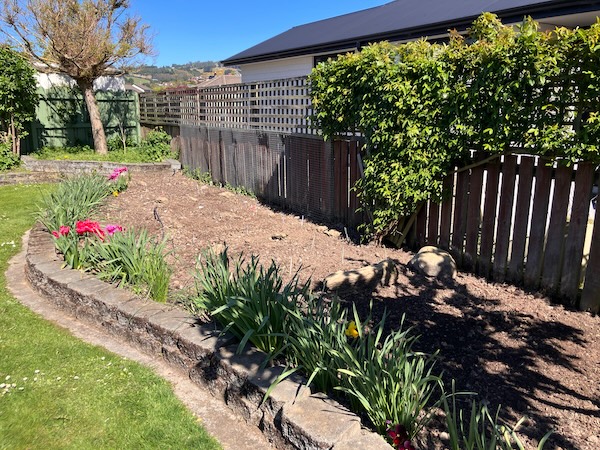
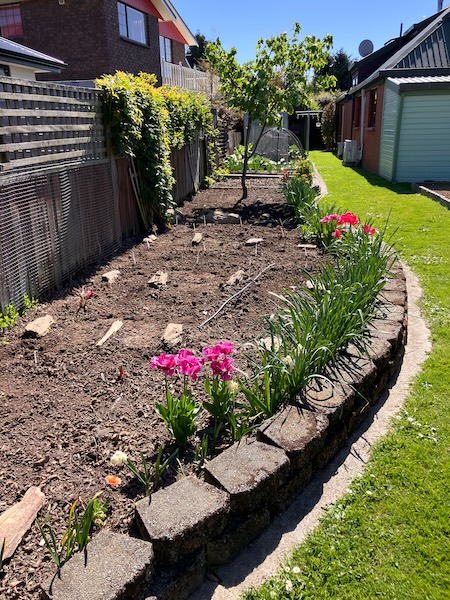
And my new dahlias have already arrived, and are in storage in our garage. I'm impatiently waiting to plant them, along with all my other anemone and collarette dahlia varieties. After all those months of planning and weeding, I'm looking forward to seeing this space finally filled with dahlias this summer.
Have a wonderful day,
Julie-Ann
If you'd like to continue the conversation, you can find me on Instagram, Mastodon, Bluesky, and Facebook.
Social Media



Archives