
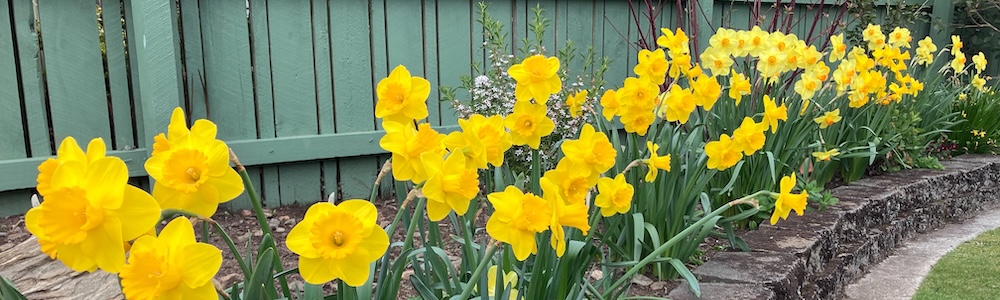
New Dahlia Varieties For 2026
Hello friends,
Today I wanted to share with you the dahlia varieties I purchased this past autumn and winter. As you know, I'm completely obsessed with dahlias, and I've even started breeding my own dahlia varieties. This year I decided to only buy anemone and collarette varieties, as they're my favourite types to grow.
But as always, life happened, and I bought a few other varieties as well. They include some wish list varieties, a few replacements for dahlias that rotted last year, and even some varieties I've purchased for an experiment I want to try this summer.
So, here is the full list of dahlias I've added to my collection this year.
First up we have the anemone dahlia varieties:
- Antonia Prebble (NZ)
- Blue Bayou
- Inca
- Jive
- Josie
- Lifestyle
- Octopus Sparkle
- Platinum Blonde (replacement)
- Poodle Skirt
- Que Sera
- Richard's Fortune
- Rural Goldfinch (NZ)
- Soulman
- The Phantom (replacement)
- Toto


There are quite a few red and purple anemone varieties included, as I don't have many of these in my garden right now.
Next, we have the collarette dahlia varieties I've bought this year:
- April Heather
- Bumble Rumble (replacement for one with gall)
- Gore Blimey
- Liquid Desire
- Pooh
- Rural Jenny (NZ)
- Rural Lady (NZ)
- Sarah Raven
- Teesbrook Audrey

Most of these varieties are red collarettes that I don't currently have in my garden. The dahlia I'm most excited about growing this year is April Heather. Last year her tubers were selling for over $350 a tuber, and this year I did a targeted strike at an online store pre-order, and bought a tuber for $50. She hasn't arrived yet, but I'm eagerly awaiting to see her flower in my garden this summer.
I also bought three miniature ball dahlia varieties for my garden, which I'll be using for an experiment in my garden for this summer.
- Koko Puff
- Rocco
- Small World

- Daisy Duke
- Night Silence
- Sharnis Suprise

Night Silence has been on my wish list for years, but I always seemed to miss out whenever Mount Mera held a sale. Daisy Duke came into my collection as a replacement for an anemone dahlia that one of my suppliers couldn't provide this spring. Fortunately, she's in a colour range I love, so I was happy to accept the substitution.
Sharni's Surprise was a last-minute purchase from our local garden centre. Released by Fiesta Bulbs this spring, she's an unusual ombré dahlia, and I haven't been able to find any information about this variety online. The current theory among New Zealand dahlia growers is that she may be a sport or mutation of another variety that Fiesta Bulbs grows each year, although this hasn't been confirmed yet.
And finally, I bought one dinner-plate dahlia, 'Café au Lait'. Every year I've tried growing her, she has rotted in my garden, but I'm giving her one last chance. I love her beautiful creamy shades and would really like to add her to the other 'Café au Lait' varieties growing in my garden. Fingers crossed I have better luck this time.

I'm really looking forward to growing all these new dahlias this season, and especially the anemone and collarette varieties that I've added to my collection. I'm also excited to see how the new additions perform in the garden and whether any of them turn out to be promising candidates for my dahlia breeding program.
Now I just need to get them all planted and wait for summer to see them in flower...
Have a wonderful day,
Julie-Ann
If you'd like to continue the conversation, you can find me on Instagram, Mastodon, Bluesky, and Facebook.
Digging Up, Dividing, and Storing My Seedling Dahlias
Hello friends,
With winter fast approaching, it was finally time to dig up the seedling dahlias from my dahlia breeding project. Back in spring, I planted them wherever I could squeeze them into the garden, but now that the growing season has come to an end, it was time to lift the tubers, divide them, and store them safely away over winter. The last thing I wanted was for any of my seedling dahlias to rot over winter. Each one is unique, so I was keen to lift and store them carefully to give them the best chance of growing again next season.
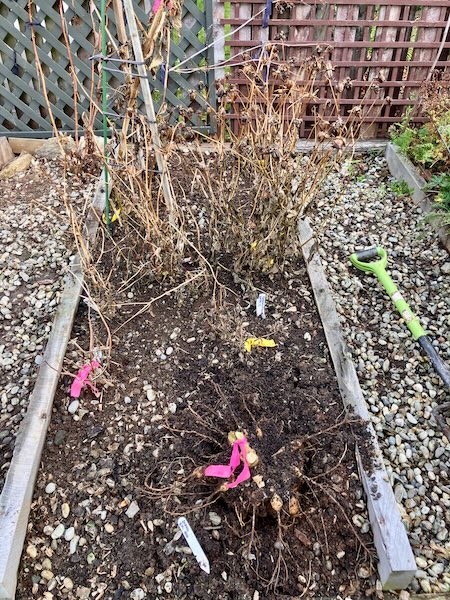
The first step was to get out my trusty garden fork and carefully lift each dahlia from the garden. To avoid damaging the tubers, I inserted the fork about 50 cm away from the base of the plant and gently levered the soil upwards. Working my way around the clump a little at a time, I gradually loosened the soil until the tubers lifted free.
Once each tuber had been lifted, I placed it into its own plastic tray along with two labels to ensure the different seedling dahlias didn't get mixed up. Having a backup label also gave me a little extra peace of mind in case one was accidentally lost during the cleaning and dividing process.
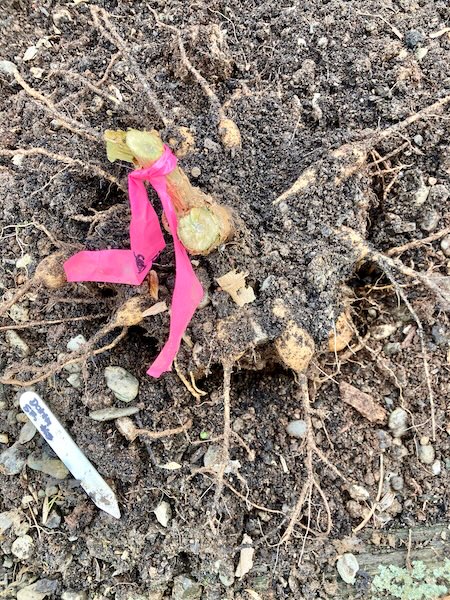
The next step was to wash the excess soil from the dahlia tubers. To keep the mess to a minimum, I placed each tuber into an empty garden bed and used the hose to gently wash away the soil. Once clean, the tubers were returned to their labelled trays and left to dry in the sun before the next stage of the process.
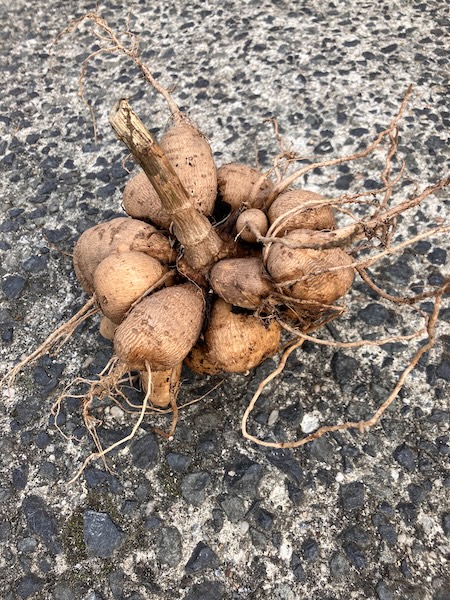
With the tubers dry, it was time to divide them. The first step was to remove the old mother tuber, along with the long, thin feeder roots attached to the new tubers. This made it much easier to see the individual tubers and identify where they could be carefully divided.
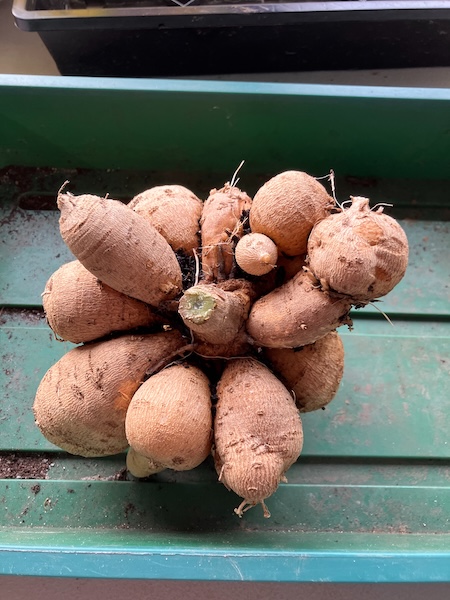
Using a combination of secateurs, scissors, and a few other garden tools, I carefully broke each clump into smaller, more manageable sections. From there, I looked for the dahlia eyes on the crown and divided each section into individual tubers, making sure each division had at least one healthy eye attached. Once divided, I left the tubers to dry overnight. This allows the freshly cut surfaces to callus over, helping to reduce the risk of rot during winter storage.
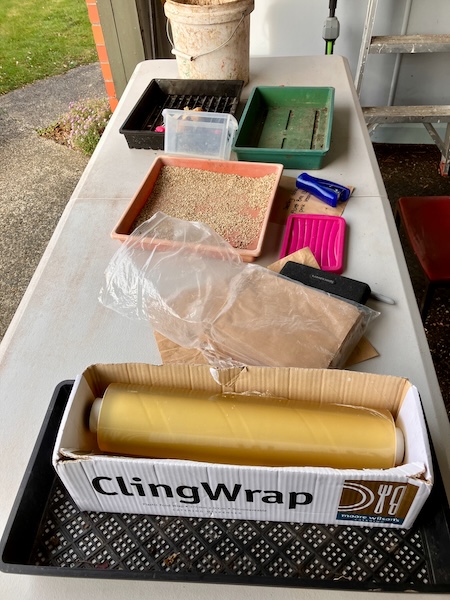
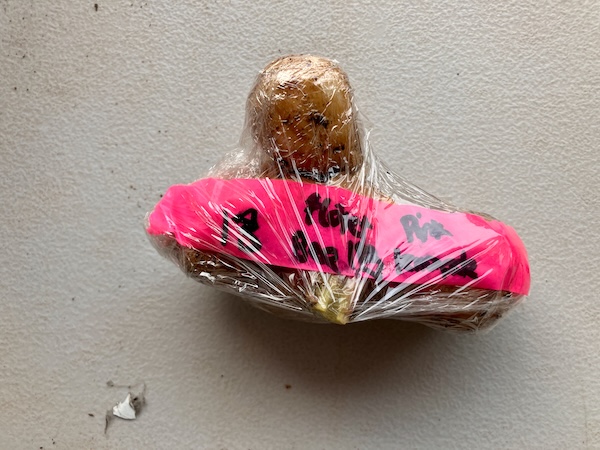
The following day, it was finally time to put the dahlia tubers away for winter. Each tuber division was labelled twice, with one label attached to the outside and a second placed inside as a backup, giving me peace of mind that none of the seedlings would lose their identity over the coming months. This year I decided to trial two different storage methods that I learnt during the Floret Flower Farm Flower Farming Workshop earlier this year. Some of the tubers were placed into paper bags filled with vermiculite, while others were individually wrapped in plastic wrap. I was curious to see how the two methods would compare after winter.
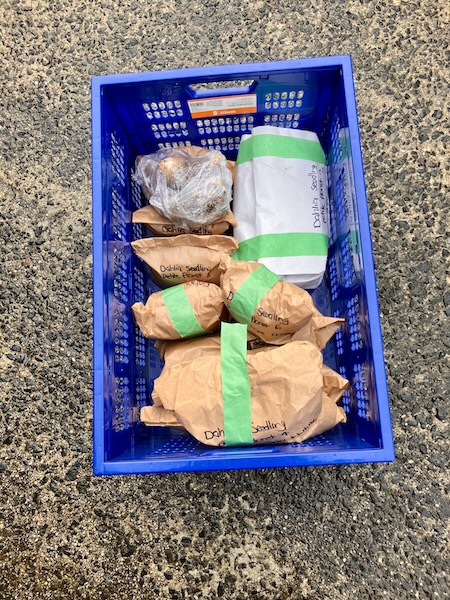
To give each method the best chance of success, I stored them in two different locations in our garage. We also have a temperature sensor in the garage, allowing me to keep an eye on the conditions over winter and make sure the tubers don't get too cold. It will be interesting to compare the results in spring and see which storage method worked best.
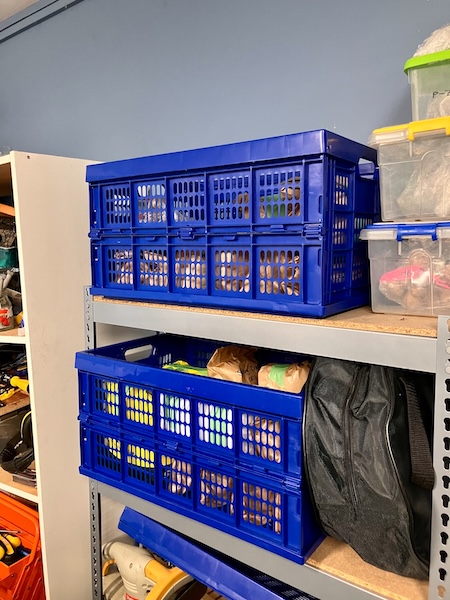
With the tubers now safely tucked away for winter, this year's dahlia breeding season has come to an end. Although it always feels a little strange lifting the plants just as they've finished growing, there's something exciting about knowing that each carefully labelled tuber holds the promise of next season's flowers.
Now all that's left to do is keep an eye on them over the coming months and wait for spring to arrive. I'm already looking forward to planting them out again and discovering how they perform in their second season.
Have a wonderful day,
Julie-Ann
Saving Dahlia and Zinnia Seeds for Next Season
Hello friends,
Over late summer and early autumn, I spent many happy hours collecting seeds from the dahlias in my garden, and from the Floret zinnia varieties growing in my zinnia patch.
This year, my focus was on saving seeds from as many collarette and anemone dahlias as possible, along with seeds from some of my favourite seedling dahlias from this season. There's always something hopeful about saving dahlia seeds. Unlike tubers, the seedlings won't grow true to their parents, and that's part of the magic. Every seed has the potential to produce something completely new, making each growing season full of anticipation and surprises.
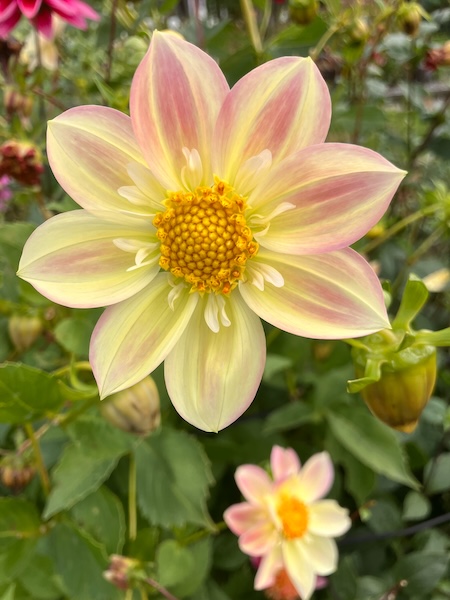
The process of saving dahlia seeds takes a little time and patience. Once a flower has finished and the petals have fallen, the waiting begins. Not every flower produces a good seed head, so I watch carefully for those that develop into plump, full seed heads.
Once I find one, I mark it with a piece of flagging tape and leave it on the plant to mature. Depending on the weather, this can take anywhere from a couple of weeks to a month. As the seed head ripens, it gradually turns a mid to dark brown colour, becomes dry and crunchy to the touch, and the outer sepals begin to pull back, revealing the inner parts of the seed head.
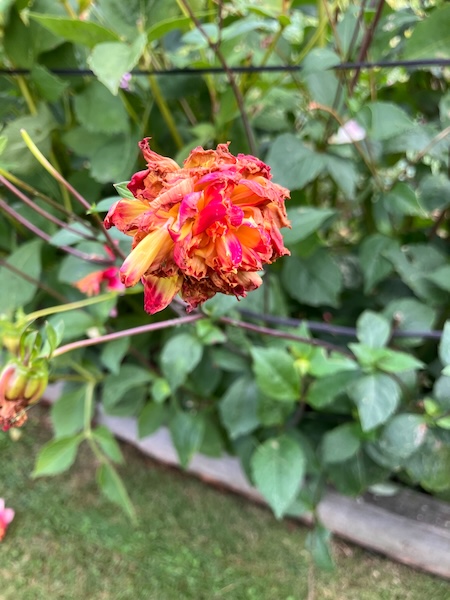
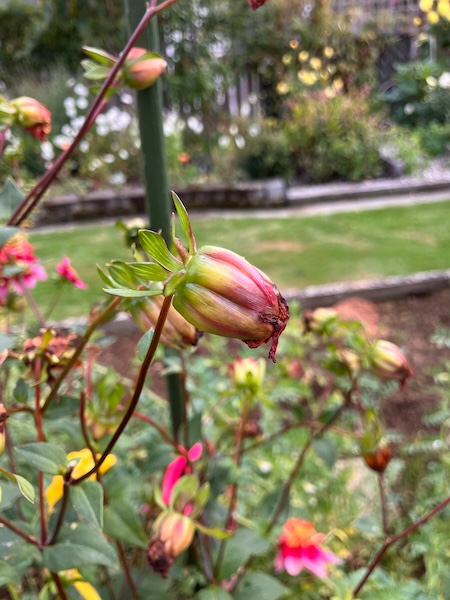
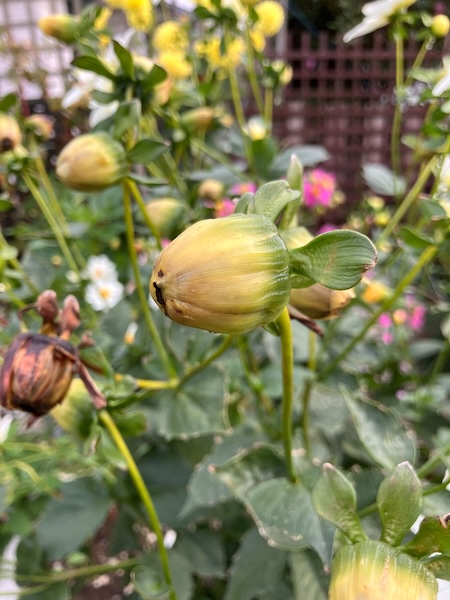
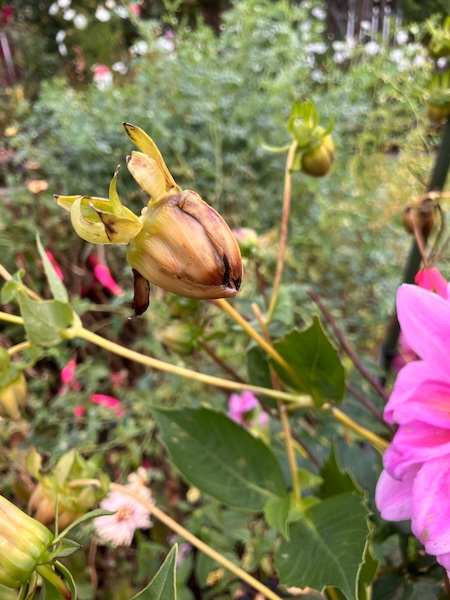
At this stage, I remove the seed heads from the dahlia plant and place them in an open container labelled with the variety name. I then gently break up the seed heads by hand to increase the airflow around the seeds. As the seed head falls apart, the dahlia seeds begin to separate from the chaff, and I leave everything together in the container to dry for a couple of weeks.
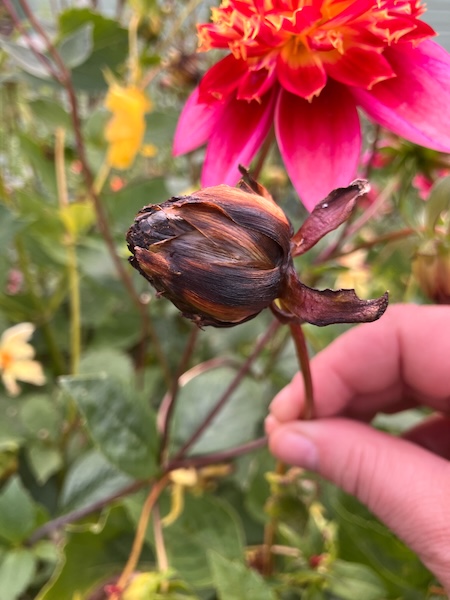
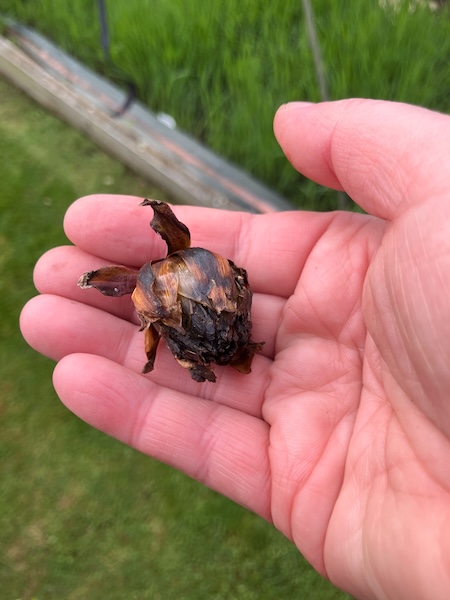
Once the seed heads are completely dry, it's time to separate the dahlia seeds from the chaff. Fortunately, the chaff is both larger and lighter than the seeds, which makes the job a little easier.
There are a number of ways to do this. One method is simply to shake the container, allowing the heavier seeds to settle to the bottom while the chaff sits on top. Another option is to winnow the crushed seed heads on a windy day, or in front of a fan. The heavier seeds drop into a waiting container, while the lighter chaff blows away. A third method is to use a soil sieve, which screens out the larger pieces of chaff while allowing the seeds to fall through.
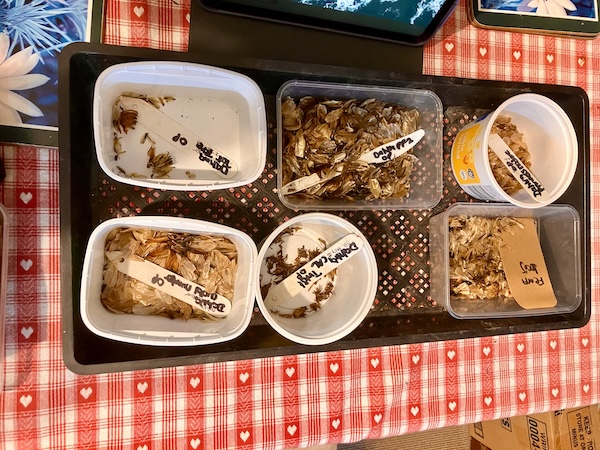
Most of the time I use the first method, as I've found that viable dahlia seeds can sometimes remain attached to the chaff. If I wasn't paying attention, it would be all too easy to throw away perfectly good seeds.
Before I begin, I make sure the seed heads are crushed up as much as possible. I then gently shake the container from side to side, allowing the heavier seeds to settle to the bottom while the chaff rises to the top. As I remove the chaff, I quickly check it for any viable seeds that are still attached and carefully pry them off by hand.
It takes a little extra time, but I'd rather spend a few extra minutes cleaning the seeds than accidentally lose some future potential favourite dahlia varieties.
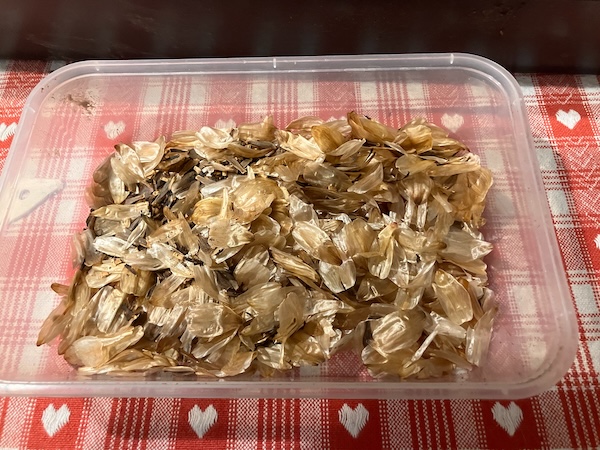
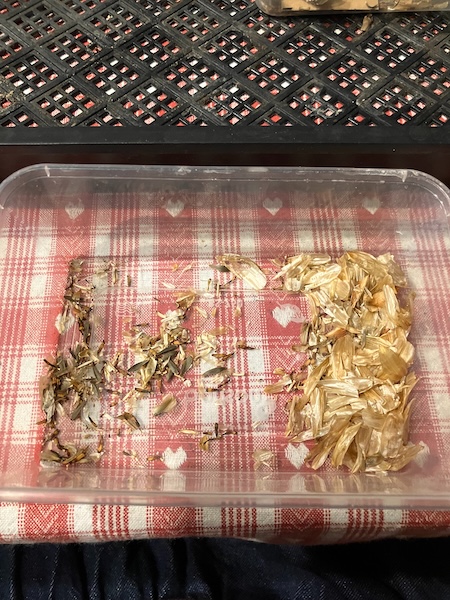
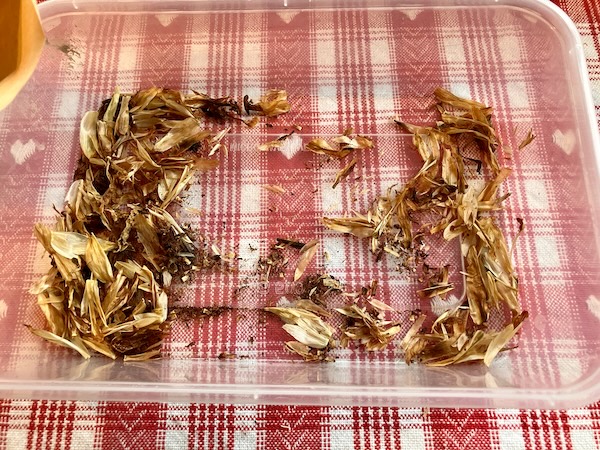
Once all of this is done, I pop the dahlia seeds into labelled paper seed envelopes. I like to include the dahlia variety, the flower type, whether the seed was open or closed pollinated, the pollen parent (if I know it), and the date the seed was collected.
With everything labelled and safely stored away, the seeds are tucked away until spring, when the whole process begins again. One of the things I love most about growing dahlias from seed is that each seed holds the possibility of something completely new, and I can't help but wonder what surprises next season will bring.
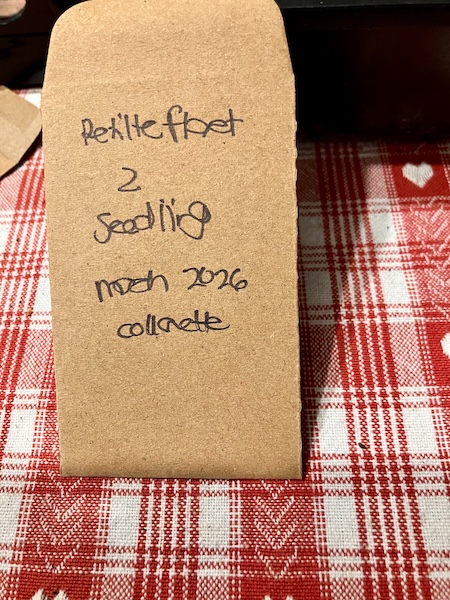
My approach with the Floret zinnias in my zinnia patch (Precious Metals, Unicorn and Blush) was a little different. Rather than selecting individual plants, my aim was simply to collect as many viable seeds as possible from across the patch.
Because Floret zinnia seeds were only available in New Zealand for one season in 2024, I have no way of purchasing more seed. If I want these beautiful varieties to remain part of my summer garden, seed saving is really my only option.
Thankfully, zinnias are generous plants, and with a little effort I hope to carry these favourites forward for many summers to come.
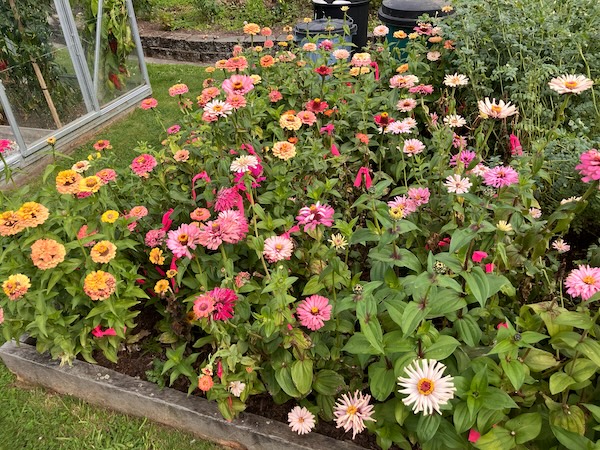
Last spring, I sowed all of the remaining Floret zinnia seeds I had in storage and grew them on through the season. By late January the first flowers were appearing, and I began saving seed in February.
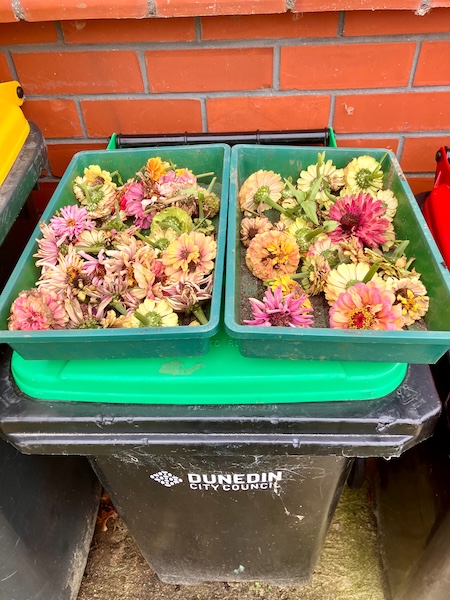
Fortunately, many of the plants set seed well, and before long I had collected trays of mature brown seed heads. Then, in April, just before our first decent frost, I harvested as many flower heads that had begun setting seed as possible, hoping that some of them would continue to mature and provide a few extra seeds as well.
With Floret zinnias no longer available, I was keen to make the most of every opportunity to save seed and carry these beautiful varieties forward into future summers.
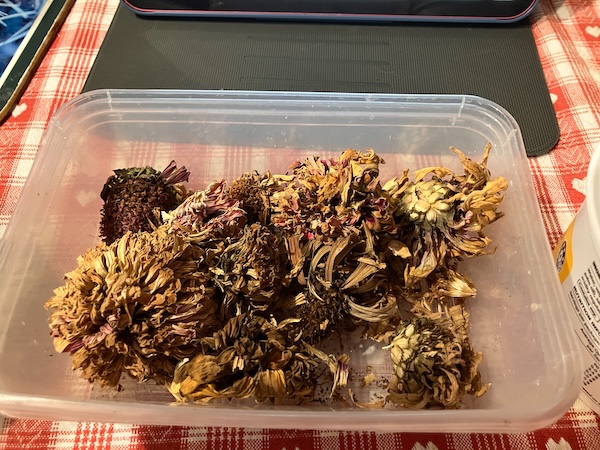
The process for collecting zinnia seeds is pretty much the same as with the dahlia seeds. I allow the seed heads to dry out completely before gently crushing them by hand. The seeds naturally fall to the bottom, and I use the same shaking method to separate them from the chaff.
One of the interesting things about zinnias is that they produce two different types of seeds. Seeds from the ray flowers are larger and rounder in shape, while the seeds from the disk flowers are much smaller and narrower. Some growers believe that the larger ray flower seeds are self-pollinated, while the smaller disk flower seeds are more open-pollinated, producing different flowers in the next generation. I haven't found any definitive evidence for this, though.
As I've collected both seed types, it would be easy enough to grow them separately and see what happens. Perhaps that's a future Crafty Gardener project waiting to happen...but that's a story for another growing season.
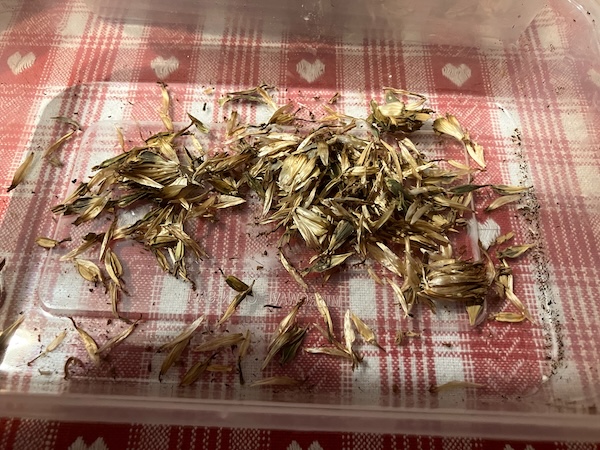
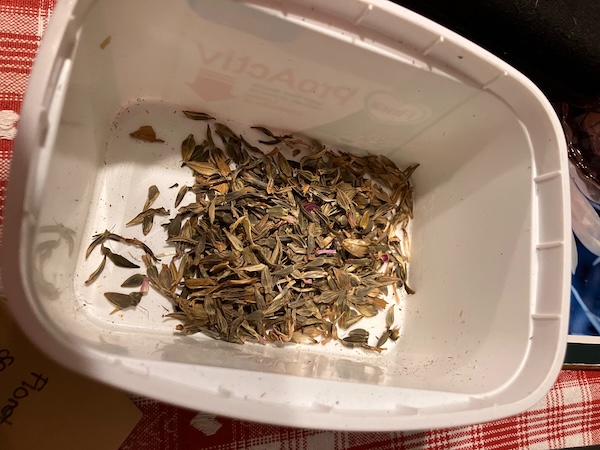
Overall, I managed to harvest over half a margarine container full of Floret zinnia seeds. They are now safely stored away, waiting patiently for spring and another season in the garden.
Both dahlia and zinnia seed saving have taken up a lot of my time throughout autumn and now into early winter, but I have many seed packets safely stored away ready for sowing in spring.
Winter has arrived, and although it is often thought of as a quieter time in the garden, I know there is still much to do. There is tidying and weeding to tackle, dahlia tubers to dig up, and a new back garden project waiting in the wings.
This will be my last blog post for the next fortnight. My husband and I have a medieval-themed wedding to attend (which means we finally get to wear our new cloaks!), and afterwards we're taking a short holiday to relax after a busy growing season.
So, until then, I'll wish you all a happy winter solstice. I'll see you again in July, at the beginning of a new gardening year, and the start of another season of stories.
Have a wonderful day
Julie-Ann
Want to discuss my post? Feel free to chat with me on Instagram or Mastodon or Bluesky, and now also Facebook.
My Favorite Dahlia Varieties Of This Past Summer
Hello friends,
Today I thought I'd share with you my ten favorite named dahlia varieties of the 2025/2026 growing season. This list is in no particular order, but no doubt you'll probably see a pattern emerging...
First up we have the Polka variety, which is an anemone dahlia with white and cranberry outer leaves, and golden fluffy inner leaves. Honesty, she is probably my new favorite dahlia of all time. Her colouring is just so unusual and happy, that she'll always have a space in my garden.

Number two is my second favorite new dahlia variety of all time, Bumble Rumble, a collarette dahlia with bright pink and white and gold flowers. She's a stunner in the garden with her frilly petals, and the bumble bees do indeed rumble over her all summer long.

Dahlia variety number three is Misses Amy, another anemone dahlia, with cranberry and light pink colouring. She has a huge pincushion top which makes her another favorite of bees and butterflies in our garden.

The next variety, Mambo, is another stunning anemone dahlia in my garden. She has magenta and red and peachy toned flowers, and her inner anemone petals are very unusual, as they lie flat with serrated gold tips.

Dahlia variety number five is Dream Seeker, a collarette dahlia bred by Dr Keith Hammett in New Zealand. This bright orange dahlia also attracts bees and butterflies all summer long, and her florescent colouring brightens our front garden for months and months over summer and autumn.

Cafe Au Lait Rosé is the only dinner plate dahlia to make it into to my favorite dahlia list for the 2025/2026 season. Her flowers are huge, and the deep magenta flower petals are stunning against the green backdrop of the garden. If I were to only keep one dinner plate dahlia CAL Rosé would be the one.

Princess Nadine is another eye catching collarette dahlia I love, and her cranberry shades fading to golden yellow petals are just so pretty. She's probably my third favorite dahlia overall in the garden.

Sweet Sanne is one of the two decorative dahlias which made it onto my favorite dahlias list. Her ombré dark peach colouring is gorgeous against her dark green leaves.

Joal Kaitlyn, is another decorative dahlia which made it onto the list. She was an expensive buy for me, but she is completely worth it in my opinion. Her smoky peach/apricot colouring is just so unusual that she stands out in my front garden. This was hubby's favorite dahlia last season, and that's a big thing for him since he doesn't really care that much about plants.

And finally we have Zahra, a creamy white anemone dahlia. Her poofy flowers may be small, but they stand out against all the other brighter dahlias in the garden. She reminds me a lot of the double white daffodil varieties flowering in my garden each spring.

As you will have probably noticed by now, this list is mainly made up of anemone and collarette dahlia varieties. As the years go on, I seem to be attracted more and more to these fluffy and bright and unusual dahlia varieties.
Already in this coming year, the only dahlias I've bought in pre-sales are collarette and anemone varieties. And I've already made some space for them in the garden by digging out some dahlia varieties which no longer interest me...
Have a wonderful day
Julie-Ann
Want to discuss my post? Feel free to chat with me on Instagram or Mastodon or Bluesky, and now also Facebook.
Social Media



Archives