
Quince Tree Pruning and Natural Dyeing
Hello friends,
I was running out of time this winter to prune our quince tree, and the job needed to get done before spring came and the tree began bursting its buds. So one warm and dry winter afternoon hubby and I got out our ladder, and the numerous pruning tools necessary for the job, and got to work taming our unruly quince tree.
My first aim was to get the vertical branches under control. If they were allowed to grow much further, the quince fruit would be out of reach, even with a ladder. The tree was also beginning to cast shade over my dahlias every afternoon, which definitely wasn't an allowed option either. With the area set up for the pruning job, it was time to look at the 4 'D's of plant pruning, remove dead, damaged, diseased, and dying branches, along with branches that crossed over other branches.


It didn't take very long at all to prune our quince tree, and turning it into a much smaller and tighter shape. With that done it was time to clean up the pruned quince branches.

Not wanting to waste the quince branches, I chopped them into smaller pieces and set them aside for a natural dyeing experiment. Apple and pear branches are well known among natural dyers for producing pink and peach shades from their bark, so I was curious to see whether quince being in the same family, might produce similar results.

As yet, I haven't had a chance to try this natural dyeing experiment, but in the meantime the quince wood chips have dried nicely and are now stored away for later. Hopefully I'll get a chance to see what colours they produce before too long.
Have a wonderful day
Julie-Ann
If you'd like to continue the conversation, you can find me on Instagram, Mastodon, Bluesky, and Facebook.
Kahikatea Farm Soapwort Plant Order
Hello friends,
After failing once again to grow my own Soapwort plant from seed this year, it was time to source the plant from somewhere else.
I've been very keen for a while now to grow Soapwort so I can harvest the plant material to turn it into my own natural gentle soap solution for cleaning, and also for washing fabrics around the house. Soapwort solutions are used by museums and art galleries to clean works of art and fabrics, and a Soapwort washing solution has even been used to clean the Bayeux tapestry in the past.
After searching the internet, I found that Kahikatea Farm had Soapwort seedlings for sale, as well as some other natural dye plants on my wish list. Not wanting to waste empty space in the courier box, I put in an order for other natural dye plants including Woad, Dyer's Chamomile, White Yarrow, and Meadowsweet.

When the box arrived, and the plants were removed from their packaging safe and sound, it was time to label them with waterproof labels, and plant them out in the natural dye garden.
My Soapwort plant has lots of stems growing, so hopefully I can harvest some this growing season.

I bought a replacement Woad plant after losing the one I had growing in the garden, when I transplanted it into the new natural dyeing bed in winter this year.

I also invested in a Dyer's Chamomile plant, and I'm excited to harvest the flowers and then dye with them, so I can produce warm yellow natural dye tones this growing season.

I bought a white Yarrow plant for natural dyeing after watching Jente's YouTube Channel "Mijn Wolden". Jente is a spinner, natural dyer, and knitter from Belgium, and she is one of my favorite crafting YouTubers. If you want to have a good time watching a friendly neighbourhood chaos goblin and her fiber shenanigans (in her words), you need to follow Jente. In a recent episode on her vlog, Jente natural dyed yarn with Yarrow to produce yellow and dark green tones (using an iron bath).

And finally I bought a Meadowsweet seedling for the garden. Meadowsweet is a perennial herb that prefers to grow in damp conditions, and it has frothy clusters of cream-white flowers and a sweet scent. It has a number of natural medicinal uses, as it contains aspirin like compounds, but I really just like the plant in general, and wanted to add it to my garden.

With all these seedlings now planted into the garden, I look forward to seeing them grow, and harvest plant material from them over the summer.
Have a wonderful day
Julie-Ann
Want to discuss my post? Feel free to chat with me on Instagram or Mastodon or Bluesky, and now also Facebook.
Side Garden Project - Planning and Building Raised Garden Beds
Hello friends,
After we had taken down the old aviary/berry cage, it was time to get to work turning this space into garden beds.
The first task was to weed the area, tidy up the fence line, and move two concrete pavers. Once I pulled out all the weeds and then tidied the fence line by putting old pieces of wood up against it for protection, hubby and I maneuvered the pavers into the space next door, where I have my worm farm located.

With all that done I ordered macrocarpa sleepers from our local garden centre for creating the new garden beds. The sleepers are 1.8 m long, which was the exact size we needed for that space.

The next step was to first put up some old trellises for our raspberry bushes, so we could train them along the fence line. We then create 90 cm wide beds using the macrocarpa sleepers, with 50 cm pathways in between for easy access to the garden beds. It was a lot of hard work considering there was a lot of river pebbles in the area. We transferred those river pebbles into the pathways between the garden beds when we were finished.


Once all the beds were in place, hubby did the hard work of digging over the garden beds and adding compost. The first bed closest to the garden shed was set aside for the strawberry plants I had put into pots in the glasshouse before the aviary was removed.


The next garden bed was set aside for my natural dyeing plants including Madder, Woad, St John's Wort, Tomentil, and Lemon Sorrel, which I had squeezed in another garden bed down the side of the house. While transferring the plants I was able to harvest some of the madder roots for natural dyeing. I have enough space leftover now to put more natural dyeing plants in the other half of the garden bed this spring.


Garden beds 3 and 4 are currently empty, and they still need to have compost added, before being prepared to a fine tilth for spring.


My plan is to grow Linen and Japanese indigo plants in bed 3: I have my own homegrown flax linen seeds in storage from last year, and I bought Japanese indigo seeds from Growing Textiles last autumn with the intention to grow my own indigo plants for natural dyeing, and also for indigo seed production.


In bed 4 I want to start my own breeding experiments with dahlias. I've wanted to do my own plant breeding for ages, and I now have the space to start this. I have dahlia seeds set aside from last year's plants to do this. I'm very excited about this project and can't wait to get started in spring.
Have a wonderful day
Julie-Ann
Want to discuss my post? Feel free to chat with me on Instagram or Mastodon or Bluesky.
Transplanting my Blueberry Plants
Hello friends,
When we moved from Wellington back to Dunedin in October 2019, our new home came with a large outdoor aviary. At first I really wasn't sure what to do with it, but after a couple of weeks I came up with a perfect idea—if birds couldn't get out of the bird cage, then that meant that birds also couldn't get in. It would make a great berry cage to protect all the precious strawberries, raspberries and blueberries I wanted to grow in the garden.
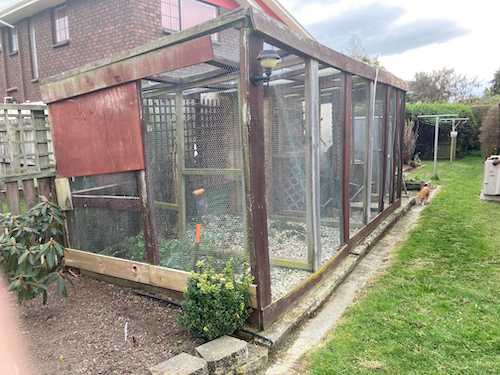
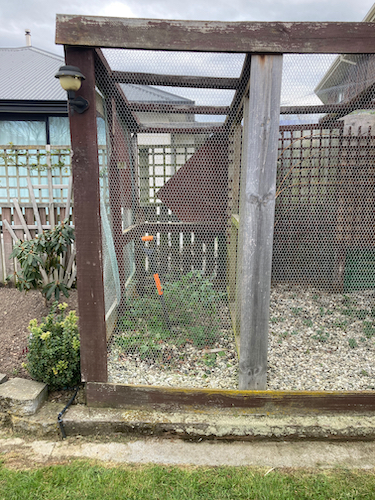
Over the next couple of months I removed all the nesting boxes and bird related stuff, and began turning it into a berry cage by making sure that light and rain could get in. When all that was completed, I then planted a raspberry bush, multiple strawberry plants, and three varieties of blueberries. All these plants have grown very well in the last three years thanks to the previous inhabitants droppings, and it has now come to the point that the blueberries have outgrown the small space that I gave them in the berry cage to live.
So this meant that I had to find somewhere else to grow them in the garden. There is a section of the garden down near the clothes line that already had a gooseberry bush, a giant blackcurrant bush, rhubarb, and a dwarf apricot tree I planted last year. I had began clearing up all the overgrown weeds in that section of the garden last autumn, but after my sinus operation that all came to a halt.
By the time I got back around to tidying that section of the garden this month, the weeds had all returned in a vengeance. Hubby has helped me tackle this area over the last couple of weeks, and last weekend he dug four holes for me, three for the blueberry bushes, and one for the tea plant I had ordered online, but hadn't arrived yet.
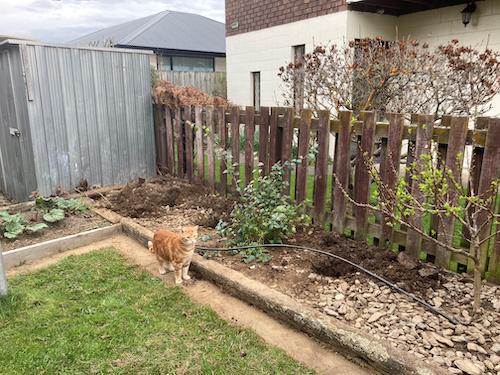
As you can see from the above photo, Luna, our neighbour's cat came and helped me with the transplanting. She is a very good girl, who I will miss very much, as her owners have just sold their house, and Luna will soon be living elsewhere. I think she mainly helped because I have catnip growing in the berry cage, and she wanted to partake in its benefits...
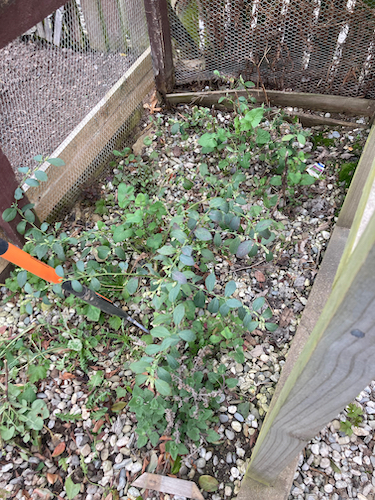
It didn't take long to transplant the blueberries, and they have bounced back quite quick, which is great. I have also transplanted some natural dye plants I had growing in the vege garden, into this garden space as well. I am growing St Johns Wort, Woad, Madder, Tormentil, and Lemon Sorrel to hopefully dye with later on in the growing season.
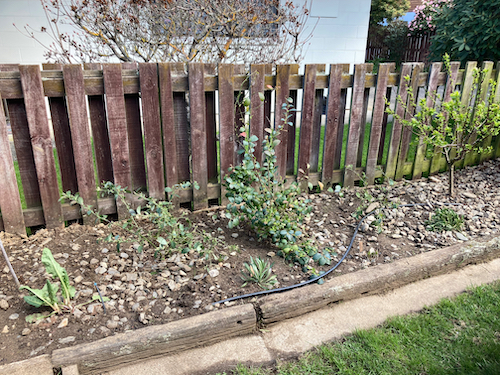
I know that I will now have to net my blueberries from the birds, but I will deal with that closer to the time. I hope that very soon my blueberry bushes will provide me with lots of delicious blueberries to eat and put in smoothies over the coming summer.
Have a wonderful day
Julie-Ann
Want to discuss my post? Feel free to chat with me on Instagram or Mastodon.
Social Media



Archives