
July In The Garden - 2026
Hello friends,
July is the depth of winter here in Otago, New Zealand. Frosty mornings are a familiar sight, the garden has settled into its winter rhythm, and much of this month's work has been focused on preparing for spring. Although everything feels a little slower at this time of year, there are still plenty of signs that a new growing season is on its way.
Here's what July has looked like in my garden...
What's Flowering:
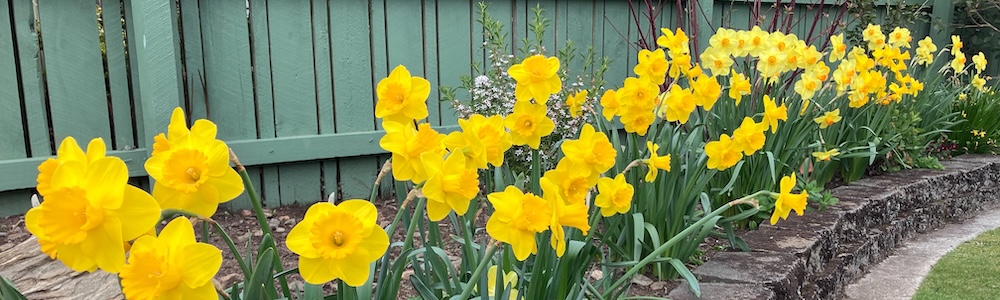
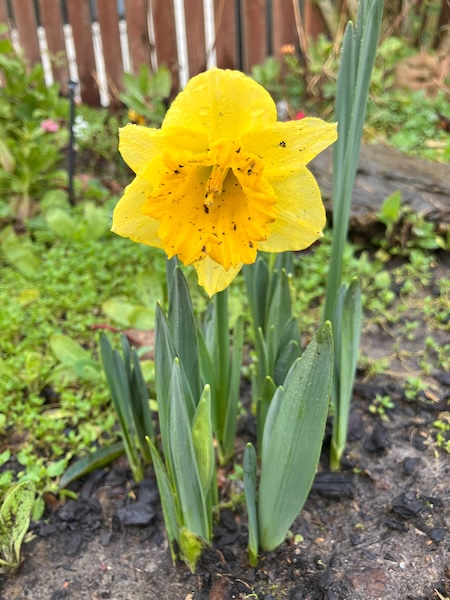
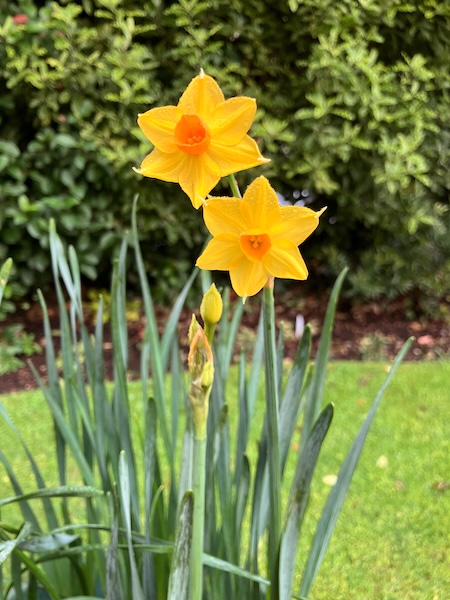
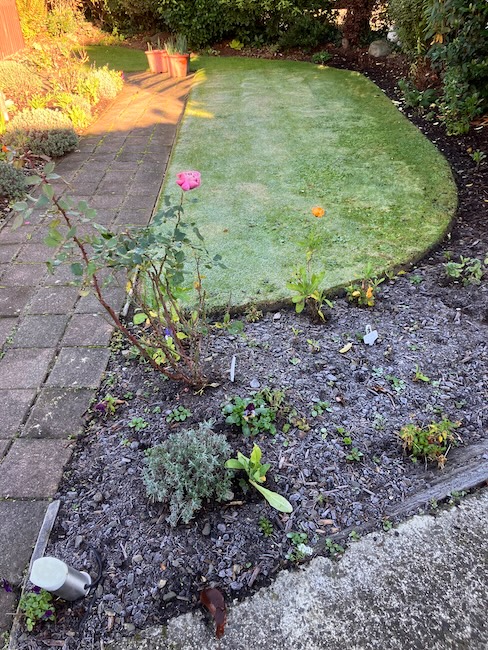
Surprisingly, the first yellow daffodils are already flowering in my backyard. Their foliage began emerging in early June, with the first blooms opening in early July. For now it's only a handful of flowers, but the main display will begin in August and continue right through until October.
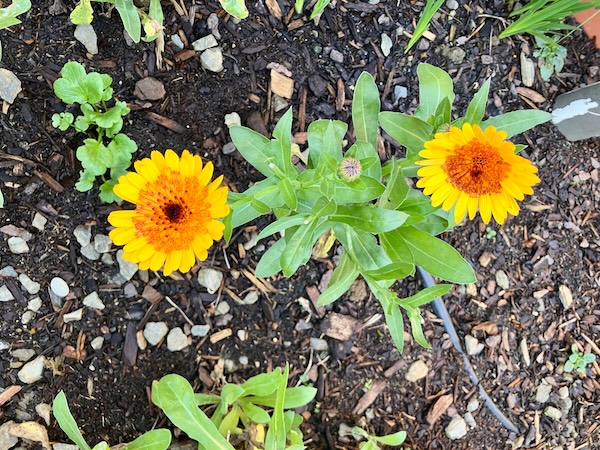
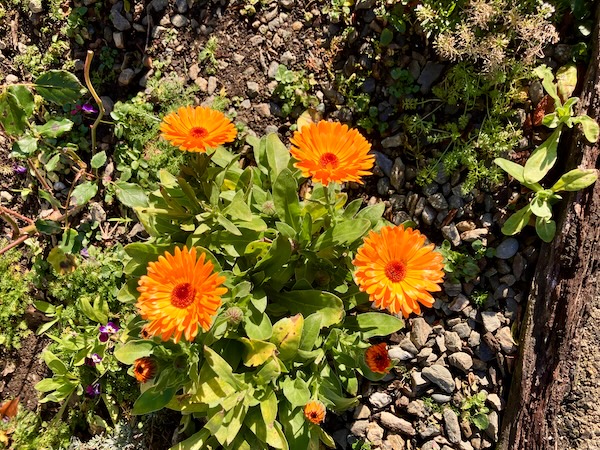
There are still a few calendula flowering in the garden. Over the years I've found they provide flowers for almost the entire year, and their cheerful blooms always brighten the cold, dreary days of winter.
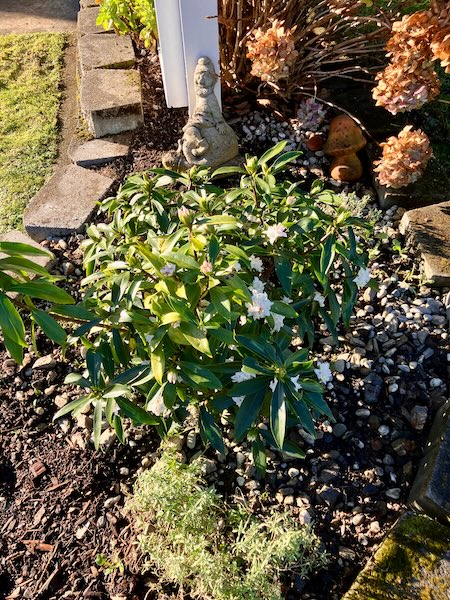
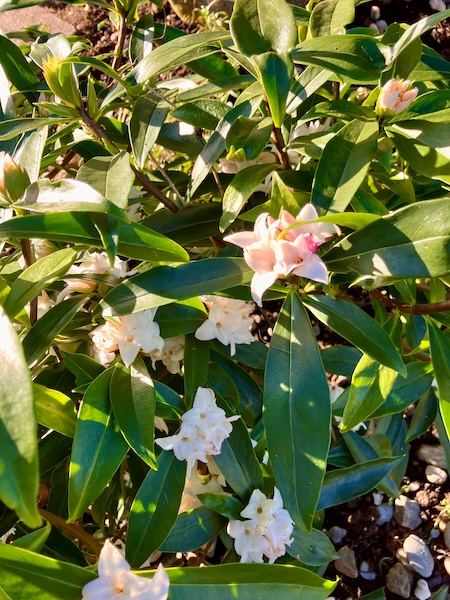
And finally, my young 'Perfume Princess' daphne has been flowering over the past couple of weeks, and its fragrance is intoxicating, filling the entire backyard on sunny still days.
What's Growing:
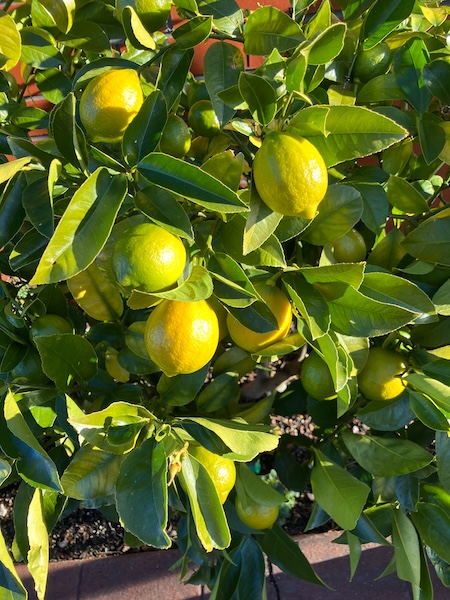
The lemons on my 'Meyer' lemon tree are beginning to ripen, and I'm looking forward to harvesting them over the coming weeks and putting them to good use in the kitchen.
I'm overwintering some sugar beet plants for seed saving, and they've taken all our winter frosts in their stride. They've remained completely hardy and continue to grow without any problems. It is still another 9 months until I can save seed from these plants, and no doubt I'll have to corral them to stop the seed heads from falling over in summer and autumn.
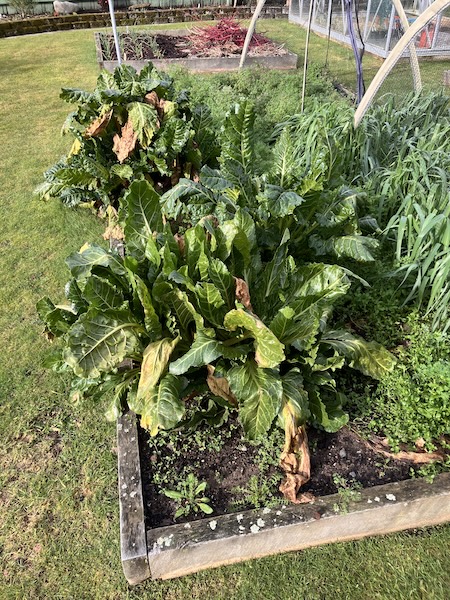
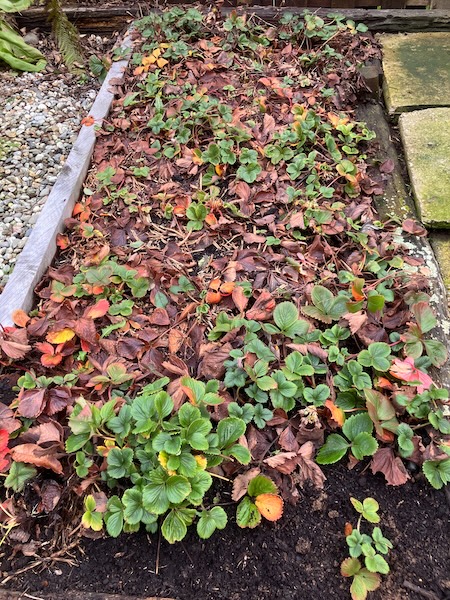
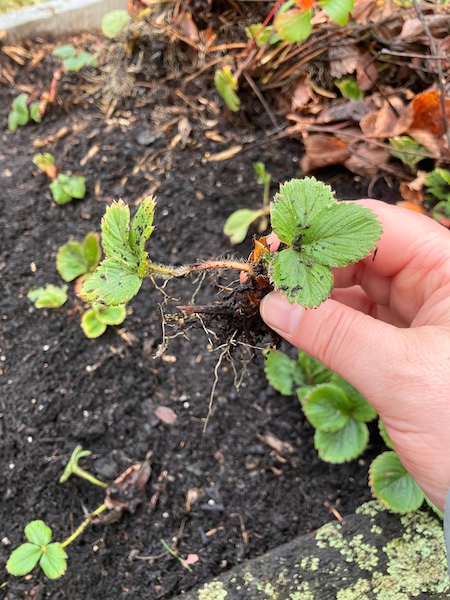
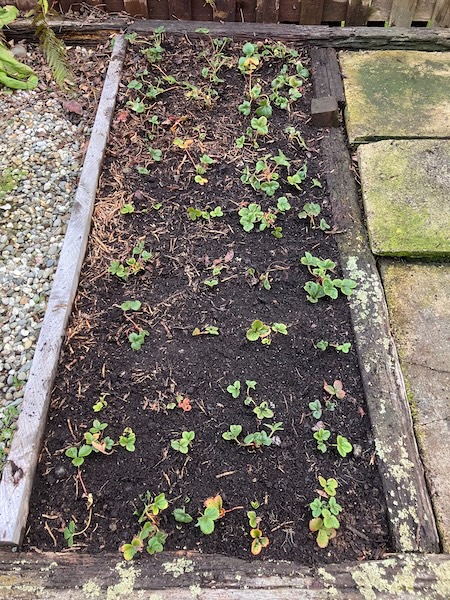
And finally, I gave my strawberry bed a tidy-up by weeding, removing
the older plants, and replanting it with fresh runners. In the process, I
increased the number of plants from 24 to 40, which should mean a much
bigger strawberry harvest this summer.
Nature Notes
Bird life is abundant at this time of year, with many birds searching for food throughout the garden. As always, the blackbirds have been busy digging up the lawn, vegetable garden, and flower beds in search of worms. Tauhou (also known as silvereyes or waxeyes) have been flitting between the few plants still in flower, searching for nectar, while a pair of pīwakawaka have made themselves at home, darting about in search of insects.
I even managed to photograph one of the pīwakawaka as it followed me around the backyard one sunny afternoon—a lovely reminder that even in the middle of winter, the garden is full of life.
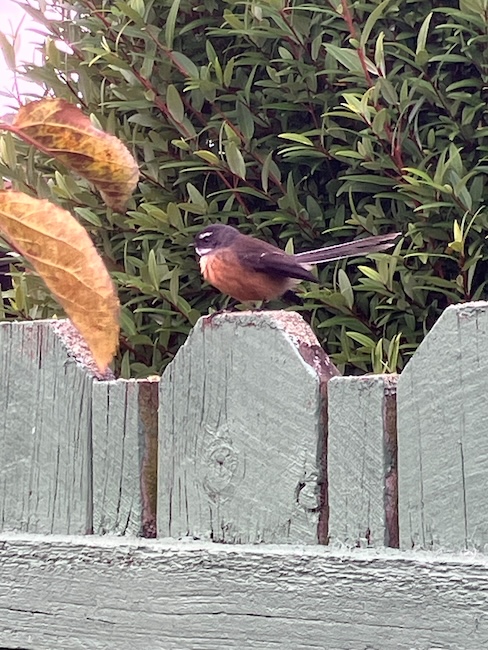
I usually put bird feeders out in the front garden over winter, but with the recent arrival of bird flu in New Zealand, I decided to follow the advice of our local ecosanctuary, Orokonui, and take them down. Hopefully it won't be too long before it's safe to welcome the birds back to the feeders.
July has been surprisingly mild. We've had a total of 19 frosts, with temperatures ranging from –0.1°C down to –2.6°C. For the coldest month of the year, that's quite unusual. In a typical July we would normally expect at least a few frosts of around –6°C, along with plenty of mornings below –4°C.

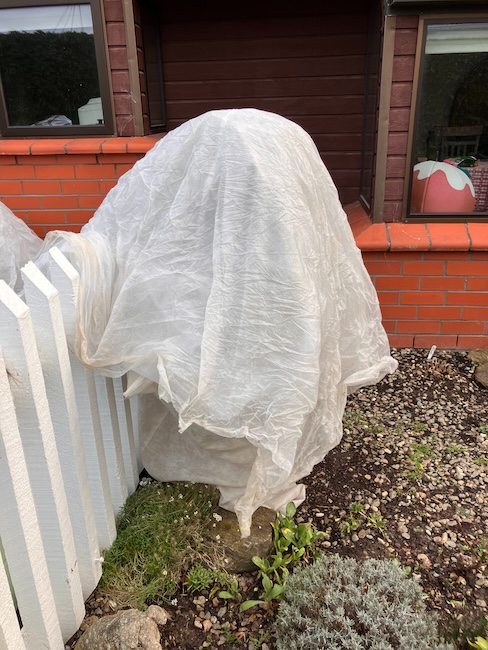
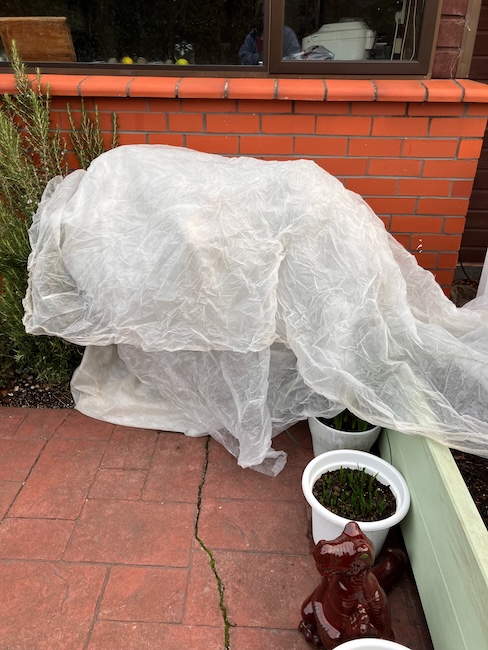
Every day it seems I'm outside in the early evening throwing frost cloth over my citrus plants, wasabi plant, and seedings growing in my glasshouse. My citrus plants look like ghosts in the garden the next morning...
Our biggest weather event this month occurred on 5–6th of July, when a severe winter storm swept across the South Island. Many areas were blanketed in snow, but unfortunately the air wasn't quite cold enough here. Instead, we received torrential rain from the east, prompting MetService to issue a Red Heavy Rain Warning for Dunedin.

Whenever we get this type of weather pattern, it almost always leads to flooding in our backyard, as well as more widespread flooding across Dunedin. On the 5th of July we recorded 113 mm of rain in just 24 hours, followed by another 80.3 mm on the 6th of July.
As usual, the path leading to our woodshed flooded, so we built a temporary flood barrier using bags of potting mix to keep the water at bay. We keep meaning to fix the problem properly, but this particular weather pattern only comes along every few years, so it never quite makes it to the top of the to-do list.
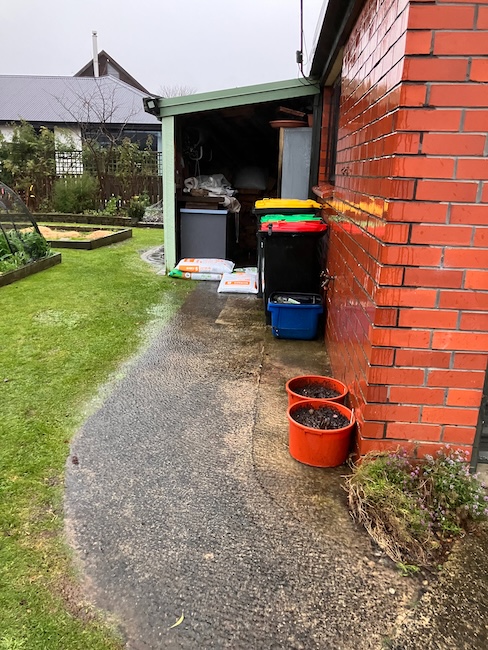
I took a trip out in the pouring rain to check out our local stream. Luckily it stayed within its banks, even though the water was so swift that even the local ducks didn't want to go anywhere near it.


Luckily, the torrential rain eventually came to an end and the garden began to dry out. We've since enjoyed a run of crisp, sunny winter days, making it much easier to catch up on jobs around the garden.
As July draws to a close, the garden is slowly beginning to wake from its winter rest. My seed orders are on their way, and I can't wait to start filling the glasshouse with trays of seedlings. It won't be long before another growing season is underway.
Have a wonderful day
Julie-Ann
If you'd like to continue the conversation, you can find me on Instagram, Mastodon, Bluesky, and Facebook.
Making Lime Syrup With A Glut of Limes
Hello friends,
As it's now winter, it's peak citrus fruit season for our lemon and lime bushes. The lime fruit ripened on the bush first, so we've been using them in various baking and cooking recipes for the last couple of months (wherever citrus is needed), and I've even been giving away limes to anyone who comes to visit us...
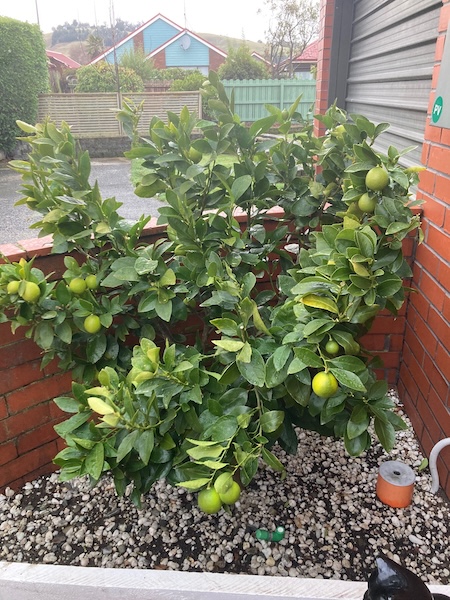
But even after doing all that, we still have too many limes sitting on our kitchen window sill and also on the bush, so I searched the internet for ideas for what to do with all the limes.
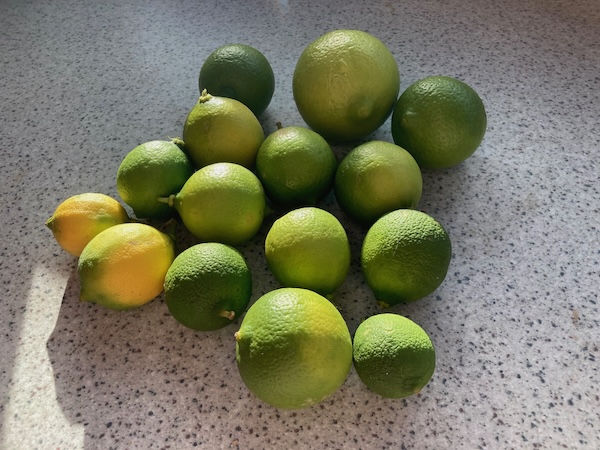
After searching for a while, I settled on making some simple lime syrup. It uses up a lot of limes, and it means I have homegrown syrup for hot and cold drinks, and also for using in baking recipes.
Simple Lime Syrup
Ingredients
1/2 Cup of Fresh Lime Juice
Zest of Those Limes
1 + 1/2 Cups of Water
1 Cup of Sugar
1/2 Teaspoon of Citric Acid (citric acid makes the lime syrup flavor more intense)
Recipe
(1) Zest limes one by one before you juice them, aiming to have 1/2 a cup of lime juice, plus the zest from them at the end. This step is not exact, depending on how much juice is in the limes. As I had a lot of limes, I just kept juicing them until I had enough juice and zest. It's always easiest to zest the limes first before cutting them in half and zesting them.
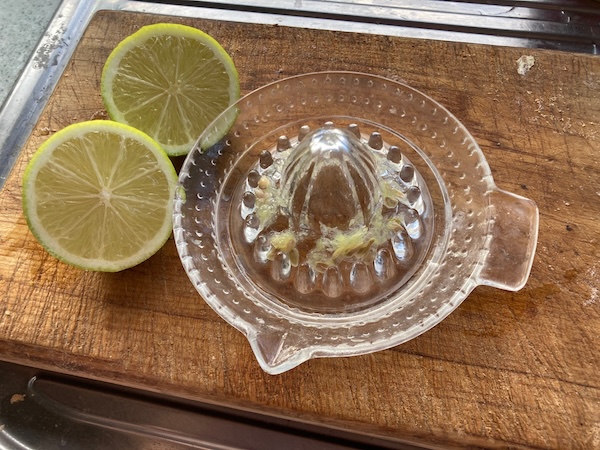
(2) To a pot, add 1 + 1/2 cups of water and heat to a simmer, add the sugar and citric acid, and mix until the sugar is completely dissolved. Add in the lime zest and juice, and cover the pot, and simmer for 15 minutes.
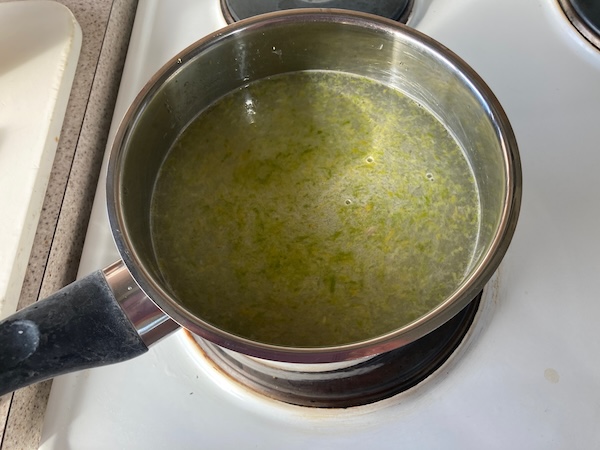
(3) Remove the syrup from the heat and allow it cool. When the syrup is cool enough to handle safely, strain the lime syrup to remove the zest and any stray lime pieces. I used a dexam strainer that I got from Moore Wilsons when we lived in Wellington. (The dexam strainer is very useful for many cooking, bottling, juicing, and jam making projects, as the strainer is super fine.)
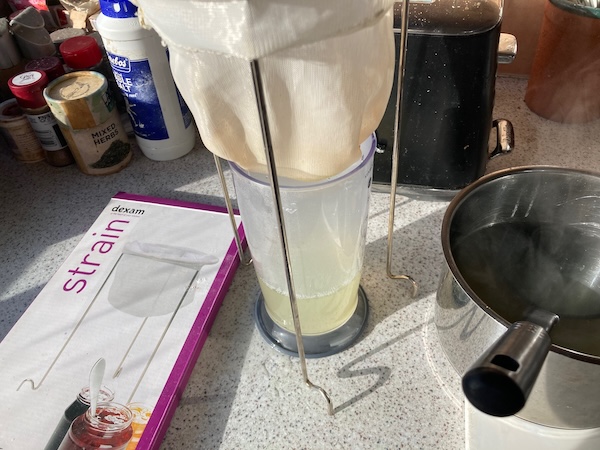
(4) Collect the lime syrup in a container, and store it in the fridge, where it will last for up to a month.
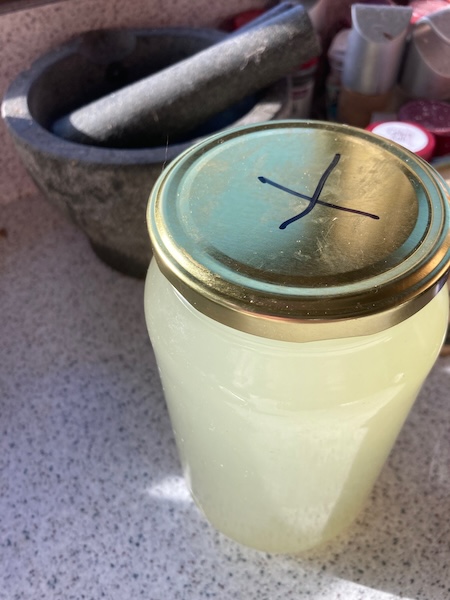
You can also use this recipe to make a simple syrup with other citrus fruit like lemons and mandarins and oranges. I've found that the lime syrup is great for making a hot citrus drink, similar to making a hot lemon, and you can add honey to it as well. It's quite refreshing and warm on a cold frosty day.
Have a wonderful day
Julie-Ann
Want to discuss my post? Feel free to chat with me on Instagram or Mastodon or Bluesky.
The Winter Citrus Gardening Project is Finished
Hello friends,
My winter citrus gardening project is finally completed. A couple of weeks ago, I dragged the citrus trees out of the glasshouse, and gave them each a trip on the wheel barrow out onto the patio. The next task was digging three very big wholes into the ground to make space for the citrus trees.
The first tree to go in was the lime tree. It only took a couple of bangs on the outside of the pot, and it loosened up enough for hubby and I together to lift the heavy plant into place.
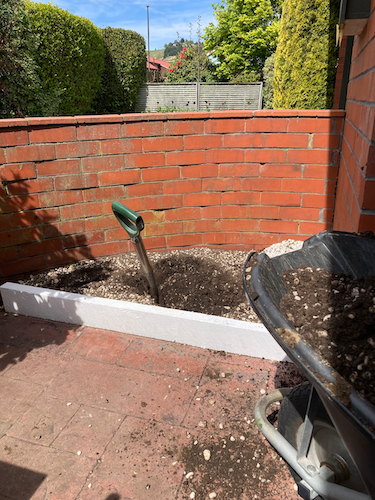
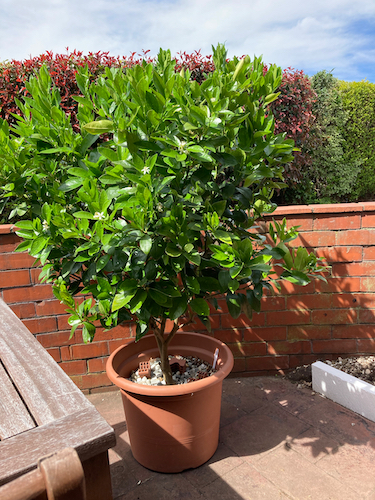
Then it was just a task of filling in the hole, sprinkling both citrus fertilizer and water retention crystals onto the soil, and then watering the lime tree in.
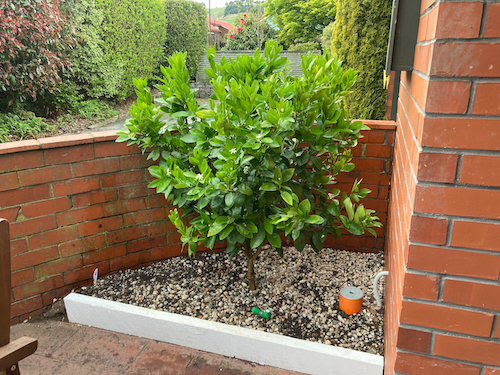
Next up on the list was to do the same to the lemon tree, which is now sitting quite happily underneath the kitchen window in the herb garden.
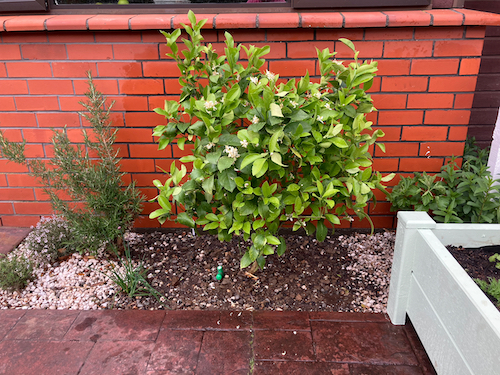
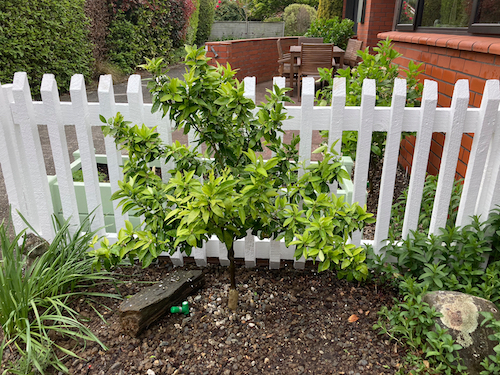
And last of all was the mandarin tree, which is now sitting in front of the newly painted white fence in the front garden. If you've noticed the three green pegs in the ground, they're soil water monitoring sensors, which I can keep an eye on to see how much water each plant is getting. The pegs are connected to our weather station system, and I can check them online whenever I want.
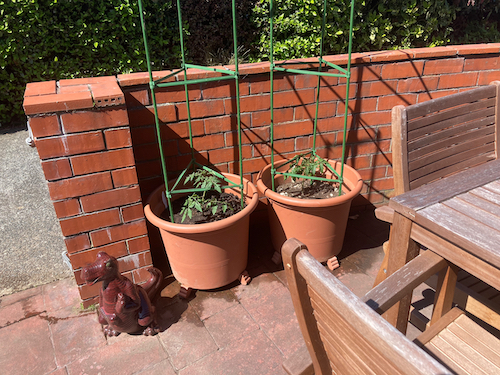
I've repurposed the now empty large pots, and they're now housing three of our tomato plants, a yellow Honey Bee plant, a Pomodoro plant, and a Juane Flamme plant.

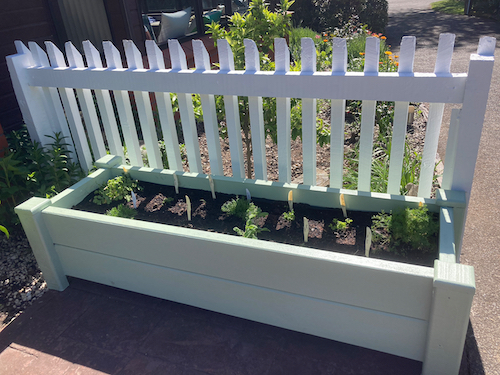
And last of all the planter box has been painted a pretty shade of sage green, and it is now full of annual herb plants.
I'm really happy with how this garden project has turned out. Now all I need to do is paint our patio garden furniture sage green, and then the whole area is spruced up. Over the summer I need to come up with a plan to protect the citrus from frosts and snow over winter, but for now I can just enjoy the fruits of my labour.
Have a wonderful day
Julie-Ann
Want to discuss my post? Feel free to chat with me on Instagram or Mastodon.
Growing Citrus Plants in Mosgiel
Hello friends,
Some of my favorite fruits of all time to grow are citrus. I love growing lemon, limes, and mandarin bushes, not only for their fruit, which I love using in food and drink all year round, but also for their shiny bright foliage which looks great when the plants are grown in a patio setting.
Back when we lived in Tawa, Wellington, I was able to grow lemon, limes, and mandarin plants outdoors throughout the year in the ground at our hillside home, and only had to protect them from frost for about ten nights each year. When we moved back to Mosgiel, in Dunedin in October 2019, however, I knew I had to make a decision on how to grow my citrus plants. From previous history, I knew that I couldn't just plant them in the ground and leave them to fend for themselves in Dunedin's winters.
The suburb of Mosgiel where we now live is blessed with its own microclimate which is far different from that of the rest of Dunedin, as it lies inland, in a sheltered valley 6 km from the sea. In summer Mosgiel is warmer and sunnier than Dunedin, and in winter is is colder and frostier. I love this about Mosgiel because it is more like Central Otago/the Mediterranean, than the rest of Dunedin, which nearly always get cool sea breezes from either the south-west or the east.
Warm, sunny summers are great for citrus plants, but cold and frosty temperatures in winter, along with the occasional snow, are not, especially when temperatures drop down to -6˚C. So I decided to put my citrus plants into very large plastic terracotta-like pots so that I could shift outside to our patio in late spring, and then bring them into our glasshouse in autumn for protection over the winter months. I also chose to plant the most cold hardy varieties that I could find, to give the plants their best chance at life.
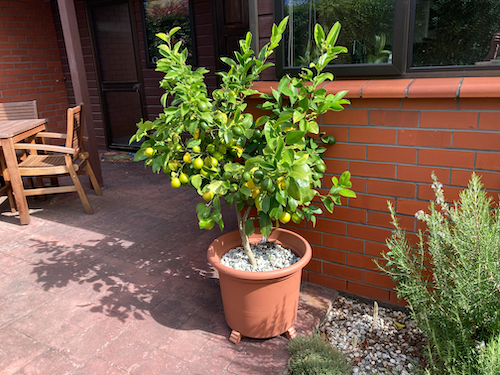
The first citrus plant chosen is the lemon variety Lemon Meyer. It is the hardiest of all lemon varieties, is a heavy cropper, and the juice from the lemon isn't too sour. It was the first citrus plant I planted. It has flourished in it's position in the patio during the summer months, and now bears many fruit each year.
The second citrus plant chosen is the lime variety Tahitian Lime. We mostly use limes in our favorite soup recipe, Tomato, Capsicum and Lime soup, and this variety works perfectly for our needs. As limes do not like the cold at all, we were very surprised to see it growing and flourishing over the last three years. The first year we had two limes, and now each year we are getting dozens of limes off the bush, so many in fact that we are now giving our excess away.
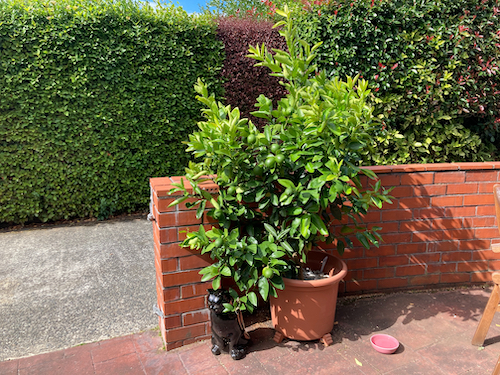
The last citrus plant we chose was the Satuma Mandarin variety. Mandarins are one of my favorite fruits (much easier to peel than oranges), and are the perfect size for snacking on. They went into our last citrus pot, and along with the lemon and lime plants, they grew healthy and strong during it's first and subsequent summers. I am currently awaiting on it's first harvest, hopefully I can eat some soon.
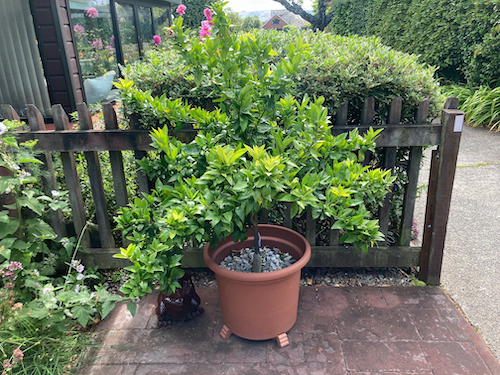
Each year, at the beginning of October, they are moved out of our glasshouse, and into our patio, where we have just enough space for the growing plants. Over the spring and summer they are fed both a monthly and long term fertiliser, and are watered nearly every day to ensure the pots don't dry out. I recently also added Ecowitt Soil Moisture sensors to each pot to keep an eye on their moisture levels, so I know exactly how each plant is faring, and if they need to be watered.
They stay there all summer long until the end of March, and then we drag them back into the glasshouse for the winter.
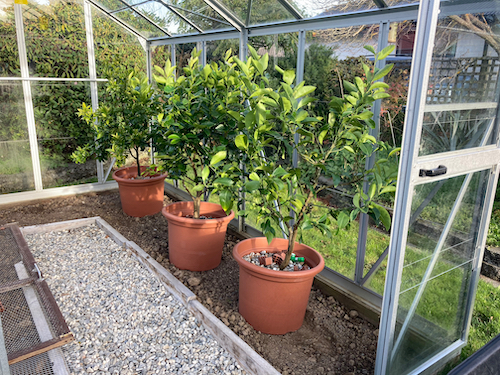
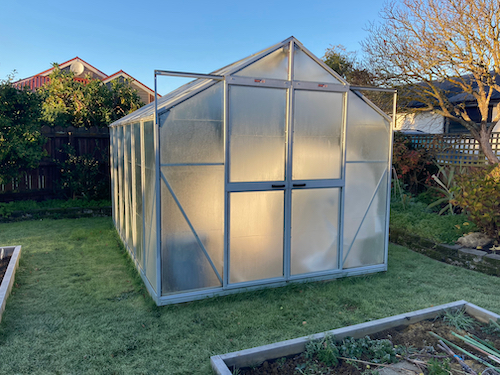
Because of the many cold and frosty days ahead I take a multiple layered approach to keeping them healthy over winter. The first is to keep them safe in the glasshouse over winter, which keeps them safe from high wind damage and protects them from small frosts.
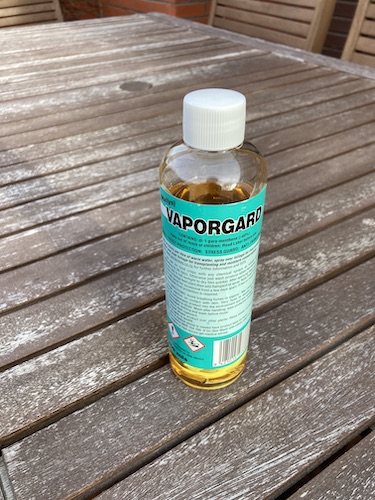
The second layer of protection is the use of Vaporgard Liquid frost cloth. It is an organic wax made from pine resin which helps protects leaves from frost damage down to -3˚C for 2 to 3 months. I usually spray my citrus plants with Vaporgard twice over winter in the glasshouse, and once more when they go outside in early October, since we sometimes get late frosts even up to the end of October. The good thing about Vaporgard is that it can also be used in summer to slow down moisture loss from plants.
The last layer of frost protection is my ever trusty frost cloth. I have a container full of it which I drag out of the shed each autumn. I usually drape a single layer over the citrus plants on frosty nights, but if I know that a big cold snap with snow, or a prolonged period of frosty weather is about to happen, I double up the frost cloth layers. On frosty mornings I don't unwrap the citrus plants from their frost cloth layers until the glasshouse has defrosted in the sun.
This multilayered approach to frost protection has worked really well with my citrus plants until now, but now I have a problem. My citrus plants have outgrown their pots, and they have gotten too big to transport to and from the glasshouse each winter. I need to find space in the garden for them to grow and flourish, and this means I have to plant them into soil. They are in the glasshouse for the last time this winter, and come this spring, they will be planted into the ground.
This means I am currently undertaking a winter garden project to rearrange the sunniest and warmest part of our garden to fit the citrus plants into this coming spring. And then after this summer and autumn I will be undertaking another project to figure out how to protect the citrus from frosts the next winter after that.

It's a big winter garden project at the moment, but it'll be worth it once the plants are happy, and thriving, and give me much more citrus to eat and drink in the coming years.
Have a wonderful day
Julie-Ann
Want to discuss my post? Feel free to chat with me on Instagram or Mastodon.
Social Media



Archives