
The Sweet Pea Project: Sowing the Seeds for a New Gardening Year
Hello friends,
Although the garden may seem quiet in the middle of winter, now is the time when preparation for the next growing season begins. For me, July is peak sweet pea sowing season, and I always save this job for cold, rainy days when it's too wet to work outside. Sweet peas prefer germinating in cooler temperatures, so sowing them in winter gives them the best chance of producing armfuls of fragrant blooms in late spring and early summer.
Sweet peas have always been a favourite of mine ever since childhood, when my grandfather used to grow them in his back garden. Their fragrance would drift through the backyard during the warmer months, and ever since then I've dreamed of having a dedicated sweet pea patch of my very own.
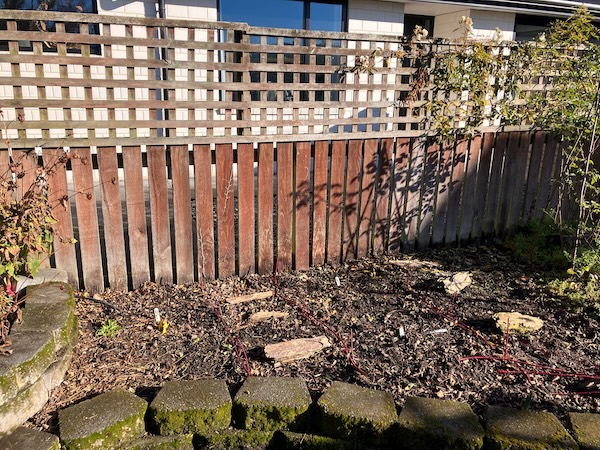
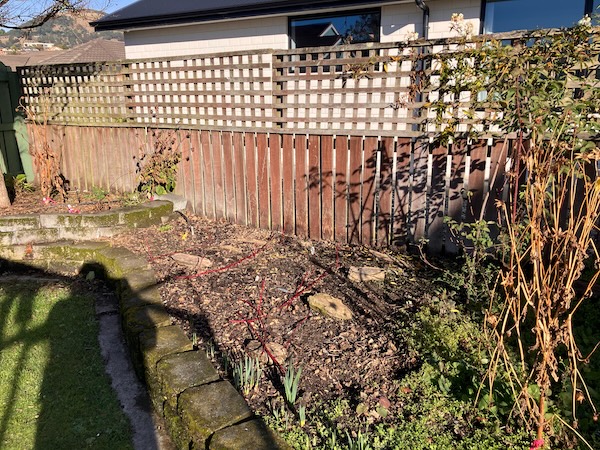
Until recently though, I simply didn't have the space in my garden to do this. That changed last summer when our old lilac tree finally succumbed to the damage it suffered during last year's big spring storm. Once the tree had been removed, a section of the backyard fence opened up to full sun from early morning until late afternoon, creating the perfect place for a sweet pea patch. With the space finally available, it seems like now is the perfect time to turn a long-held dream into a reality. So let's begin, and I'll show you the little patch of garden where this year's sweet pea project will take shape.
My sweet pea patch will run along the western side of our backyard, beside the boundary fence that used to sit in permanent shade beneath the old lilac tree. This section of fence line is approximately four metres long, providing plenty of room for this new project. My plan is to install metal mesh along the fence, and let the sweet peas scramble their way upward, hopefully filling the space with flowers and fragrance throughout spring and summer.
With the growing area planned, it was finally time to pull out my sweet pea seed collection, and decide which varieties to grow. Over the years I've accumulated a large collection of sweet pea seed, so narrowing down the choices was no easy task. In the end, I settled on a collection of mostly Keith Hammett varieties, along with a few other favourites, and some homegrown seed collected from my own garden, all selected for their beautiful colours and sweet fragrance.
The varieties I chose and sowed were:
- 23 × Hammett Blue Butterflies
- 15 × Hammett Blue Shift
- 10 × Hammett Blue Reflections
- 15 × Hammett Brilliant Fragrance
- 10 × Hammett Burlesque
- 15 × Hammett's Surprise
- 2 × Hammett Licorice
- 6 × Hammett NZ Gardener
- 10 × Hammett Somewhere
- 15 × Hammett Sapphire
- 9 × Hammett Triple G
- 10 × Hammett Turquoise Lagoon
- 25 × Homegrown seeds from my garden
- 10 × Nimbus
- 10 × Swan Lake
- 10 × Sweet Pea Original
In total, I sowed 195 sweet pea seeds, which should provide a beautiful mixture of blues, purples, smoky pinks, bi-colours, and wonderfully fragrant blooms over the coming spring and summer.
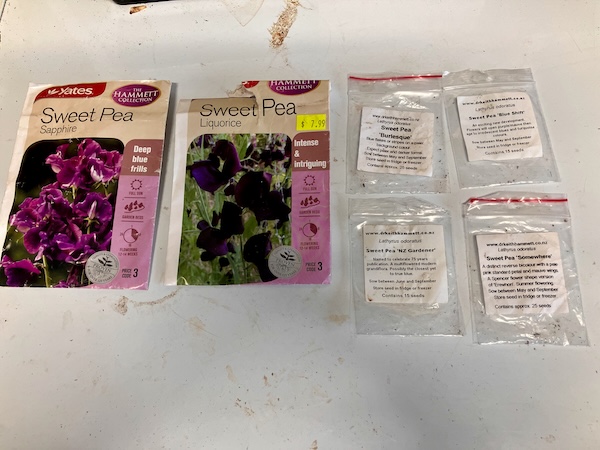
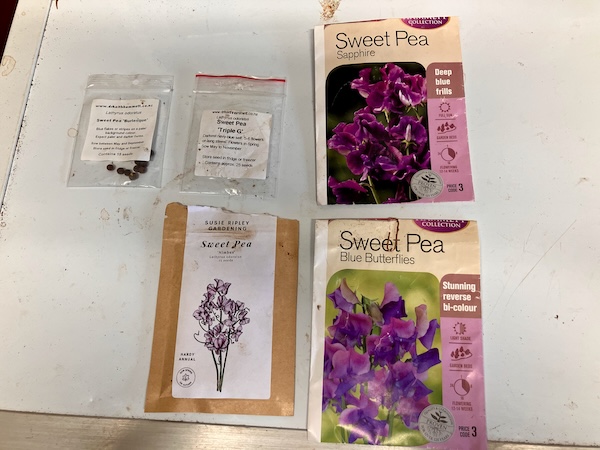
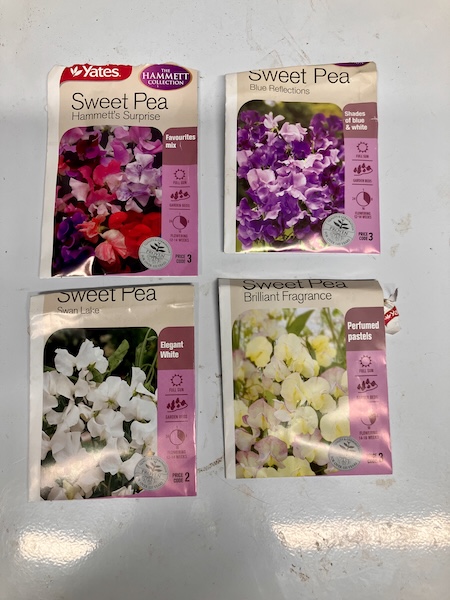
Although 195 sweet pea seeds may seem like a lot, some of the seed packets were older, and experience has taught me that not every seed will germinate. The seeds were sown into seed-raising mix that had been sieved to remove large stones and wood chips, before being placed into four 50-cell seed trays.
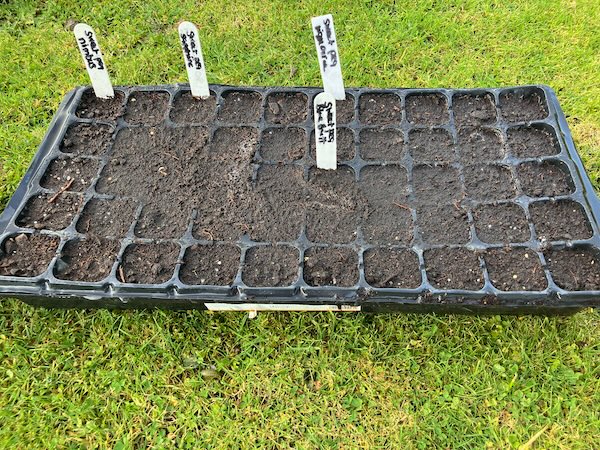
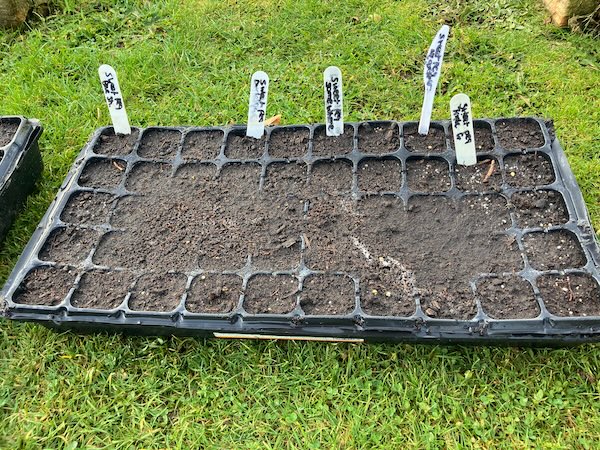
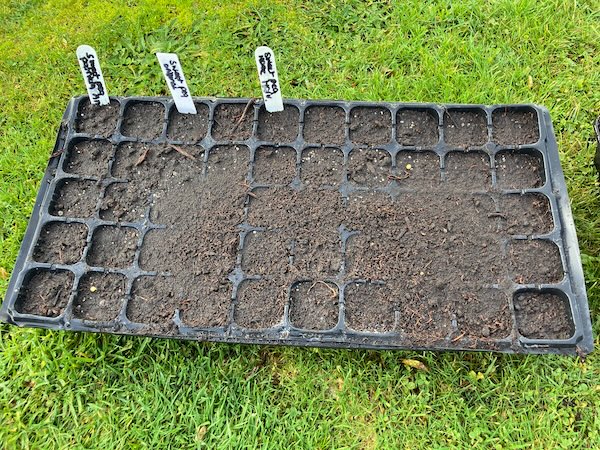
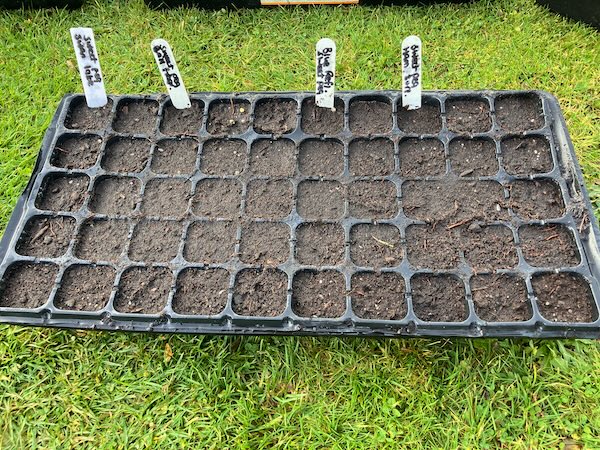
After sowing, the seed trays were watered well, and placed onto shelving in my glasshouse. The shelving is covered with some shade cloth, which helps protect the emerging seedlings from strong sunlight, and it also prevents them from drying out too quickly.
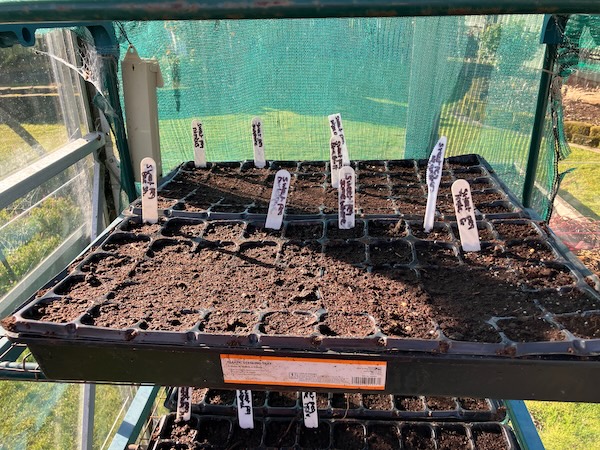
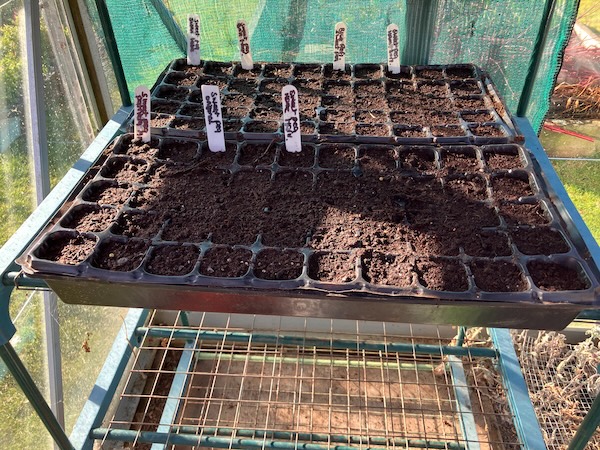
There is always something so hopeful about seed sowing. In the depths of winter, seeds are a reminder that spring is never too far away, and that every gardening year begins with the promise of new life.
For now, the sweet peas are sown, and the waiting begins...
Have a wonderful day
Julie-Ann
If you'd like to continue the conversation, you can find me on Instagram, Mastodon, Bluesky, and Facebook.
I'd love to hear what you're growing, making, or enjoying in your own garden.
Flower Farming This Summer
Hello friends,
One day while I was doom scrolling on Instagram, I came across a reel from a local flower farmer, searching for local flower growers to sell their excess flowers to her for her floristry business. Since I was at the time in the middle of completing Floret Flower Farm's online Flower Farming Workshop, I thought this was a good opportunity to do some practical work for the workshop, by harvesting my flowers and foliage and selling them.


In summer my home garden is full of many flowers including varieties of dahlia, hydrangea, zinnia, scabiosa, cosmos, calendula, as well as many other precious goodies including my grown from seed dahlias. Most of these flowering plants are used in the floral industry for selling as cut flowers, and also many of these plant varieties that I grow do not travel very well over long distances, meaning that local florists need to find local growers to provide them for their floral work.


I contacted the flower farmer, and within a few days she came to my home to look at my garden, and also to pick her first bucket of flowers. She was impressed with my flower varieties, and especially my dahlias and Floret zinnia plants, and she quickly got to work photographing the flowers, and also harvesting them for use in her floristry business.
One of her favorite dahlias to harvest was a Floret Petite seedling dahlia of mine, which is currently named FP6, and it is an unusual anemone dahlia in shades of pink, red and yellow. I'm very happy with this dahlia, and intend to grow this as a second year seedling dahlia next year.

It wasn't long before she contacted me again, with the intention to buy more flowers from me, which I was very happy to do. This time she taught me how to harvest all the various flowers in the garden, so in the future I could harvest flowers for her myself.


This came in handy the next week which was Valentines Day week, the busiest time in a florist's year. For the first time I harvested all the flowers and foliage by myself, and I really enjoyed the process, harvesting the flowers that usually just flowered in my garden, and then processed them ready for her to pick them up.

I had so much fun harvesting zinnias, dahlias, hydrangea, and also filler flowers like calendula, cosmos and coreopsis. I also picked foliage plants like rosemary and dogwood for her. When she came to pick up all the flowers up after they'd been harvested, she asked to pick some more, as she planned to make over 100 bouquets for Valentines Day. By the time she left, my garden had provided her six buckets of flowers and foliage, and I was so pleased to have the experience under my belt.


From here on out, she is happy to buy flowers from me whenever she has the need for flowers, and I'm willing to sell them to her. I'm very pleased with this arrangement because it's a way for me to do some flower farming without committing myself to owning a full on flower farm, and all the commitments that come with it, but it also means that any income I receive from this means I can invest it into more plants for my garden, and most likely more dahlia varieties...
Have a wonderful day
Julie-Ann
Want to discuss my post? Feel free to chat with me on Instagram or Mastodon or Bluesky, and now also Facebook.
Social Media



Archives