
Storing Dahlia Tubers Over Winter: Vermiculite vs Glad Wrap
Hello friends,
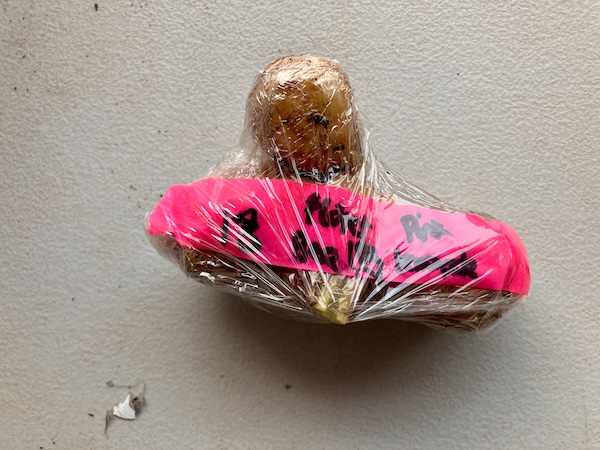
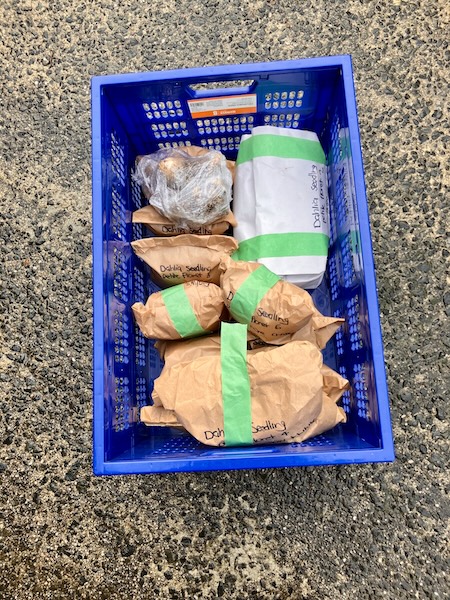
Back in July, I shared how I dug up, divided, and stored the seedling dahlias from my dahlia breeding project for winter. This year, I decided to try two different storage methods I'd learnt about during the Floret Flower Farming Workshop this year: storing tubers in vermiculite, and wrapping individual tubers in Glad Wrap.
Throughout winter and into spring, I periodically checked on my stored dahlia tubers, looking for signs of rot and moisture loss, as well as watching for the first signs of sprouting as the weather warmed up. Now that my dahlias are planted out in the garden, it's time to look back at how the two methods compared and what I learnt from trying them.
Watching for the First Signs of Growth:
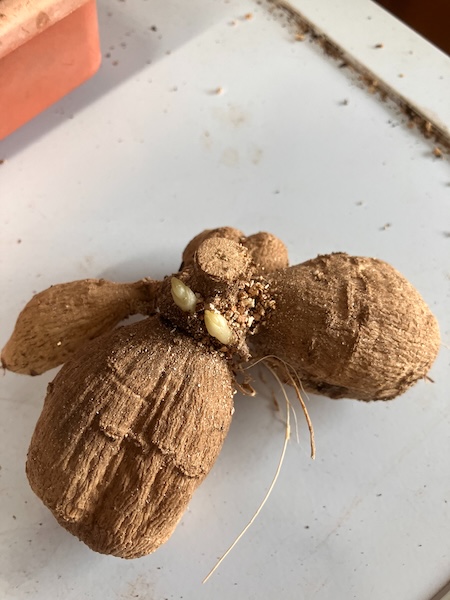
In late winter, while checking on my stored dahlia tubers, I discovered that a couple of those wrapped in Glad Wrap had already begun to sprout. The tubers were in excellent condition, with no visible signs of shrivelling or rot. As they could no longer remain in storage once they began growing, I planted them in pots filled with potting mix and moved them into the glasshouse. At this stage, all the tubers stored in vermiculite were still dormant, although some were beginning to show signs of moisture loss.
As winter gave way to spring, I continued checking all the stored dahlia tubers weekly. More of those wrapped in Glad Wrap began to sprout, so I gradually planted them into pots of potting mix and moved them into the glasshouse. The tubers stored in vermiculite were slower to wake up, with sprouting only beginning later in the season.
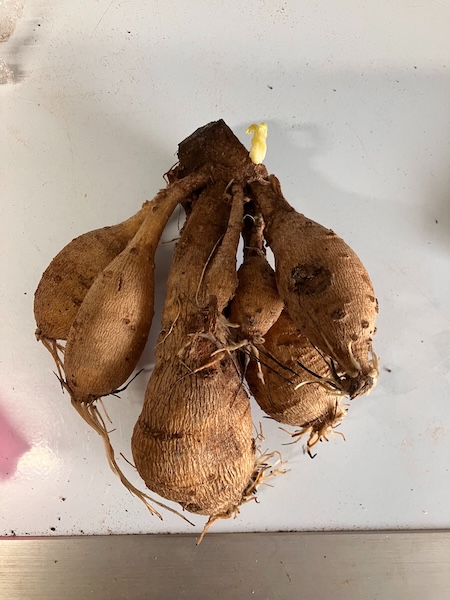
By the time I was ready to plant the dahlia seedlings out into the garden in mid-October, most of the tubers stored in Glad Wrap were already growing in pots in the glasshouse, while most of those stored in vermiculite were only just beginning to wake up. In the photo below, you can see the difference between two tubers from the same dahlia seedling, 2025-33. The tuber stored in vermiculite is on the left and is a little more shrivelled, while the tuber stored in Glad Wrap is on the right. It has begun to sprout and remains in excellent condition.
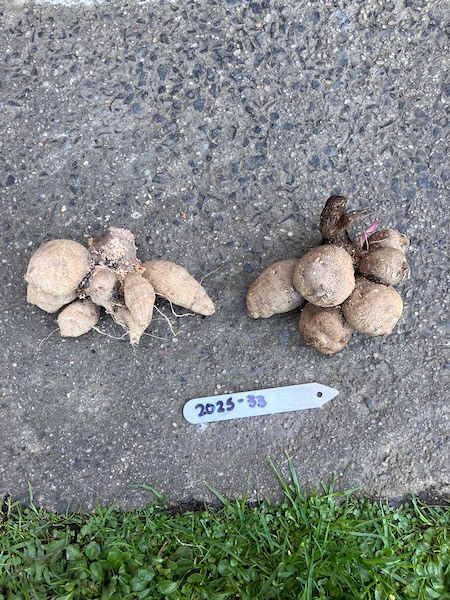
From my observations, the tubers stored in Glad Wrap appeared to break dormancy earlier than those stored in vermiculite, giving them a head start on the new growing season.
Checking the tubers over winter
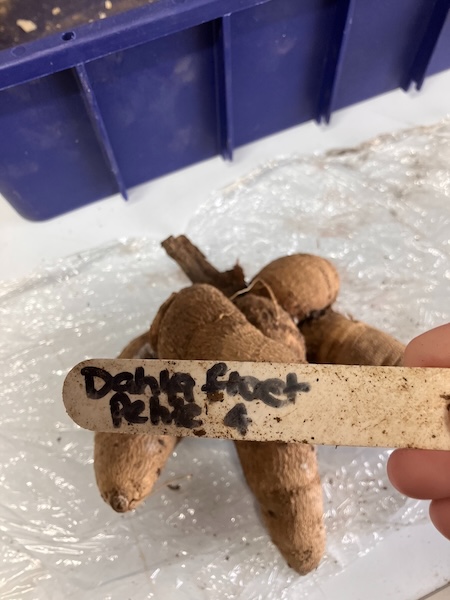
When it came to checking the two storage methods, I found the Glad Wrap method much easier to manage. I could see the tubers through the plastic without having to unwrap them, and I could gently feel them to check that they were still firm. It was a quick and easy way to keep an eye on their condition.
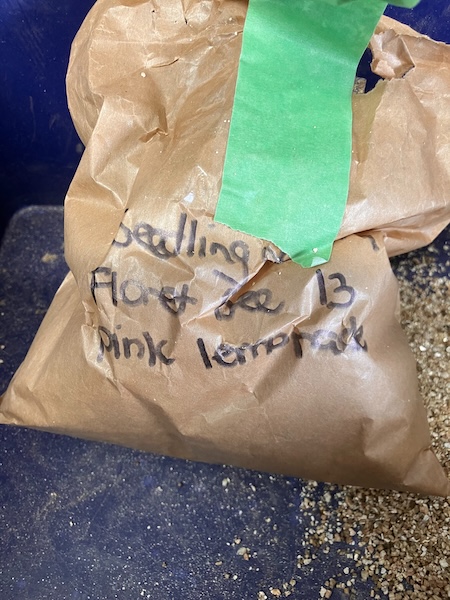
The vermiculite method, on the other hand, was much messier. To check each tuber, I had to tip the vermiculite out of the paper bag, find the tuber, and then carefully put everything back into storage. The vermiculite got everywhere, making quite a mess in the garage, and I'm still finding bits of it on the floor even now!
How well did the tubers keep?
The two methods also differed in how well they preserved the tubers over winter. Provided the tubers were thoroughly dry after dividing, those wrapped in Glad Wrap retained their moisture well, and I found no signs of rot among them.
In comparison, the tubers stored in vermiculite lost more moisture, and a couple developed rot. Based on this season's results, Glad Wrap provided better protection against moisture loss and rot in my collection of seedling dahlias.
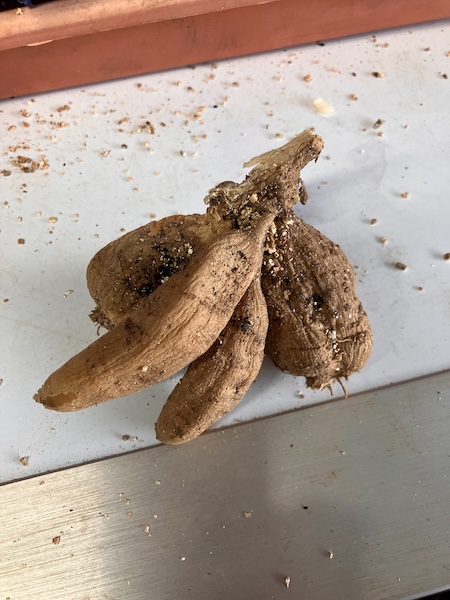
Cost, storage space and identification
Another consideration was the cost and storage space required for each method. For me, the Glad Wrap method was essentially free, as I had acquired a huge roll of commercial Glad Wrap from Moore Wilsons in Wellington years ago, and I doubt I'll ever use it all in my life time.
I could write each seedling's name directly on the wrap and place a plant tag inside beside the tuber, making it easy to identify each one. I was also able to stack the individually wrapped tubers together in a plastic container, making the method very space-efficient.
The vermiculite method, on the other hand, required many bags of vermiculite to store all my dahlia seedlings. This made it a considerably more expensive option, and the bags took up much more room than the compact containers of wrapped tubers.
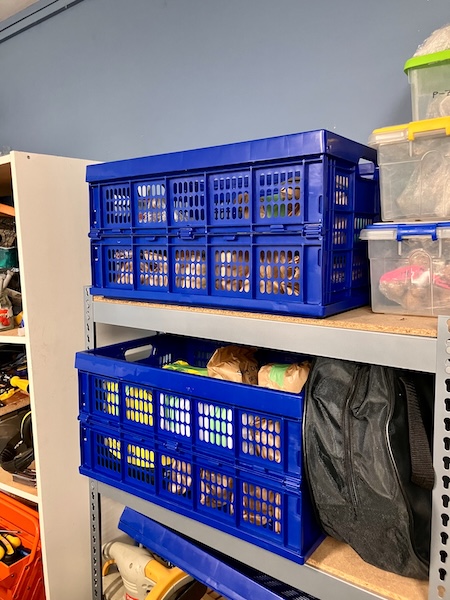
Overall, I found Glad Wrap easier to manage, more economical and more space-efficient. The tubers also retained their moisture better and began sprouting earlier in spring. For my dahlia collection, it was the more practical option in several important ways.
The Environmental Consideration
There is also an environmental consideration when comparing the two methods. Glad Wrap is a single-use plastic, while vermiculite is a naturally occurring mineral that is mined and heat-treated before being used in gardening. Although it could potentially be reused, it is not without its own environmental impact.
I’d be reluctant to reuse vermiculite from one season to the next because I wouldn’t want to risk carrying over rot or potential diseases, such as leaf and crown gall, to another batch of dahlia tubers. Using fresh vermiculite each year would add to the ongoing cost and the amount of material required.
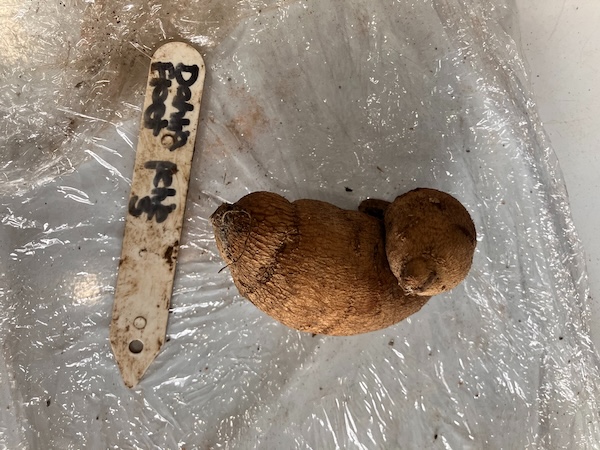
After planting out my seedlings, I sent the cleaned used Glad Wrap to soft plastic recycling rather than putting it in the rubbish. While recycling provides an alternative to landfill, it doesn’t eliminate the environmental impact of using plastic.
Both methods have their advantages and drawbacks, and this is another factor to consider alongside cost, storage space and how well the tubers keep over winter.
What I've learnt from this trial
Comparing these two methods has given me a much clearer idea of what works best for storing my dahlia seedlings over winter. This season, Glad Wrap worked best for my collection, but it was useful to compare the methods for myself rather than simply relying on what I'd heard from other growers.
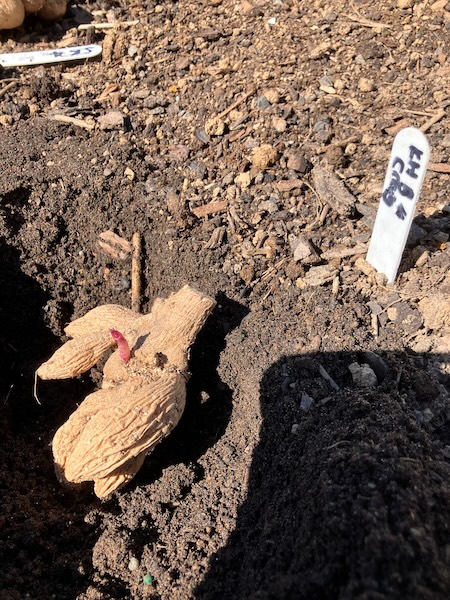
As this was only one season's trial, I'll be interested to see whether I get similar results when I lift and store the tubers again next autumn. For now, I'm looking forward to watching my seedlings grow and flower over the coming months, and continuing to develop my dahlia breeding project.
Have you tried either of these methods for storing dahlia tubers over winter? I'd love to hear about your experiences and what works well in your garden.
Have a wonderful day,
Julie-Ann
If you'd like to continue the conversation, you can find me on Instagram, Mastodon, Bluesky, and Facebook.
2025/2026 Dahlia Breeding Season Results
Hello friends,
Today I thought I'd share with you the results of the 2025/2026 dahlia breeding season.
I grew a total of 55 dahlias from seed, or as seedlings, and at the end of season only 14 dahlia seedlings remain. The number of dahlias I've kept is unusually high, and this is a result of me growing some of Floret's Petite dahlia seedlings, which I bought from Emerden last spring. They were unusually populated with promising dahlia seedlings, and this in my opinion makes buying these expensive Floret seedlings completely worth it.
To keep a track of all my seedling dahlias during the season I employed a dual system, first of all a dahlia seedling spreadsheet, and also a physical note book with a page per seedling, noting down when it flowered, what type of dahlia it was, colouring, and photos showing each dahlia in flower.


The majority of dahlia seedlings that flowered were single dahlia types, and most of those dahlias were the colour yellow. This makes sense because the single dahlia type, and the colour yellow, are both dominant in dahlia genetics according to the book "Dahlia Breeding for the Farmer-Florist and the Home Gardener". Thirty eight of the fifty five dahlia seedlings were single types, equaling a total of 69% single dahlias in my breeding experiment. Twenty seven of the fifty five dahlia seedlings had yellow flowers, or they had yellow colouring in their flowers. Both single type dahlias, and dahlias with yellow flowers, are not what I'm looking for in a dahlia in general, as they are very common, and not really interesting to me.
This dahlia seedling, SR5, is a typical yellow single dahlia flower. I don't consider it interesting at all, even though the bees love these flowers. I don't have enough space in my small garden to justify growing them every year.

And now for all the amazing dahlia seedlings I grew this last summer.
First up we have Keith Hammett Beeline II #4, a dahlia seedling from a Beeline II seed packet I bought from the dahlia breeder Dr Keith Hammett. Dr Keith Hammett doesn't have the space to grow every single seed in his breeding program, so he sells seeds packets occasionally. This dahlia is a single dahlia, but the pink to yellow ombre colour shift is just spectacular against its dark green leaves. This dahlia, KHBII #4, is very similar to Dr Keith Hammett's Mystic Sparkler dahlia, which I own and love in my garden. However, this flower is much larger, and I prefer this seedling dahlia's petal shape more, so it makes it worth keeping this dahlia for next year to see how it fares.

Next up is another Dr Keith Hammett dahlia seedling, NZ Gardener #1, which is grown from a seed packet given away by the NZ Gardener magazine. This is a yellow decorative dahlia, with great symmetry in its petals. Even though this is a yellow dahlia, I haven't seen many pure lemon decorative dahlias for sale in New Zealand, and this is the only decorative dahlia seedling I grew this year. It's worth growing for another year to see how it looks over time.

This next dahlia seedling is called Floret Bee's Choice #13 (FBC#13), AKA Pink Lemonade. This is a yellow, white, and pink anemone dahlia, with unusual domed inner anemone petals. I really love its delicate colours, and it's unusual anemone shape. This dahlia is quite pretty, and has a lot of potential. I'll be growing it for the next couple of years, to see how it develops as the tuber gets older.

The next dahlia is another Floret Bee's Choice seedling #15 (FBC#15). This is another anemone dahlia variety, and it is two toned, with pale lemon outer petals, and brighter yellow inner domed petals. I've called this one Daffodil Daze, as it reminds me of the fluffy double daffodil flowers I grow in my garden each spring.

This next seedling, SR#4, is another anemone dahlia. I'm not really sure what to think of it, but I love the purple colouring. I'm willing to grow it in my garden for another year to see if it improves.

This white collarette dahlia seedling is SR #13, which I've named Snow Dancer (named for the Snow Dancer wolf pack in Nalini Singh's Psy-Changeling book series). She's such a pretty white collarette dahlia, and since I have none growing in my garden, she will make a happy addition to my dahlia collection.

The following dahlia seedling is Floret Petite #2, a magenta on magenta collarette dahlia. This is a really pretty dahlia I bought as a seedling from Emerden Garden last spring. She reminds me a lot of the Cafe Au Lait Rose dahlia, and she also has a large flower head for a collarette dahlia. She's definitely a keeper for next year, and I've collected seed from her to see what dahlia types I get from her.

This next dahlia seedling is Floret Petite #3, which is another anemone dahlia with great potential. New flowers are a very pretty smoky peach colour, and she fades to a apricot colour as the flowers age. FP#3 is definitely another keeper, and I can't wait to see how she performs next summer.


Next up is Floret Petite #4 a stunning lemon and magenta streaked collarette dahlia with white frilly petals inside. She is a stunner in the garden, and very much appreciated by those noticing her. This dahlia probably has the most potential of all the dahlia seedlings I've grown this year. I can't wait to see her flowering again next summer. I haven't chosen a name for her yet...

Floret Petite #5 is another collarette seedling dahlia, and has pointed lemon petals, and curly white inner petals. She was growing in a bad spot in the garden, and didn't get a lot of sun, so I don't think she's grown to her full potential this year. I'm going to grow her in a better place next year, and see how she fares.

And next is Floret Petite #6, my favorite of all the dahlia seedlings I grew this past year. She is a very unusual anemone dahlia, with the outer petals colour shifting in an ombre pattern from dark to light pink, and the inner anemone petals doing the same, but with gold tips. What is also interesting is her 3D shape which is very pronounced, making her look like she's wearing a poodle skirt. She is just stunning and looks nothing like any other dahlia I've ever seen. Her colouring shifts as the flowers age.


I have also kept dahlia seedling Floret Petite #8 until next year. Unfortunately Floret Petite #6 grew beside FP#8 and completely overshadowed the dahlia seedling. Because of this, the dahlia seedling stayed quite small, and it also didn't flower this year. Due to the prevalence of great Floret Petite dahlia seedlings, my plan is to grow it for another season, to see if it has potential.
And finally we have two unknown dahlia seedlings, Unknown 2 and Unknown 4, which popped up in the back garden over summer. Their parent plant I think is Dahlia Protegee, which grows nearby them, and I think when you see the comparison photos you'll agree with me.
First up is the suspected parent plant, Dahlia Protegee, which is a Keith Hammett bred dahlia. She is an ombré magenta to salmon pink single dahlia with dark leaves. This dahlia is an absolute bee magnet all summer long.

And this is Unknown #2 dahlia seedling. She has green leaves, her petals are rounded, and her petal colouring is a deep pink ombré fading out to a baby pink outer. There are also dark pink streaks throughout her petals. When this dahlia flower ages, the light pink fades to a white shade which is really pretty.

And this is Unknown 4 dahlia seedling. She has fewer petals, green leaves, but has more of a pure pink ombré effect. There are also streaks of darker pink running through the leaves. She is also very pretty.

As you can see from these photos, they do indeed look like dahlia Protogee's daughters. I'm happy to keep these dahlias for another growing season to see how they look and change over the growing season.
Overall my dahlia breeding season was very successful. At the start of the season my hope was to grow 2 - 3 dahlia seedlings which were promising enough to keep for another season, but having 14 is a bonus. All I have to do now is store them successfully over winter, and then grow them again next spring to see how they fare. In the mean time we've already had 4 frosts, and my dahlias have all died back, and winter is fast approaching...
Have a wonderful day
Julie-Ann
Want to discuss my post? Feel free to chat with me on Instagram or Mastodon or Bluesky, and now also Facebook.
Social Media



Archives