
Preparing For Late Spring Frosts...Again
Hello friends,
It seems that once again, just after Labour weekend — when the usual New Zealand gardening rule says it's safe to plant frost-sensitive plants outdoors — I found myself pulling out all of my frost protection buckets and my frost cloth from the garden shed. A cold spell was on its way, with the potential for two nights of frost.
I had a feeling in my bones that this could happen again this spring, and I’d really hoped that this year it wouldn't happen. But it did, so I grumpily spent hours preparing for the cold snap. I placed buckets beside each dahlia and other frost-sensitive plants, using pieces of firewood to weigh them down and keep them in place. I’d even bought extra buckets ahead of time, along with some more extra frost cloth just in case. I also sorted and organised all my frost cloth by size to make covering the affected plants a little easier, and tracked down all my metal pegs to hold it in place.
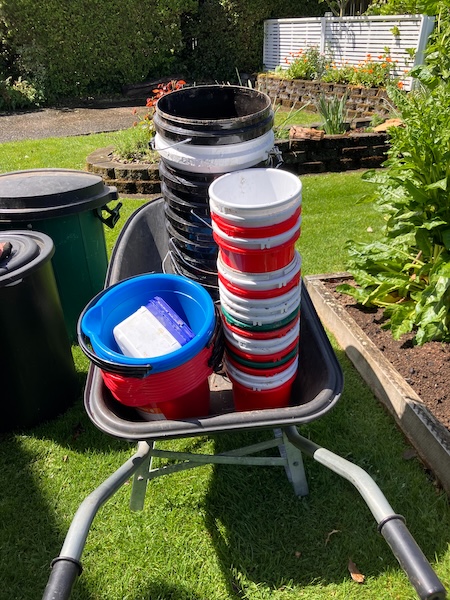
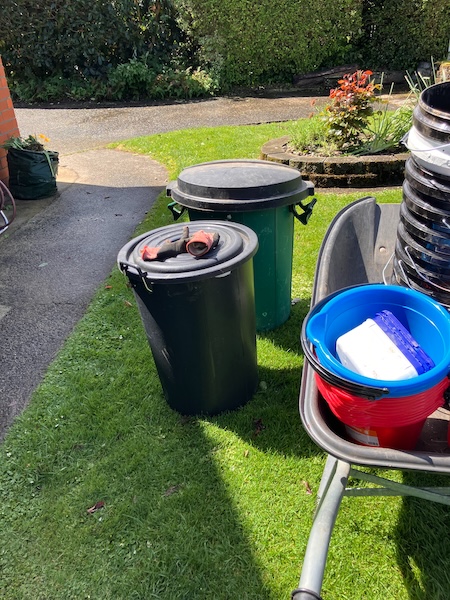
When the cold snap arrived, I found myself out in the rain for two evenings, placing buckets and firewood over each dahlia and other plants that needed protection, before the potential frost the next morning. I then set about covering the remaining plants in the garden with frost cloth, and pegging it securely in place.
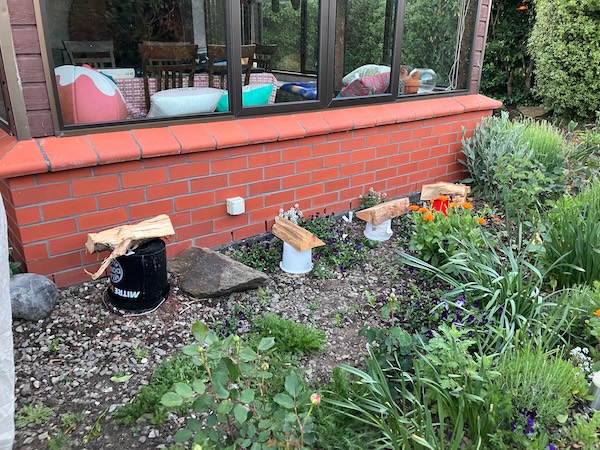
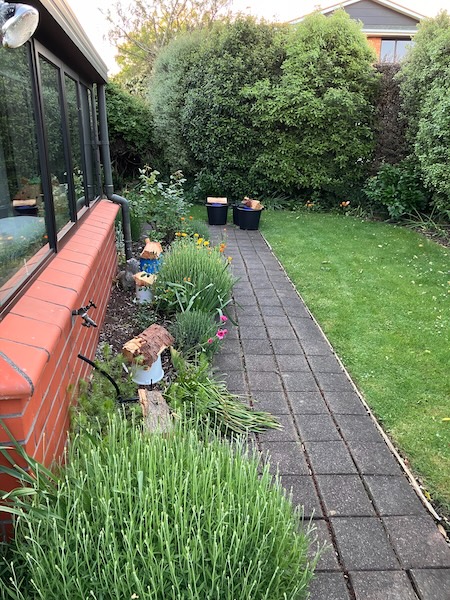
The next morning, I was back outside in the cold, removing the frost protection buckets from the dahlias and other plants. I left the frost cloth in place though, as MetService was predicting another frost for the following morning. I knew that the plants would be fine for one day as sunlight could get through to them.
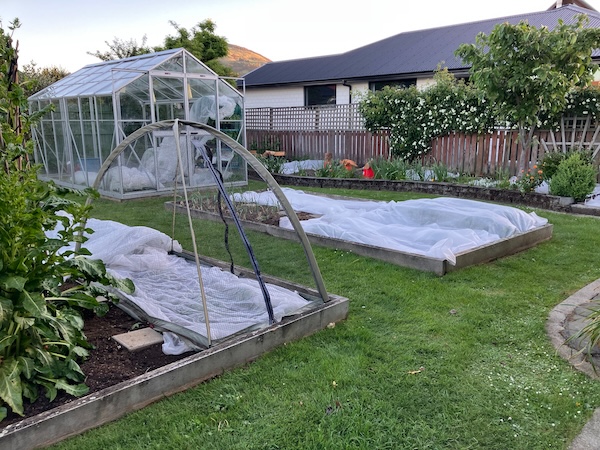
By the next morning, the cold snap was over, with more than 10 days of good weather ahead. I then spent several hours collecting all the frost protection buckets, firewood, and the frost cloth and putting everything away. The buckets and firewood were relatively easy to deal with, but the frost cloth needed to be dried out before it could go back into storage. I hung most of the frost cloth on our clothesline and let the now warm winds blow them dry.
And did my garden get a frost on those two nights?
On 27 October, the temperature at my weather station dropped to 2.7°C at one metre above ground. It definitely didn’t freeze that night. The following night, 28 October, the temperature fell to 1.5°C around 3 am. We often get ground frosts when temperatures drop below 2°C, so it’s possible that the garden experienced a frost. However, as it happened in the early hours of the morning, no one was around to observe it.
I've been thinking since then about the weather at this time of the year, and it's interesting to look back at the weather data for October and November:
- 7 October 2019: last frost -1˚C
- 9 October 2020: last frost 0.3˚C, ground frost observed
- 27 September 2021: last frost -0.4˚C
- 25 October 2022: last frost -0.7˚C
- 27 October 2023: snow settled on the ground overnight
- 10 November 2023: last frost -1.1˚C
- 25 November 2023: 1.2˚C
- 3 November 2024: last frost 0.1˚C, ground frost observed
- 28 October 2025: snow settled on the ground overnight
- 16 November 2025: 1.9˚C
- 28 October 2026: 1.5˚C
As you can see from these records here in my garden in Mosgiel, snow can settle on the ground as late as the last week of October, and frost is still a possibility into the second week of November. Not only does this mean that the saying that it’s safe to put out frost-sensitive plants at Labour Weekend doesn’t hold true for where I live, but it also means I need to be prepared to protect large areas of my garden, if necessary, well into the second week of November.
I’m starting to think it might be worth delaying seed sowing and planting out by a couple of weeks, rather than ending up in this situation every year. It’s much easier to protect frost-sensitive plants in the glasshouse overnight than to spend many hours outside protecting individual plants from snow and frost. Every garden has it's own microclimates, and here in my garden in Mosgiel the danger of spring frosts and snow is one I need to be aware of.
Did you experience late spring frosts in your garden this year? I’d love to hear how the weather behaved in your part of the country, and whether it affected when you planted out.
Have a wonderful day,
Julie-Ann
If you'd like to continue the conversation, you can find me on Instagram, Mastodon, Bluesky, and Facebook.
July In The Garden - 2026
Hello friends,
July is the depth of winter here in Otago, New Zealand. Frosty mornings are a familiar sight, the garden has settled into its winter rhythm, and much of this month's work has been focused on preparing for spring. Although everything feels a little slower at this time of year, there are still plenty of signs that a new growing season is on its way.
Here's what July has looked like in my garden...
What's Flowering:
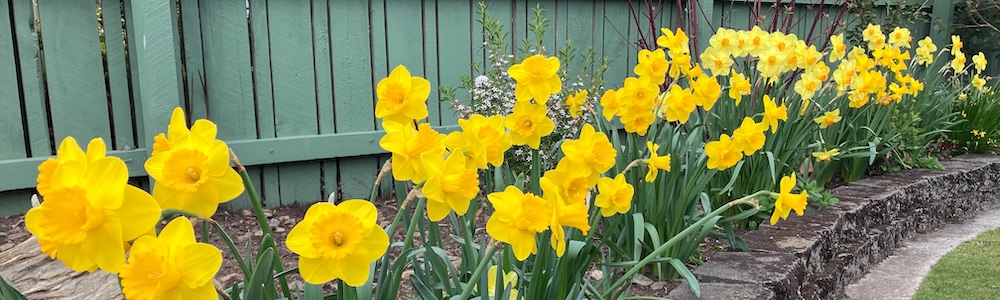
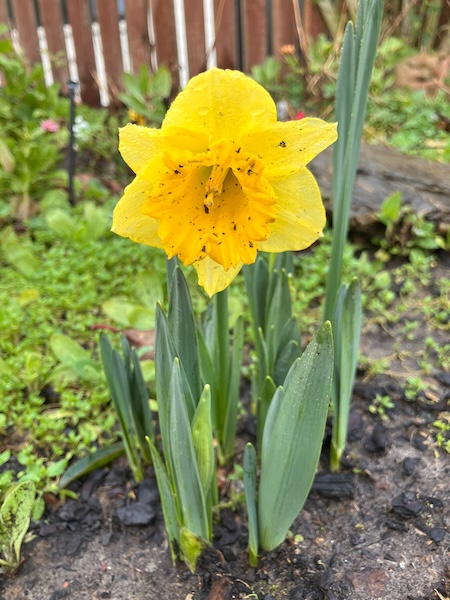
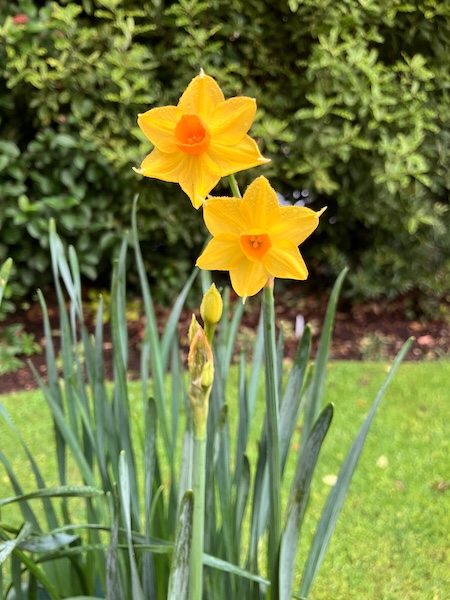
Surprisingly, the first yellow daffodils are already flowering in my backyard. Their foliage began emerging in early June, with the first blooms opening in early July. For now it's only a handful of flowers, but the main display will begin in August and continue right through until October.
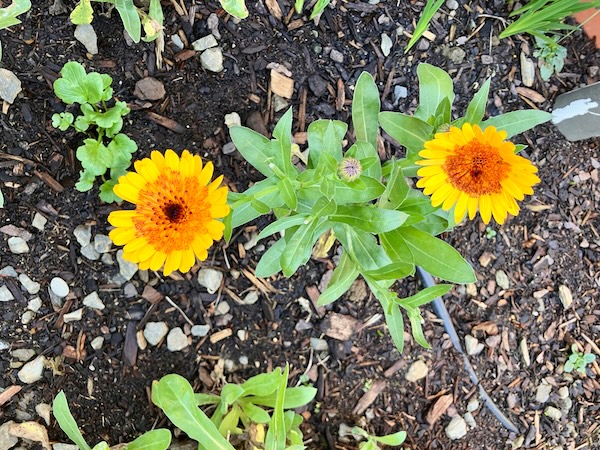
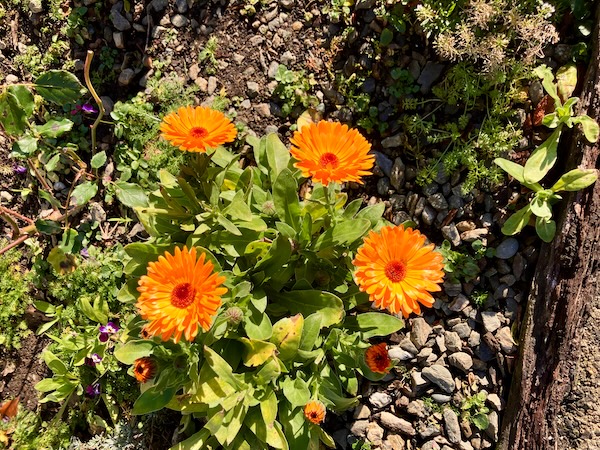
There are still a few calendula flowering in the garden. Over the years I've found they provide flowers for almost the entire year, and their cheerful blooms always brighten the cold, dreary days of winter.
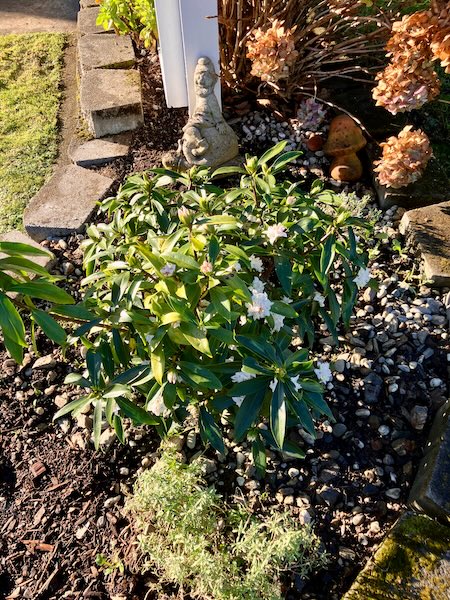
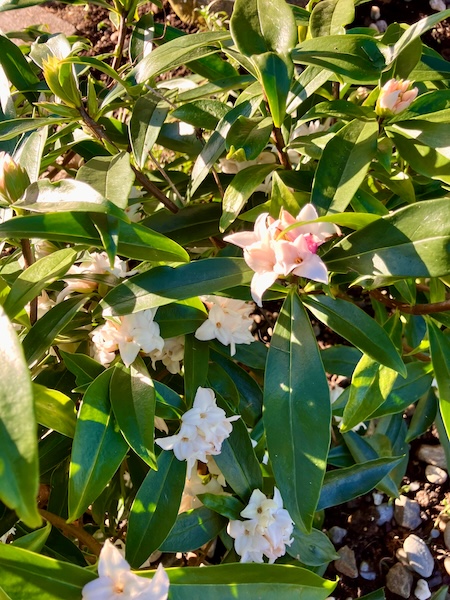
And finally, my young 'Perfume Princess' daphne has been flowering over the past couple of weeks, and its fragrance is intoxicating, filling the entire backyard on sunny still days.
What's Growing:
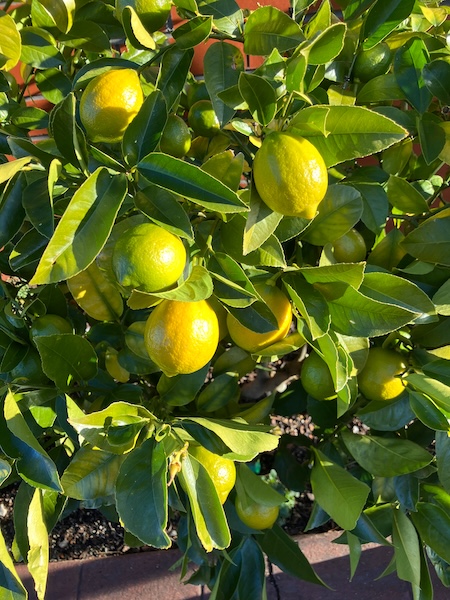
The lemons on my 'Meyer' lemon tree are beginning to ripen, and I'm looking forward to harvesting them over the coming weeks and putting them to good use in the kitchen.
I'm overwintering some sugar beet plants for seed saving, and they've taken all our winter frosts in their stride. They've remained completely hardy and continue to grow without any problems. It is still another 9 months until I can save seed from these plants, and no doubt I'll have to corral them to stop the seed heads from falling over in summer and autumn.

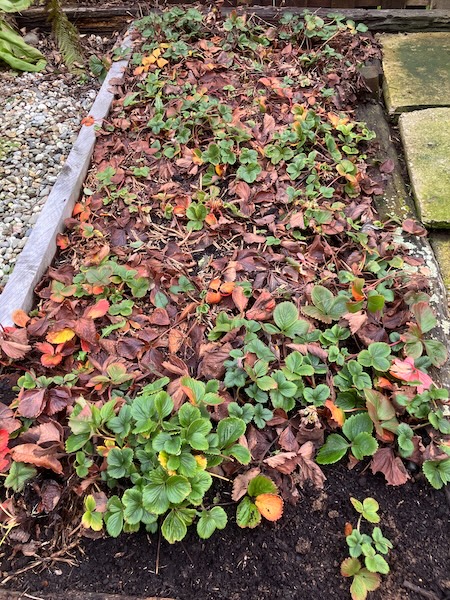
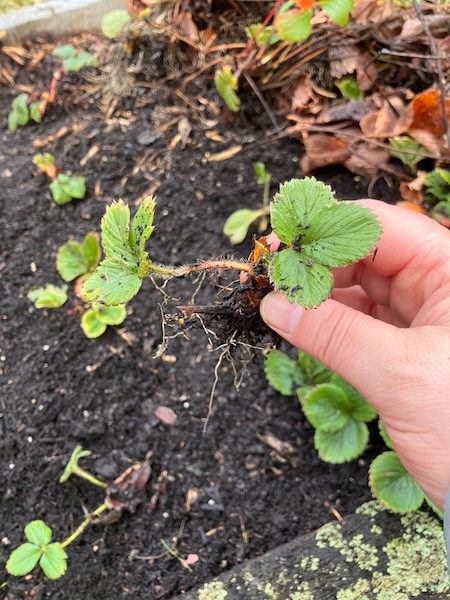
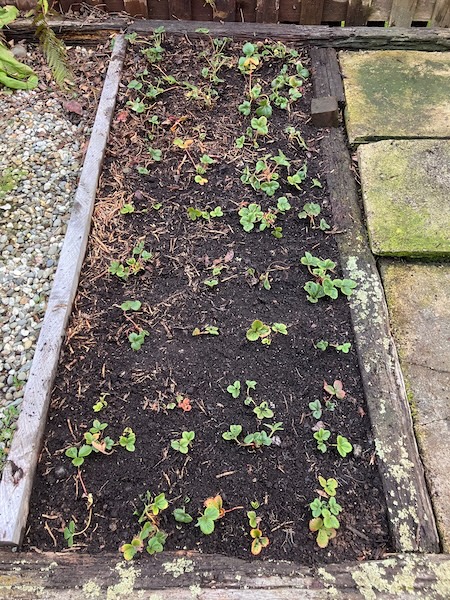
And finally, I gave my strawberry bed a tidy-up by weeding, removing
the older plants, and replanting it with fresh runners. In the process, I
increased the number of plants from 24 to 40, which should mean a much
bigger strawberry harvest this summer.
Nature Notes
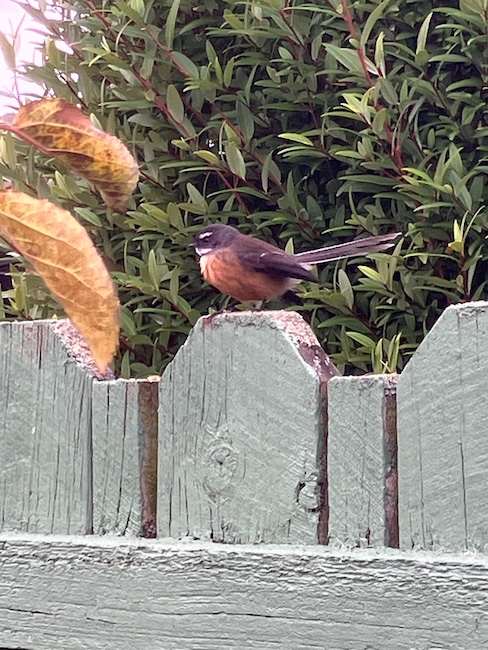
Bird life is abundant at this time of year, with many birds searching for food throughout the garden. As always, the blackbirds have been busy digging up the lawn, vegetable garden, and flower beds in search of worms. Tauhou (also known as silvereyes or waxeyes) have been flitting between the few plants still in flower, searching for nectar, while a pair of pīwakawaka have made themselves at home, darting about in search of insects.
I even managed to photograph one of the pīwakawaka as it followed me around the backyard one sunny afternoon—a lovely reminder that even in the middle of winter, the garden is full of life.
I usually put bird feeders out in the front garden over winter, but with the recent arrival of bird flu in New Zealand, I decided to follow the advice of our local ecosanctuary, Orokonui, and take them down. Hopefully it won't be too long before it's safe to welcome the birds back to the feeders.
July has been surprisingly mild. We've had a total of 19 frosts, with temperatures ranging from –0.1°C down to –2.6°C. For the coldest month of the year, that's quite unusual. In a typical July we would normally expect at least a few frosts of around –6°C, along with plenty of mornings below –4°C.
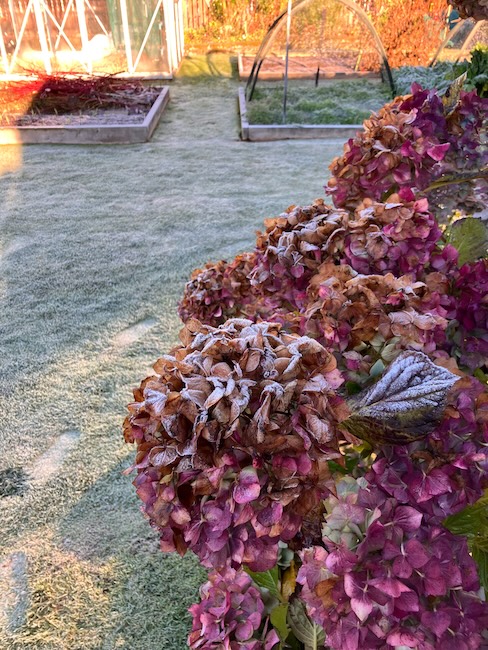
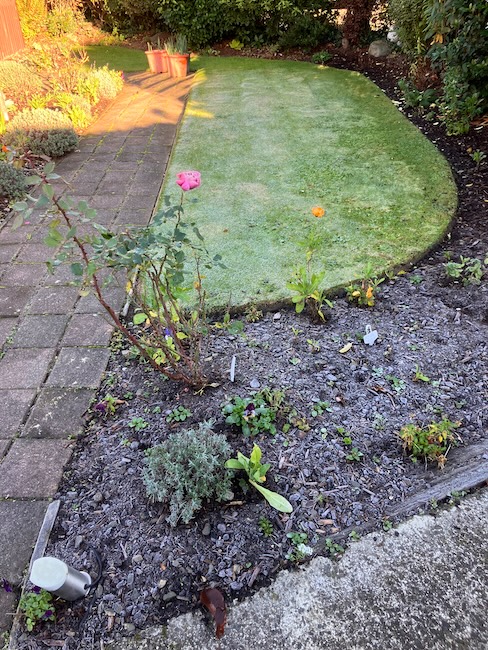
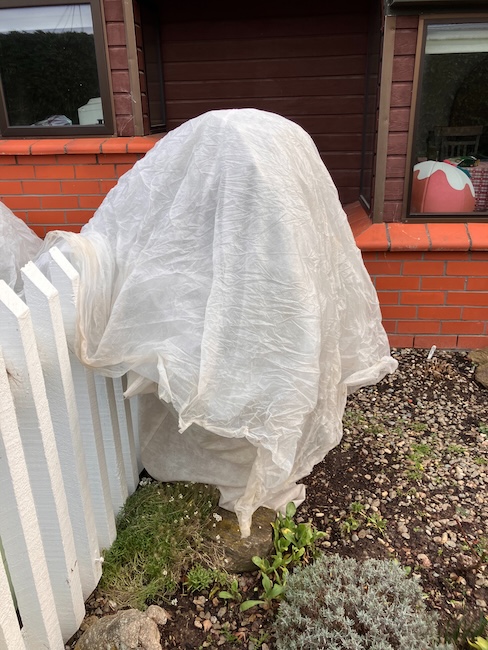
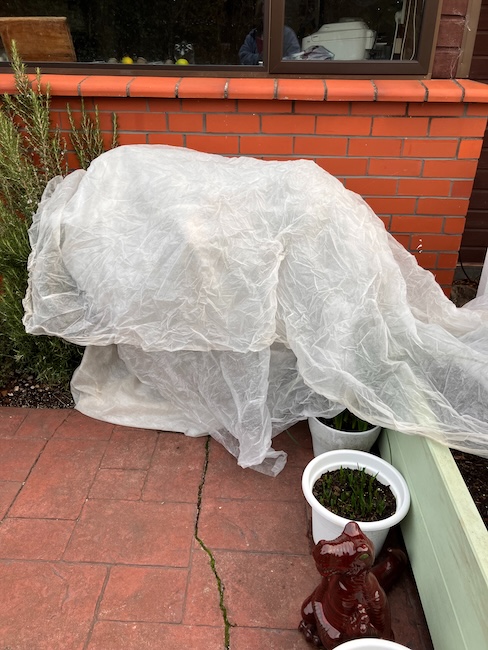
Every day it seems I'm outside in the early evening throwing frost cloth over my citrus plants, wasabi plant, and seedings growing in my glasshouse. My citrus plants look like ghosts in the garden the next morning...
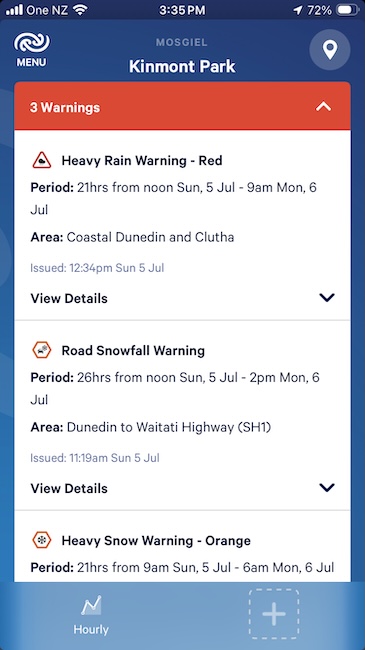
Our biggest weather event this month occurred on 5–6th of July, when a severe winter storm swept across the South Island. Many areas were blanketed in snow, but unfortunately the air wasn't quite cold enough here. Instead, we received torrential rain from the east, prompting MetService to issue a Red Heavy Rain Warning for Dunedin.
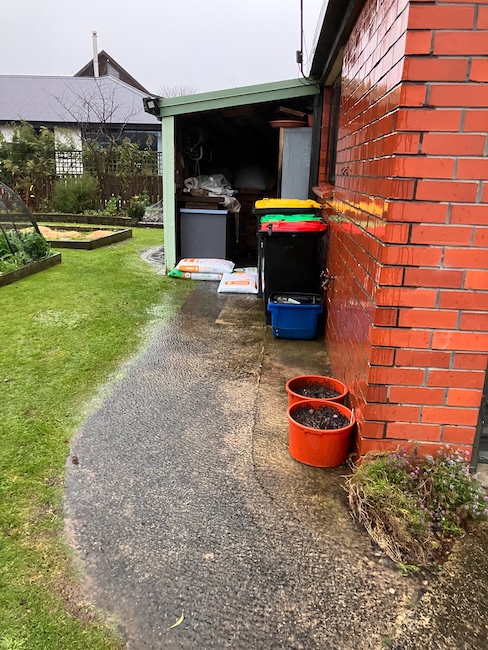
Whenever we get this type of weather pattern, it almost always leads to flooding in our backyard, as well as more widespread flooding across Dunedin. On the 5th of July we recorded 113 mm of rain in just 24 hours, followed by another 80.3 mm on the 6th of July.
As usual, the path leading to our woodshed flooded, so we built a temporary flood barrier using bags of potting mix to keep the water at bay. We keep meaning to fix the problem properly, but this particular weather pattern only comes along every few years, so it never quite makes it to the top of the to-do list.
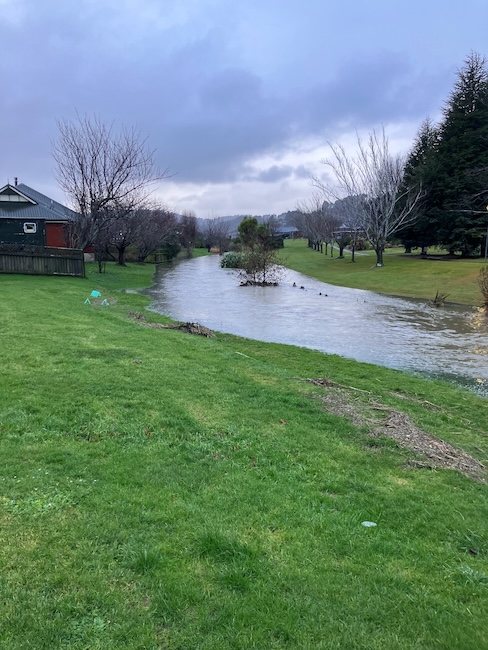
I took a trip out in the pouring rain to check out our local stream. Luckily it stayed within its banks, even though the water was so swift that even the local ducks didn't want to go anywhere near it.

Luckily, the torrential rain eventually came to an end and the garden began to dry out. We've since enjoyed a run of crisp, sunny winter days, making it much easier to catch up on jobs around the garden.
As July draws to a close, the garden is slowly beginning to wake from its winter rest. My seed orders are on their way, and I can't wait to start filling the glasshouse with trays of seedlings. It won't be long before another growing season is underway.
Have a wonderful day
Julie-Ann
If you'd like to continue the conversation, you can find me on Instagram, Mastodon, Bluesky, and Facebook.
Predicting Frosts At Home
Hello friends,
This week I thought I'd share with you how I predict frosts at home using weather resources for New Zealand which are available on the internet.
More often that not, thanks to us being in an inland valley, the weather forecast for Dunedin doesn't apply to Mosgiel, and yet the Mosgiel regional forecast is meant for areas further inland than us. Over the years I've used a bunch of different weather forecasts and also my gut feeling to know when to put frost cloths on my citrus and other frost sensitive plants.
The usual frost set up for us goes something like this: In autumn, winter, and spring, a southerly front/storm comes in from the south west from out over the southern Pacific Ocean. It brings with it either rain/snow, wind, and cold temperatures. After the southerly blows through, the wind dies down, and the sky clears, usually mid afternoon/early evening, then it cools overnight and then we get a frost (or a number of frosts) in the days following. Our frosts can get down to around -6˚C in the middle of winter, but in autumn and spring they can hover just around 0˚C.
Because this set up is pretty predictable, I've come to get a gut feeling about frosts in our local inland valley. So in the late afternoon after a southerly storm when I tend to get a feeling that it'll freeze, that's when I turn to my top three weather forecasting methods.
First up I go to Metservice's website:

On the today forecast in the Dunedin Regional Forecast the -4˚C predicted isn't for "today" but rather than the next morning, on Monday. It's all a bit confusing but it's the best way that it works for me, and the temperature is approximately right. I then look at the "Monday" forecast to see if it says calm winds and frost. In autumn and spring, this forecast tends to be incorrect in predicting frosts.
The second forecast I check is Weather Watch's frost risk forecast. The blue and purple sections on the map show the medium and high risks areas for frosts for the coming days. You can also look at their minimum temperature map to see the temperature bands.


From my observations, Weather Watch's frost predictions are the most accurate. Basically if frost risk map shows blue (or just on the edge of blue), we will get a frost. I trust this frost predictor rather then the other two that I use.
And finally the last frost predictor I use is Rural Weather's forecasts. Just go to rural weather, enter which area of the country you are in, and it'll show you rain, wind, temperatures, fog/cloud, and frost predictions for the coming days.


Their frost trend graph is still in beta, but it is good for predicting frosts. The dark red sections means most likely to have a frost, and the pink is a slight risk of frost. It also shows you what times the frosts might occur. This is my second favorite frost forecast.
With all three of these forecasts in mind, and with my gut feeling telling me there will be a frost, it's time to pull out my frost cloth. My citrus plants and my wasabi plant are sprayed with liquid frost cloth, which protects them down to around -3˚C (depending on how much rain there has been recently). And I also put frost cloth on top of them as double protection, because sometimes, if the plant is still actively growing, the tips of the leaves and flowers may not have been sprayed by the liquid frost cloth. This method works down to around -6˚C, which is usually the coldest frosts we get. If the frost is predicted to be lower than -5˚C, then I just chuck more and more frost cloth on the plants until they are cocooned.
In this case, we did indeed get a frost, which got down to -2.4˚C, which is warmer than the predicted -4˚C by Metservice, but colder than the predicted temperature for Dunedin. It was well and truly worth spending the time putting the frost cloth on my beloved citrus and wasabi plants overnight.


And so, as you can see that my frost prediction method for home is a good setup, and it works for me most of the time. It's much more tricky to predict frosts in late spring though, and we are now getting frosts up until the first week of November, which is a huge risk for my newly emerged dahlia plants. And considering that I have over 50 dahlia plants in my garden, I do not have enough frost cloth and buckets to protect all my plants that late in spring. And that's when I raid the linen cupboard, and use all my spare sheets and blankets as frost protection. As climate change continues to evolve in the coming years, I think our late spring frosts will only get worse.
Have a wonderful day
Julie-Ann
Want to discuss my post? Feel free to chat with me on Instagram or Mastodon or Bluesky, and now also Facebook.
A Week of Extreme Weather In October
Hello friends,
October is usually a tumultuous month for us here in Dunedin, with the weather swinging in extremes from hot north westerly gales, to cold southerly fronts, including the threat of possible snow and frost, and this October was definitely no different from previous years regarding this.
In the third week of October we were warned of a spring north westerly wind storm approaching, and the resulting weather watches and orange wind warnings from Metservice had me worried.

In preparing for the north westerly wind storm, it first meant picking up anything outside that could go airborne, including my frost protection buckets (I lost one in the wind, but I eventually found it days later), taking down our bird feeders, moving our patio furniture to a more protected spot, putting our wheelie bins into the woodshed, and tying the glasshouse doors shut as they face the North West.


I also took the precaution of moving my most precious plants out of the glasshouse and into the garage for extra protection. I just couldn't risk losing our tomato plants, and dahlias in pots due to something unforeseen happening, like our glasshouse blowing away.
The big north westerly wind storm itself was frightening, and our house shook and shuddered for hours, first with the North Westerly gales, and then the Southerly front behind it, which took out our grid power for 8 hours. Luckily, we have solar panels on our roof, and a solar battery in our garage, and this system kept our house powered during the blackout (our battery has a storm watch function, and as soon as Metservice sent out the orange wind warning, the system began charging the battery to 100%). We are now very glad we invested in a solar system a couple of years ago.


All around Dunedin mature trees were blown over, trampolines went flying, fences were blown over, and the roofs of houses were lifted off. Many people in the lower South Island lost power for hours, and some for days, and even weeks.
Unfortunately, there were two casualties in my garden from the north westerly wind storm. My Avalanche camellia in the backyard garden snapped off at its base, killing the plant. It was only a year old, and didn't have a thick trunk yet, and it looks like it bent over in the wind until it just snapped. The only good thing about this happening is that it has given me one extra spot to plant a dahlia in this summer, but I am sad that I lost a beloved plant...
And the second casualty, was that my quince tree lost two north west facing tree limbs. They snapped partially off, so I had to trim them back to the nearest healthy branch on the tree. My quince tree is only 3 years old, so it won't suffer from losing a couple of young tree limbs. Thankfully the quince fruit forming on the tree didn't fall off during the storm.


With the north westerly wind storm over, it was time to clean up the garden of plant debris, reinstate our garden furniture to the patio, return the bird feeders to their rightful places, and transfer my precious plants sheltering in our garage back to the glasshouse.
The weekend after the north westerly wind storm was Labour Weekend, the traditional time to plant everything out in the vegetable and main gardens, but I was wary of doing this because Metservice forecast a cold southerly system occurring, with the potential of snow to low levels, and a frost afterward. I refused to risk planting out all my plants into the garden that weekend, only to have to frost cloth them for nights afterward.
So instead of spending the entire Labour weekend out in the garden planting out everything, my plants stayed safely inside the glasshouse where it was definitely warmer than outside, and I watched as the cold weather arrived...
And thank goodness I listened to the Metservice forecast, because the predicted low level snow fell, and settled to about 200 m above sea level in the hills surrounding us, and our temperature dropped to 1.1˚C overnight.


The dahlias growing outside were protected by their frost protection buckets, and all the plants in the glasshouse was protected by a number of layers of frost cloth. After a couple of days the weather warmed up back to early November temperatures, and it was time to plant stuff out in the garden, but it adds to my growing evidence that late October/early November is a risk to my Labour weekend gardening plans.
Have a wonderful day
Julie-Ann
Want to discuss my post? Feel free to chat with me on Instagram or Mastodon or Bluesky.
Social Media



Archives