
Quince Tree Pruning and Natural Dyeing
Hello friends,
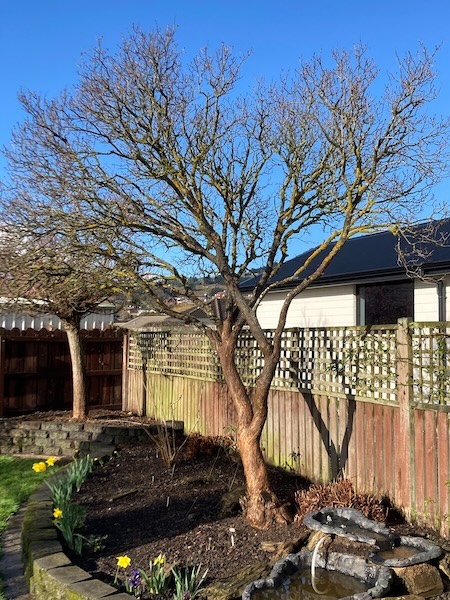
I was running out of time this winter to prune our quince tree, and the job needed to get done before spring came and the tree began bursting its buds. So one warm and dry winter afternoon hubby and I got out our ladder, and the numerous pruning tools necessary for the job, and got to work taming our unruly quince tree.
My first aim was to get the vertical branches under control. If they were allowed to grow much further, the quince fruit would be out of reach, even with a ladder. The tree was also beginning to cast shade over my dahlias every afternoon, which definitely wasn't an allowed option either. With the area set up for the pruning job, it was time to look at the 4 'D's of plant pruning, remove dead, damaged, diseased, and dying branches, along with branches that crossed over other branches.


It didn't take very long at all to prune our quince tree, and turning it into a much smaller and tighter shape. With that done it was time to clean up the pruned quince branches.

Not wanting to waste the quince branches, I chopped them into smaller pieces and set them aside for a natural dyeing experiment. Apple and pear branches are well known among natural dyers for producing pink and peach shades from their bark, so I was curious to see whether quince being in the same family, might produce similar results.

As yet, I haven't had a chance to try this natural dyeing experiment, but in the meantime the quince wood chips have dried nicely and are now stored away for later. Hopefully I'll get a chance to see what colours they produce before too long.
Have a wonderful day
Julie-Ann
If you'd like to continue the conversation, you can find me on Instagram, Mastodon, Bluesky, and Facebook.
Our Lilac Tree Died
Hello friends,
Our lilac tree stood in the right hand side of our backyard, a fully grown tree already when we moved into our home in 2019. Each year in spring it would bud out and produce leaves followed by stunning purple scented flowers, but unfortunately this past spring was its last.
In the third week of October in 2025, a large wind storm blew through the South Island of New Zealand, causing wind damage throughout Otago and Southland, and cutting off power to thousands. At the time I thought my only plant casualties were some limbs coming off my quince tree, and my Avalanche camellia bush being snapped off at its base, but unknown to us at the time, my lilac tree had been damaged as well.
A week after the storm I'd noticed that our lilac tree hadn't burst its buds, and when I touched the buds they crumbled, having been turned brown and crispy by the wind storm. The tree had gotten wind blasted to the point that it was in serious trouble. We left it for a while to see if it would bounce back, and eventually a couple of leaf buds on the south side of the tree burst open, showing that at that time the tree was still alive (well only barely).
We left it over the summer to see if it would grow more leaf buds, but it didn't, and then around early February 2026 the few remaining leaves on the plant turned brown and fell off. After carefully checking multiple branches at points around the tree, and the suckers which usually came up from the base of the tree each summer, they were all dead and brown. I also checked with a few knowledgeable plant friends, and they also agreed that our lilac tree had died.
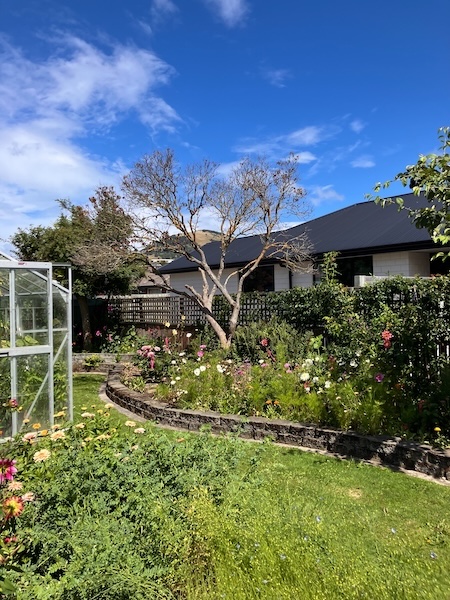
I was really upset over this, but also practical, because sometimes these things just happen. Nature gives and it takes away. The next weekend hubby got out our saw and began cutting down the tree limbs. Our first priority was to remove dead branches that could possibly hit the glasshouse or the fence, and then after that we cut the tree down to the ground. Hubby mulched what tree material he could with our wood chipper, and mulched around that area of the garden to help with weed suppression.
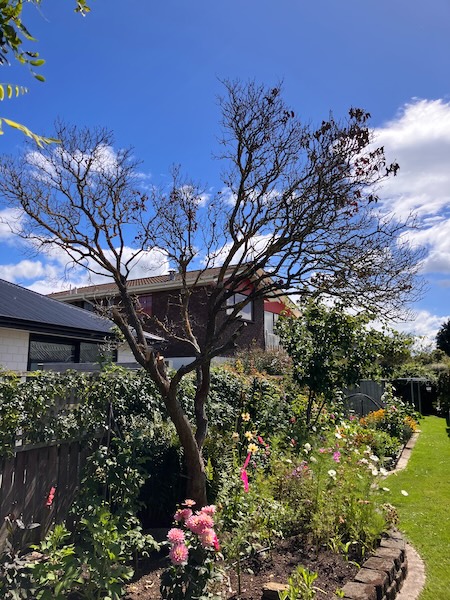
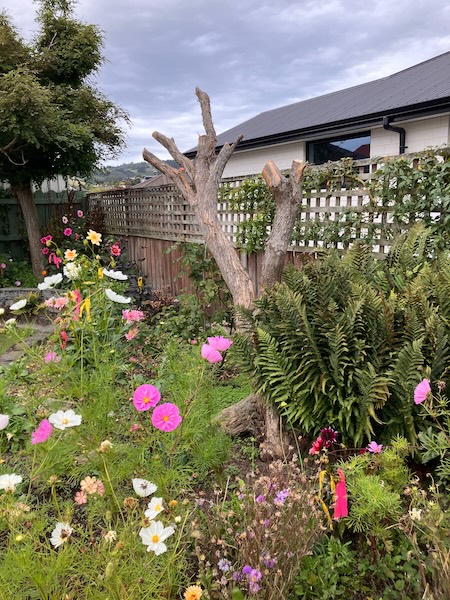
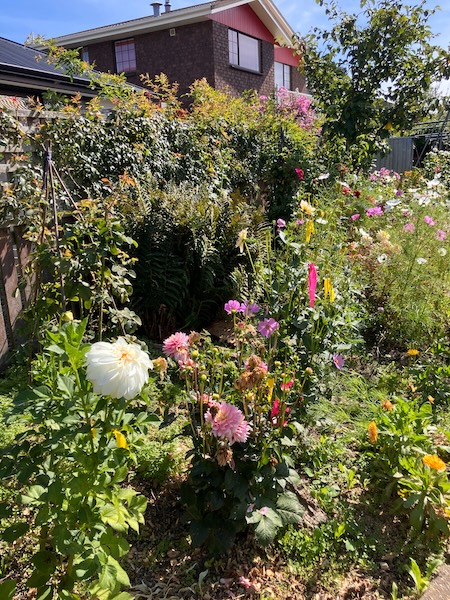
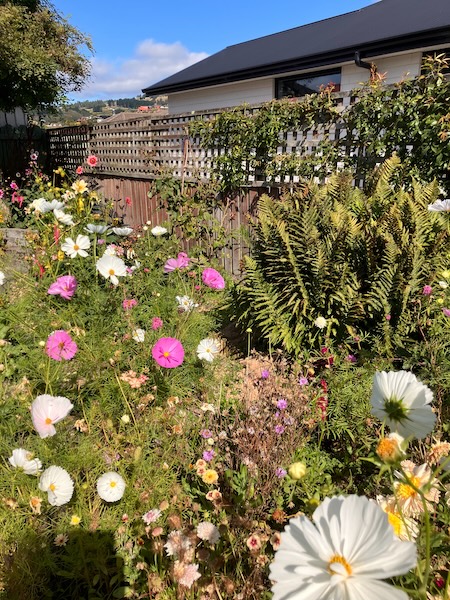
We also dug up the old fern plant beside the tree, as in the past a wasp nest had been buried in there, so I wanted to remove the plant to ensure it wouldn't happen again.
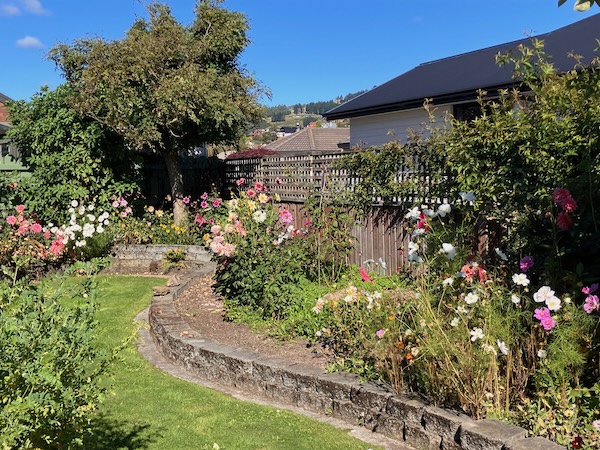
The resulting sunlight in this area of the garden after the tree had been taken down, is just amazing. There is now a lot more sun in the garden bed from early morning until early evening. Dahlia plants that had grown under the tree grew vigorously, and have even flowered.
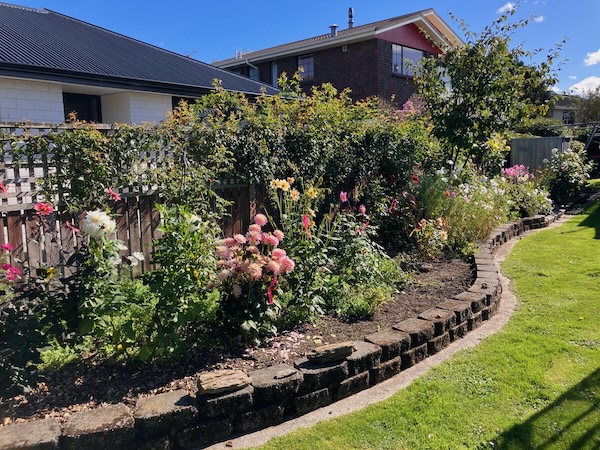
At the moment in mid-autumn there are dahlias and damask roses still growing in this area. As soon as the first big autumn frost comes, and knocks back the dahlias growing there (after I've finished seed saving from them), I think I will rearrange this whole area of the garden, in preparation for the next growing season. And I already have some ideas on what I could do...
Have a wonderful day
Julie-Ann
Want to discuss my post? Feel free to chat with me on Instagram or Mastodon or Bluesky, and now also Facebook.
Making Apricot Nectar
Hello friends,
Back in late December 2025, a neighbour turned up on my doorstep with a very large bowl of apricots in her hands, an entire bowl of unripe apricots she had harvested off the apricot tree outside my home. The tree had been planted by our local council on public land, with the intention that any fruit produced would be shared among the neighbours in our street. The fruit had just begun to ripen and fall, and I had been keeping an eye on the tree, and picking up the first few apricots dropping onto the grass each day.
My neighbour had decided to pick every single apricot off the tree in one go — they were not ripe, and were still very bitter. Her intention was to turn all the apricots into jam for herself, because she said she hated to have any fruit wasted. She thought it would be fair to give me a small amount of apricots because I had been looking after the tree throughout the year. So, she gave me a small bowl of apricots, and then went on her merry way to turn all the rest of the apricots into jam...
I have to admit I was annoyed with this occurrence, first of all it meant that no one else in the street could pick any apricots this summer, and two, I now had a bowl of unripe apricots which I now had to ripen. Luckily I had some ripe apricots for eating in my pantry, so I nestled them amongst the unripe apricots, and left them at room temperature with the hope they would indeed ripen.

Five days later, and with the majority of the apricots ripened, I broke them apart to remove the kernels, and then froze them away until I knew what I would make with them all. After taking some time to decide, I found a couple of recipes online, and chose to make some apricot nectar with the apricots, as I am very fond of drinking it on hot days, as it's very refreshing and cooling.
The first step was to defrost the 1 kg of apricots, and then I added it to a large pot along with 1 L of water.


I simmered it for half an hour, until the apricots had completely broken down.

To the pot I then added 500 grams of granulated sugar, and the juice of 1 large lemon, and then simmered the pot for a further 5 minutes while stirring.

At the end of the 5 minutes I took the pot off the heat, and let it cool.

The last thing to do was to pour the apricot nectar mixture through a fine sieve set over a large bowl, and push the apricots through the sieve until no more juice and puree came out. My mum happened to be visiting during this step, so she assisted me with this. She took the apricot remains from the sieve home with her, so she could put them on her Weetbix for breakfast, and she said it was very tasty.

With the sieving of the apricots done, the apricot nectar was ready to use.

I added a small dash of the concentrated nectar to a glass, and then topped it up with some chilled sparkling water. It was very refreshing, and it tasted just like the commercial bottles I had bought. Most of the nectar remaining was stored in the fridge for drinking over the next week.

I decided to dehydrate the remaining apricot nectar into fruit leather, using my dehydrator, and it was equally as delicious as a fruity snack. It was so tasty, that by the time it had dried properly, hubby and I had already started eating it straight off the drying sheet.

All in all, despite the frustrating start to this project, the resulting apricot nectar and fruit leather were very tasty, and I will look forward to repeating this with more apricots each year.
Have a wonderful day
Julie-Ann
Want to discuss my post? Feel free to chat with me on Instagram or Mastodon or Bluesky, and now also Facebook.
A Week of Extreme Weather In October
Hello friends,
October is usually a tumultuous month for us here in Dunedin, with the weather swinging in extremes from hot north westerly gales, to cold southerly fronts, including the threat of possible snow and frost, and this October was definitely no different from previous years regarding this.
In the third week of October we were warned of a spring north westerly wind storm approaching, and the resulting weather watches and orange wind warnings from Metservice had me worried.

In preparing for the north westerly wind storm, it first meant picking up anything outside that could go airborne, including my frost protection buckets (I lost one in the wind, but I eventually found it days later), taking down our bird feeders, moving our patio furniture to a more protected spot, putting our wheelie bins into the woodshed, and tying the glasshouse doors shut as they face the North West.


I also took the precaution of moving my most precious plants out of the glasshouse and into the garage for extra protection. I just couldn't risk losing our tomato plants, and dahlias in pots due to something unforeseen happening, like our glasshouse blowing away.
The big north westerly wind storm itself was frightening, and our house shook and shuddered for hours, first with the North Westerly gales, and then the Southerly front behind it, which took out our grid power for 8 hours. Luckily, we have solar panels on our roof, and a solar battery in our garage, and this system kept our house powered during the blackout (our battery has a storm watch function, and as soon as Metservice sent out the orange wind warning, the system began charging the battery to 100%). We are now very glad we invested in a solar system a couple of years ago.


All around Dunedin mature trees were blown over, trampolines went flying, fences were blown over, and the roofs of houses were lifted off. Many people in the lower South Island lost power for hours, and some for days, and even weeks.
Unfortunately, there were two casualties in my garden from the north westerly wind storm. My Avalanche camellia in the backyard garden snapped off at its base, killing the plant. It was only a year old, and didn't have a thick trunk yet, and it looks like it bent over in the wind until it just snapped. The only good thing about this happening is that it has given me one extra spot to plant a dahlia in this summer, but I am sad that I lost a beloved plant...
And the second casualty, was that my quince tree lost two north west facing tree limbs. They snapped partially off, so I had to trim them back to the nearest healthy branch on the tree. My quince tree is only 3 years old, so it won't suffer from losing a couple of young tree limbs. Thankfully the quince fruit forming on the tree didn't fall off during the storm.


With the north westerly wind storm over, it was time to clean up the garden of plant debris, reinstate our garden furniture to the patio, return the bird feeders to their rightful places, and transfer my precious plants sheltering in our garage back to the glasshouse.
The weekend after the north westerly wind storm was Labour Weekend, the traditional time to plant everything out in the vegetable and main gardens, but I was wary of doing this because Metservice forecast a cold southerly system occurring, with the potential of snow to low levels, and a frost afterward. I refused to risk planting out all my plants into the garden that weekend, only to have to frost cloth them for nights afterward.
So instead of spending the entire Labour weekend out in the garden planting out everything, my plants stayed safely inside the glasshouse where it was definitely warmer than outside, and I watched as the cold weather arrived...
And thank goodness I listened to the Metservice forecast, because the predicted low level snow fell, and settled to about 200 m above sea level in the hills surrounding us, and our temperature dropped to 1.1˚C overnight.


The dahlias growing outside were protected by their frost protection buckets, and all the plants in the glasshouse was protected by a number of layers of frost cloth. After a couple of days the weather warmed up back to early November temperatures, and it was time to plant stuff out in the garden, but it adds to my growing evidence that late October/early November is a risk to my Labour weekend gardening plans.
Have a wonderful day
Julie-Ann
Want to discuss my post? Feel free to chat with me on Instagram or Mastodon or Bluesky.
Social Media



Archives