
Saving Dahlia and Zinnia Seeds for Next Season
Hello friends,
Over late summer and early autumn, I spent many happy hours collecting seeds from the dahlias in my garden, and from the Floret zinnia varieties growing in my zinnia patch.
This year, my focus was on saving seeds from as many collarette and anemone dahlias as possible, along with seeds from some of my favourite seedling dahlias from this season. There's always something hopeful about saving dahlia seeds. Unlike tubers, the seedlings won't grow true to their parents, and that's part of the magic. Every seed has the potential to produce something completely new, making each growing season full of anticipation and surprises.
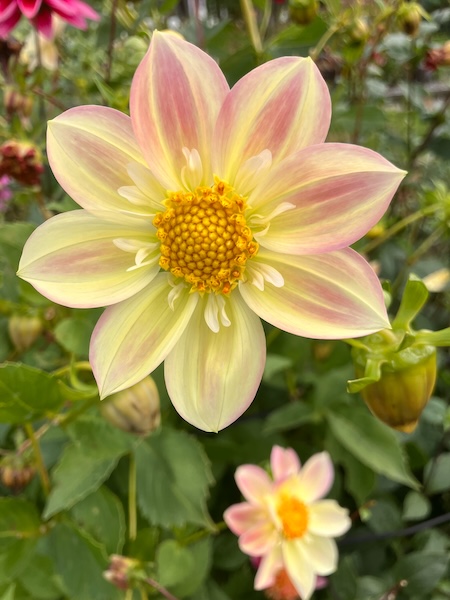
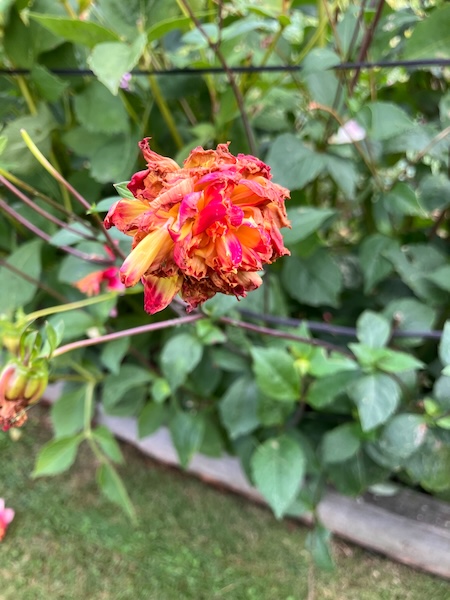
The process of saving dahlia seeds takes a little time and patience. Once a flower has finished and the petals have fallen, the waiting begins. Not every flower produces a good seed head, so I watch carefully for those that develop into plump, full seed heads.
Once I find one, I mark it with a piece of flagging tape and leave it on the plant to mature. Depending on the weather, this can take anywhere from a couple of weeks to a month. As the seed head ripens, it gradually turns a mid to dark brown colour, becomes dry and crunchy to the touch, and the outer sepals begin to pull back, revealing the inner parts of the seed head.
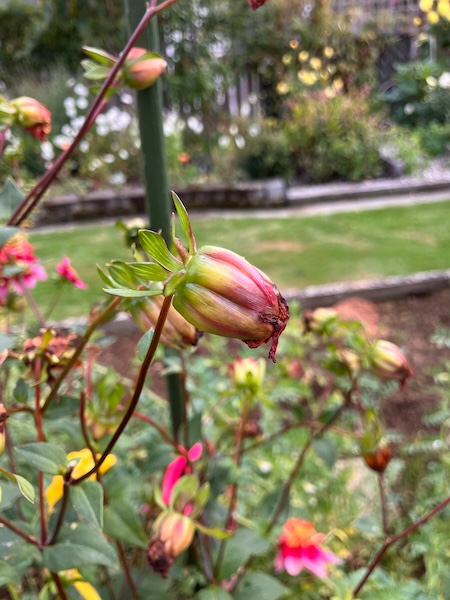
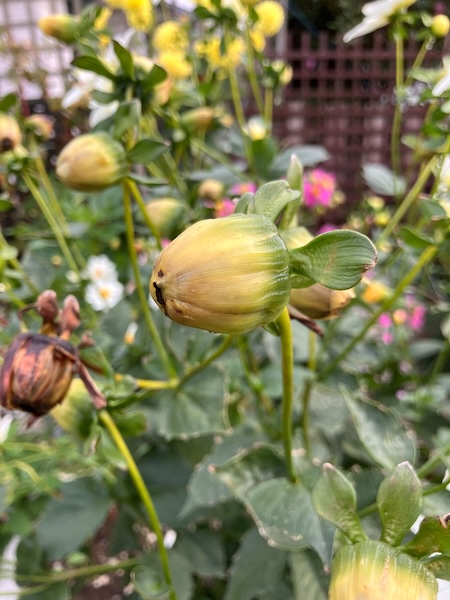
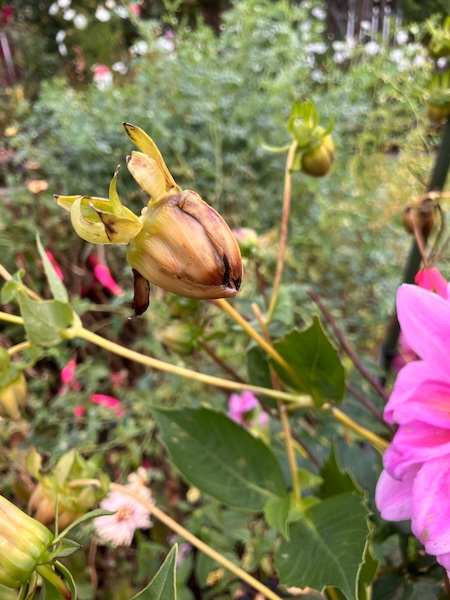
At this stage, I remove the seed heads from the dahlia plant and place them in an open container labelled with the variety name. I then gently break up the seed heads by hand to increase the airflow around the seeds. As the seed head falls apart, the dahlia seeds begin to separate from the chaff, and I leave everything together in the container to dry for a couple of weeks.
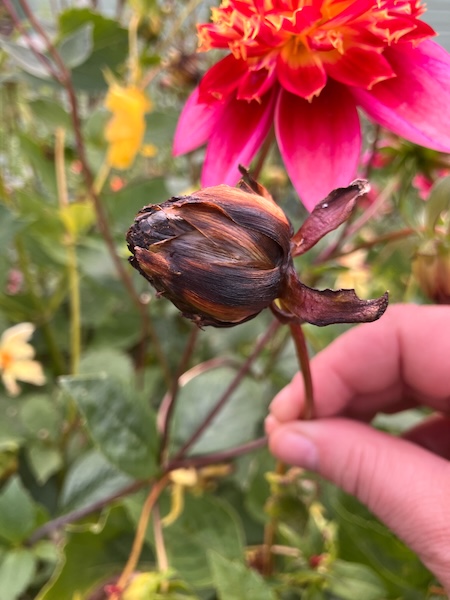
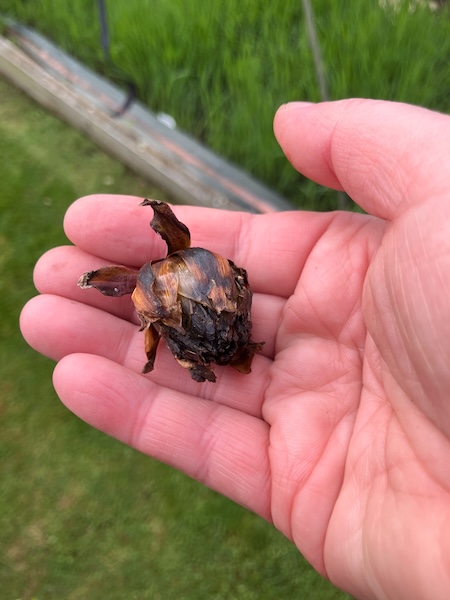
Once the seed heads are completely dry, it's time to separate the dahlia seeds from the chaff. Fortunately, the chaff is both larger and lighter than the seeds, which makes the job a little easier.
There are a number of ways to do this. One method is simply to shake the container, allowing the heavier seeds to settle to the bottom while the chaff sits on top. Another option is to winnow the crushed seed heads on a windy day, or in front of a fan. The heavier seeds drop into a waiting container, while the lighter chaff blows away. A third method is to use a soil sieve, which screens out the larger pieces of chaff while allowing the seeds to fall through.
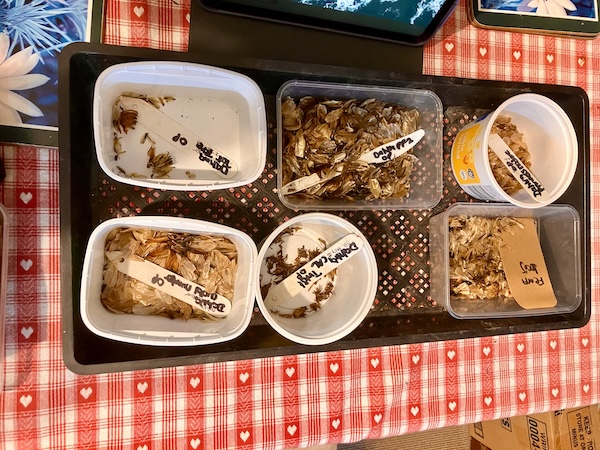
Most of the time I use the first method, as I've found that viable dahlia seeds can sometimes remain attached to the chaff. If I wasn't paying attention, it would be all too easy to throw away perfectly good seeds.
Before I begin, I make sure the seed heads are crushed up as much as possible. I then gently shake the container from side to side, allowing the heavier seeds to settle to the bottom while the chaff rises to the top. As I remove the chaff, I quickly check it for any viable seeds that are still attached and carefully pry them off by hand.
It takes a little extra time, but I'd rather spend a few extra minutes cleaning the seeds than accidentally lose some future potential favourite dahlia varieties.
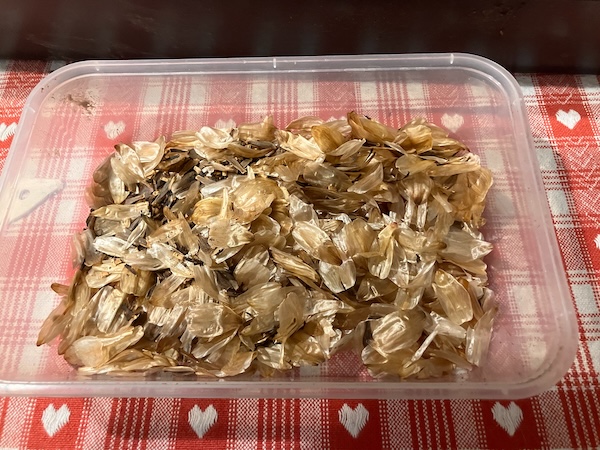
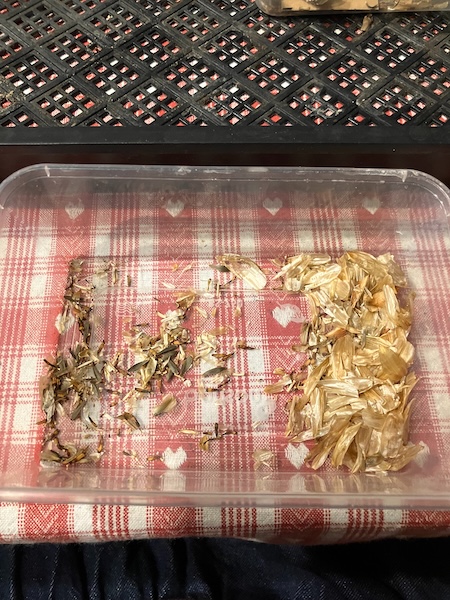
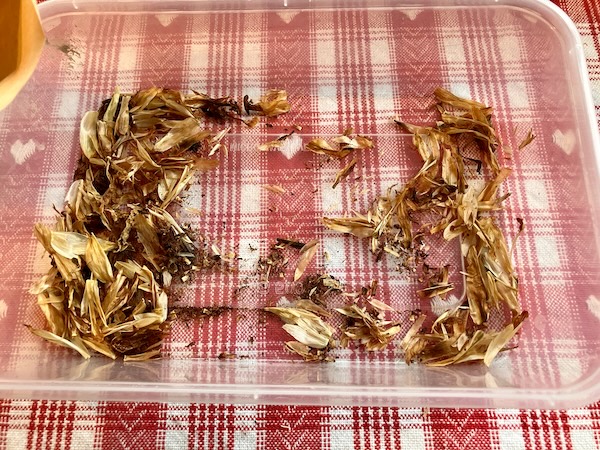
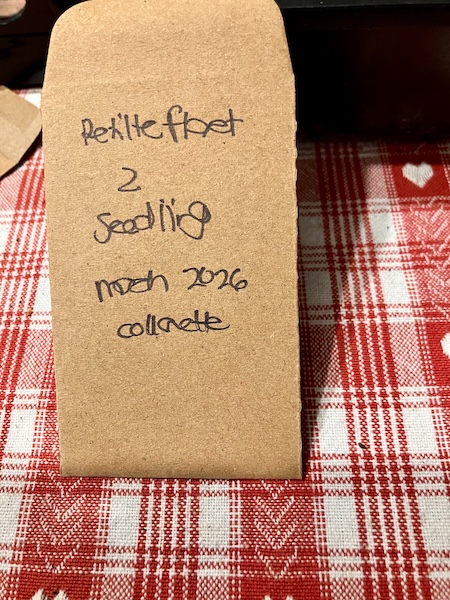
Once all of this is done, I pop the dahlia seeds into labelled paper seed envelopes. I like to include the dahlia variety, the flower type, whether the seed was open or closed pollinated, the pollen parent (if I know it), and the date the seed was collected.
With everything labelled and safely stored away, the seeds are tucked away until spring, when the whole process begins again. One of the things I love most about growing dahlias from seed is that each seed holds the possibility of something completely new, and I can't help but wonder what surprises next season will bring.
My approach with the Floret zinnias in my zinnia patch (Precious Metals, Unicorn and Blush) was a little different. Rather than selecting individual plants, my aim was simply to collect as many viable seeds as possible from across the patch.
Because Floret zinnia seeds were only available in New Zealand for one season in 2024, I have no way of purchasing more seed. If I want these beautiful varieties to remain part of my summer garden, seed saving is really my only option.
Thankfully, zinnias are generous plants, and with a little effort I hope to carry these favourites forward for many summers to come.
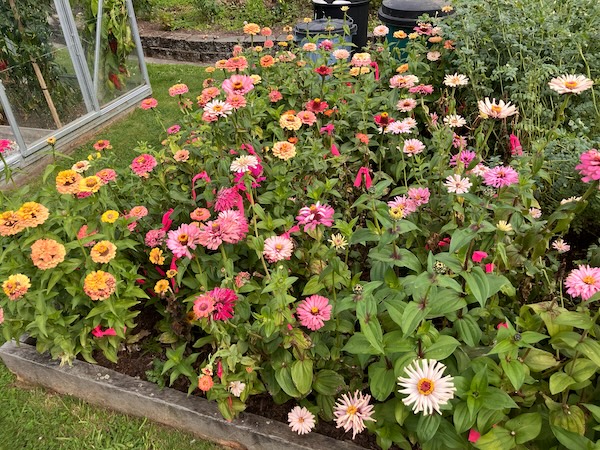
Last spring, I sowed all of the remaining Floret zinnia seeds I had in storage and grew them on through the season. By late January the first flowers were appearing, and I began saving seed in February.
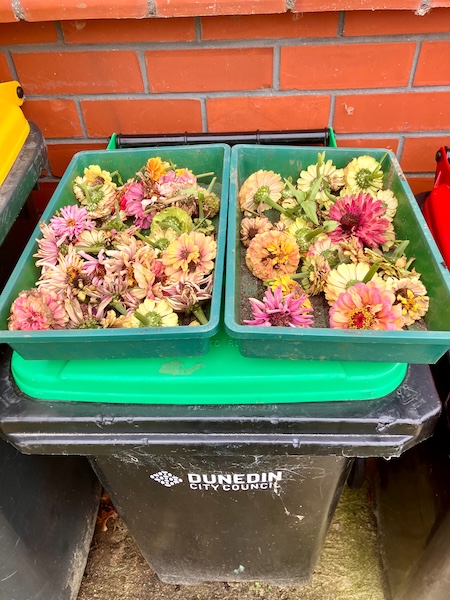
Fortunately, many of the plants set seed well, and before long I had collected trays of mature brown seed heads. Then, in April, just before our first decent frost, I harvested as many flower heads that had begun setting seed as possible, hoping that some of them would continue to mature and provide a few extra seeds as well.
With Floret zinnias no longer available, I was keen to make the most of every opportunity to save seed and carry these beautiful varieties forward into future summers.
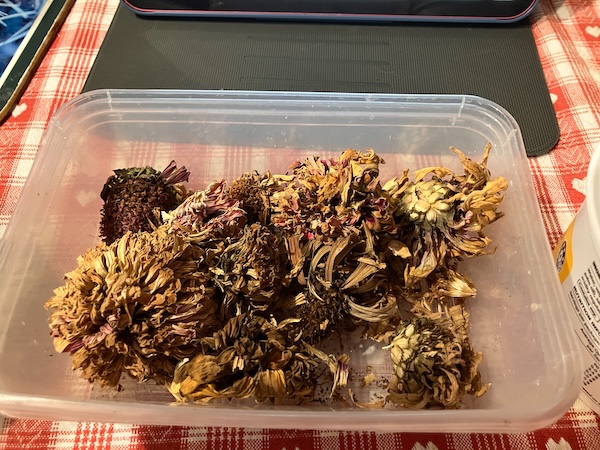
The process for collecting zinnia seeds is pretty much the same as with the dahlia seeds. I allow the seed heads to dry out completely before gently crushing them by hand. The seeds naturally fall to the bottom, and I use the same shaking method to separate them from the chaff.
One of the interesting things about zinnias is that they produce two different types of seeds. Seeds from the ray flowers are larger and rounder in shape, while the seeds from the disk flowers are much smaller and narrower. Some growers believe that the larger ray flower seeds are self-pollinated, while the smaller disk flower seeds are more open-pollinated, producing different flowers in the next generation. I haven't found any definitive evidence for this, though.
As I've collected both seed types, it would be easy enough to grow them separately and see what happens. Perhaps that's a future Crafty Gardener project waiting to happen...but that's a story for another growing season.
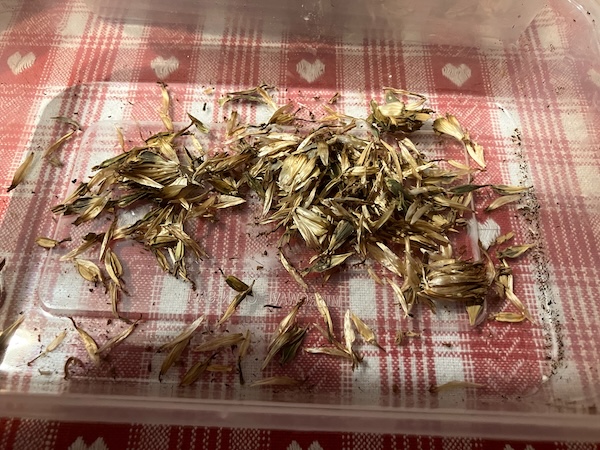
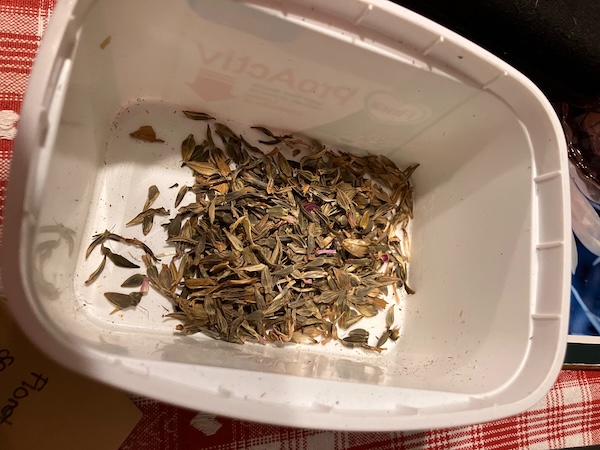
Overall, I managed to harvest over half a margarine container full of Floret zinnia seeds. They are now safely stored away, waiting patiently for spring and another season in the garden.
Both dahlia and zinnia seed saving have taken up a lot of my time throughout autumn and now into early winter, but I have many seed packets safely stored away ready for sowing in spring.
Winter has arrived, and although it is often thought of as a quieter time in the garden, I know there is still much to do. There is tidying and weeding to tackle, dahlia tubers to dig up, and a new back garden project waiting in the wings.
This will be my last blog post for the next fortnight. My husband and I have a medieval-themed wedding to attend (which means we finally get to wear our new cloaks!), and afterwards we're taking a short holiday to relax after a busy growing season.
So, until then, I'll wish you all a happy winter solstice. I'll see you again in July, at the beginning of a new gardening year, and the start of another season of stories.
Have a wonderful day
Julie-Ann
Want to discuss my post? Feel free to chat with me on Instagram or Mastodon or Bluesky, and now also Facebook.
November Dahlia Update
Hello friends,
Yes, I did buy more dahlias after I said my garden was completely full and I couldn't fit any more in, but I promise this time I had good reasons to do so...
First of all, I lost a number of dahlias this spring due to tubers rotting/eyes not forming, including:
- Arthur Hambley (DP)
- Cafe Au Lait (DP)
- Islander (DP)
- Muchacha (Dec)
- Salmon Runner (Dec)
- Tranquility (Col)
- Impression Fomoso (Col)
- The Phantom (Ane)
From my observations over the past couple of years, dinner plate dahlias seem more prone to rotting, and for this reason I am not planning on buying anymore dinner plate dahlias in the future, they're just not worth spending all that money on, just to end up rotting in spring.
Secondly, when my NZ Bulbs dahlia order arrived in early October, one of my collarette dahlias, Dark Tiger, was not in the package due to them being out of stock, and they replaced it with the waterlily dahlia, Twiggy. The dahlias in this order weren't in the best condition, and two of them (Tranquility and Impression Fomoso) are actually in the lost dahlias list. They didn't form any eyes at all, and then they rotted. I don't think I'll buy from NZ Bulbs ever again when it comes to dahlias.
Twiggy is a waterlily dahlia with warm pink suffused petals and a light yellow center.

And thirdly, I got rid of our small plastic pond in the back garden. When hubby installed it three years ago, he promised he would take care of it, and keep it clean, and that just didn't happen. So after I cleaned it out this spring (again), I talked with hubby, and he agreed with me that it was time for the pond to go. This freed up a large space in the right part of the back garden, and after some rearranging of dahlias in that area, it gave me more space for dahlias to go into the ground.
And fourthly, during the big North West storm in October my Avalanche camellia snapped off at ground level, and it left an open space in the garden which I could fill with another dahlia.
Luckily this all happened around the time that Bulbs Direct and Mount Mera Botanical restocked their dahlia varieties on their websites, so I bought some dahlias I missed out on earlier in the year, and with discounts too.
From Bulbs Direct I picked up Purple Haze, an anemone dahlia with deep plum-coloured blooms, darker in the centre, and rich dark green foliage.

From Mount Mera Botanical I picked up the following dahlia varieties:
Muchacha a small decorative dahlia with shades of rose pink, violet, and white, to replace the one I lost this spring.

Bacardi, a decorative dahlia with muddy-rose colouring and dark raspberry tips and centers. I lost this dahlia last spring due to it rotting, and I really wanted to replace it.

Platinum Blonde, an anemone dahlia with a fuzzy butter cream center and white petals.

Rockstar, an anemone dahlia with beautiful deep cranberry petals and fuzzy cushion centers.

Take Off, another anemone dahlia with soft, orchid-toned petals which encircle a lighter, fluffy center.

Princess Nadine, a collarette dahlia with double ruff of pink and plum petals and an apricot center.

And lastly, Skyfall, a collarette dahlia with luscious crimson petals and a gold heart.

As soon as these dahlias arrived by courier they all went straight into the ground, and they have already sprouted and begun to grow.
And finally just when I thought all my dahlia buying was done for the year, an opportunity came up that I just couldn't turn down. Emerden Flower Farm had Floret Petite dahlia seedlings for sale, and I couldn't miss out on buying some after I missed out on buying their Floret Petite Dahlia seeds last year. I bought 8 Floret Petite dahlia seedlings, and when they arrived by courier a couple of days later I planted them into a small section of our vegetable garden (bad of me I know, but I was desperate), and gave them a good watering. I'm excited to see what flower types and colours I'll get from them.


With summer fast approaching now, I can't wait to see all these new dahlia varieties flowering in my garden.
Have a wonderful day
Julie-Ann
Want to discuss my post? Feel free to chat with me on Instagram or Mastodon or Bluesky, and now also Facebook.
Social Media



Archives